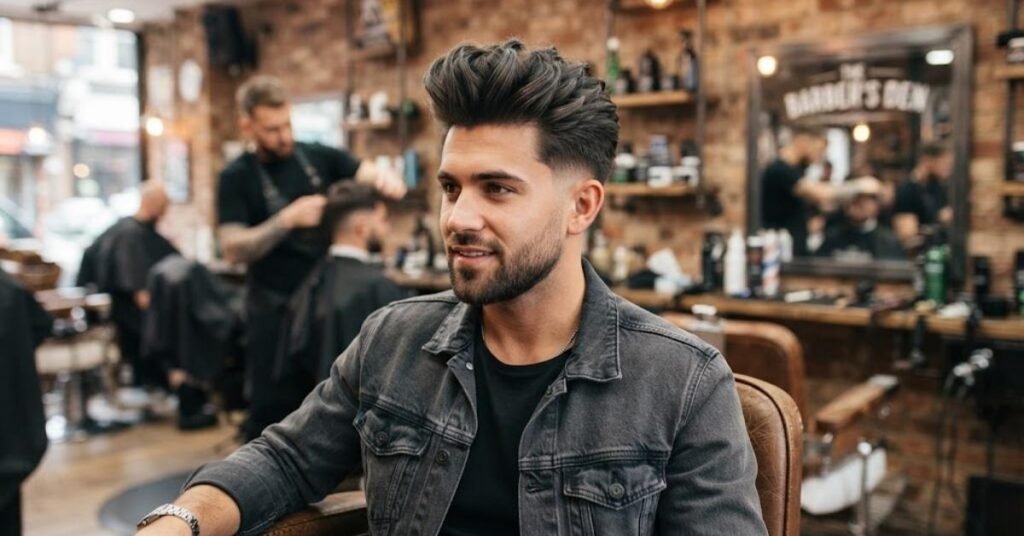
The quiff hairstyle has stayed at the top of men’s grooming trends for over seventy years, and it isn’t slowing down. What started as a rebellious 1950s statement worn by Elvis Presley and James Dean has grown into one of the most flexible cuts a man can ask for. It works on straight hair, curly hair, thick hair, and fine hair. It suits a boardroom meeting and a night out with the same ease.
If you’re bored of your current cut or just want a fresh way to style your top length, this guide breaks down 28 quiff hairstyle ideas, from the timeless classic quiff to bold, faded, modern takes. Each variation includes styling tips, the hair type it suits best, and what to tell your barber before you sit in the chair.
Table of Contents
Trendy Men’s Quiff Haircut Ideas
Every quiff hairstyle shares the same basic formula: shorter hair on the sides and back, with longer hair on top that gets brushed upward and backward for height. What changes from one version to the next is the finish, the fade, the texture, and how much attitude you want the style to carry. Below are 28 of the best quiff haircut ideas worth showing your barber right now.
Classic Quiff
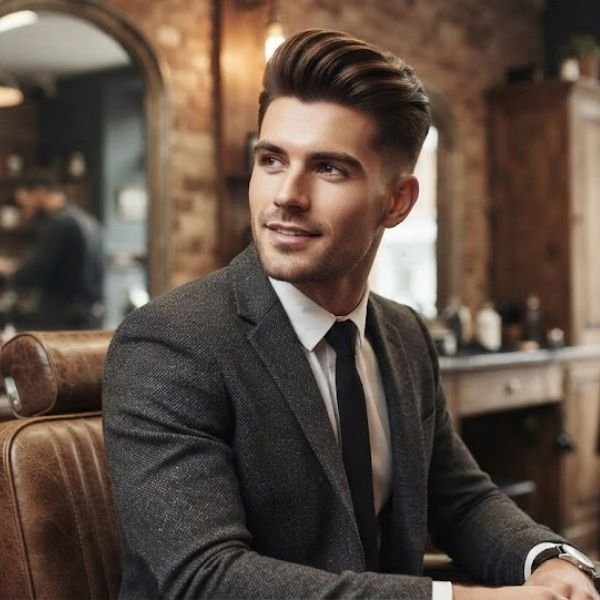
The classic quiff keeps things simple and true to its 1950s roots. The top is left around four to five inches long, with the sides kept short but not disconnected and left fade free. There’s no sharp contrast here, just a soft, gradual blend from top to sides. To style it, blow dry the hair upward while it’s still damp, then finish with a light pomade so the natural texture stays visible instead of looking overly slicked.
Messy Quiff
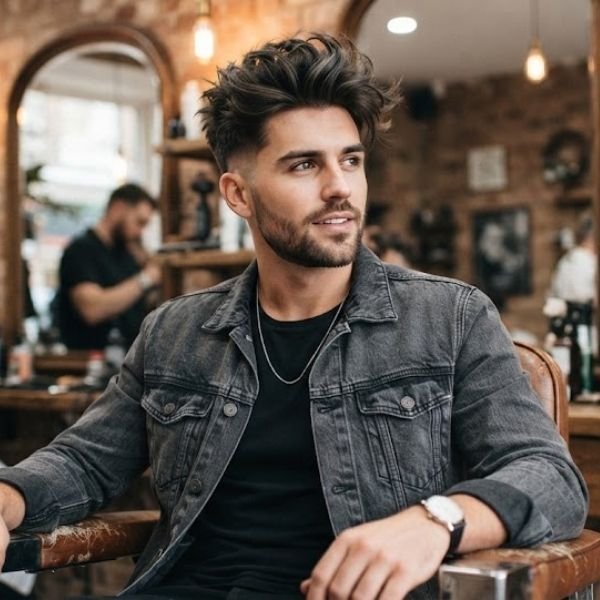
The messy quiff swaps precision for personality. Instead of a smooth, combed finish, the hair is scrunched and pushed up with fingers rather than a comb, leaving separated pieces and an undone look. It works especially well on medium length hair with some natural wave, and a matte clay or texturizing spray helps hold the shape without adding shine. This is the low effort option for guys who want height without spending ten minutes in front of the mirror.
Textured Quiff
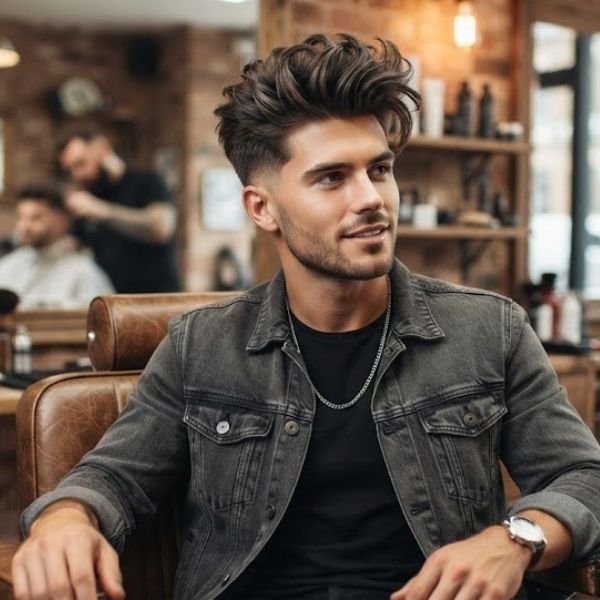
A textured quiff relies on movement and separation rather than volume alone. The top is usually cut short to medium with layers that create natural lift, then styled with a matte paste worked through with fingertips to define individual strands. This variation pairs beautifully with a fade on the sides, since the contrast draws attention straight to the texture on top. It suits thick and medium density hair best, as fine hair may need extra product to hold the definition.
Modern Quiff
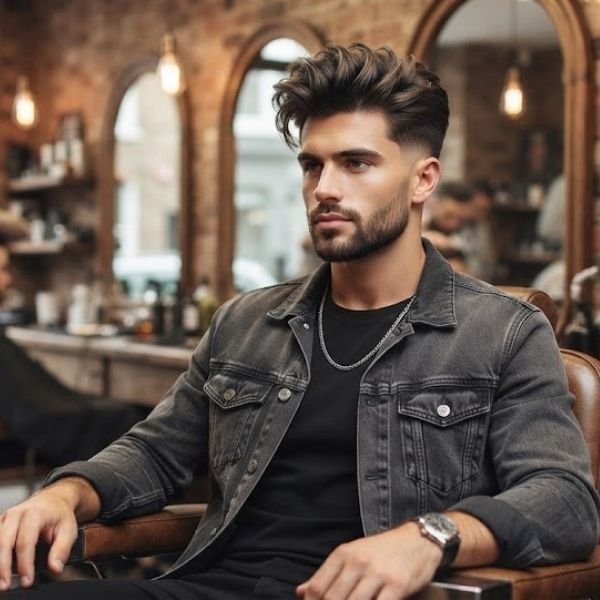
The modern quiff takes the traditional shape and sharpens every edge. Expect a crisp fade or taper on the sides, a sculpted top with clean lines, and a finish that looks deliberate rather than relaxed. It offers more polish than a messy quiff but less rigidity than a pompadour, which is exactly why it’s become a favorite among younger men who still want a professional edge. A strong hold pomade with a slight shine gives this look its signature sharpness.
Short Quiff
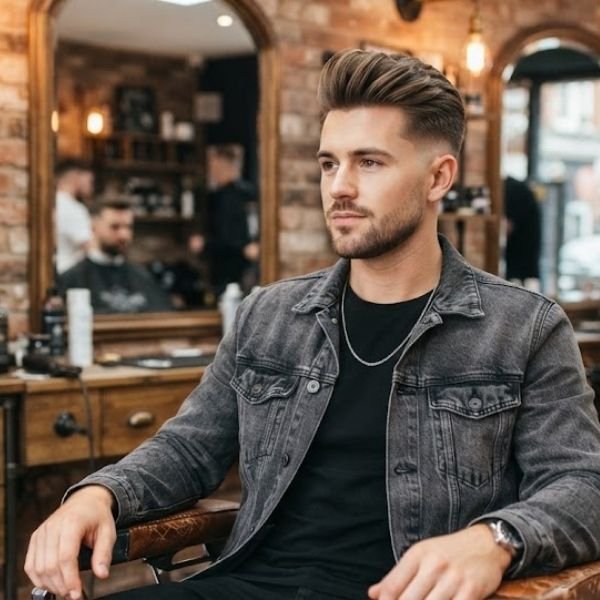
If you prefer low maintenance styling, the short quiff is the answer. The top is trimmed to roughly two to three inches, just enough to create lift without needing heavy product or long styling sessions. The sides are kept clean, often with a taper. This version is ideal for first timers who want to try the quiff shape without committing to longer hair, and it grows out gracefully between barber visits.
Quiff Fade
The quiff fade pairs the classic swept-back top with a gradual fade on the sides and back, fading from skin near the ear line up to the length on top. This creates sharp contrast and a clean, modern silhouette. It’s one of the most requested combinations at barbershops today because it flatters nearly every face shape and hair type, from straight to wavy to curly.
Medium Quiff
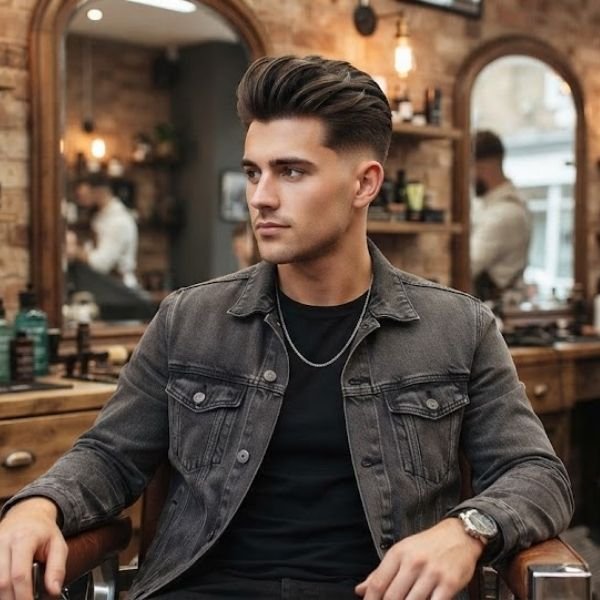
Sitting at around three inches, the medium quiff gives you enough length to play with volume and shape while still being manageable day to day. It offers more versatility than a short quiff, since you can style it sleek and structured for work or messier and more textured for weekends. A light to medium hold product is usually enough to keep it in place.
Quiff with Beard
Pairing a quiff with a full or well groomed beard adds masculine balance to the whole look. The height on top draws the eye upward while the beard frames the jawline, which works particularly well for men with round or oval faces. Keep the fade on the sides consistent with your beard fade line for a cohesive, barbershop finished appearance.
Short Quiff with Low Taper Fade
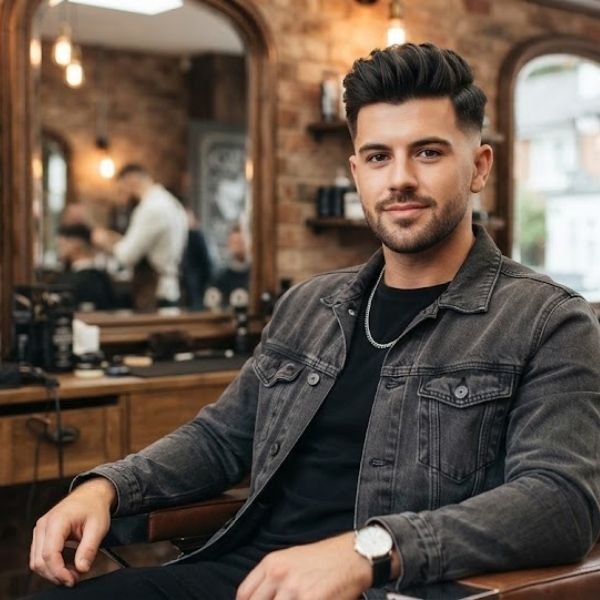
This combination keeps things clean and subtle. The top is kept short, roughly two inches, while the sides transition gradually into a low taper that starts just above the ears. It’s a professional friendly option that still carries a hint of edge, making it a solid everyday choice for office environments.
Tousled Textured Quiff with Low Fade
Here the top hair is left slightly longer and styled with a tousled, lived in finish rather than a sharp comb over. A low fade on the sides keeps the sides understated so the textured top remains the focal point. Sea salt spray or a light texturizing cream helps recreate that just out of bed volume without looking unkempt.
Wavy Quiff
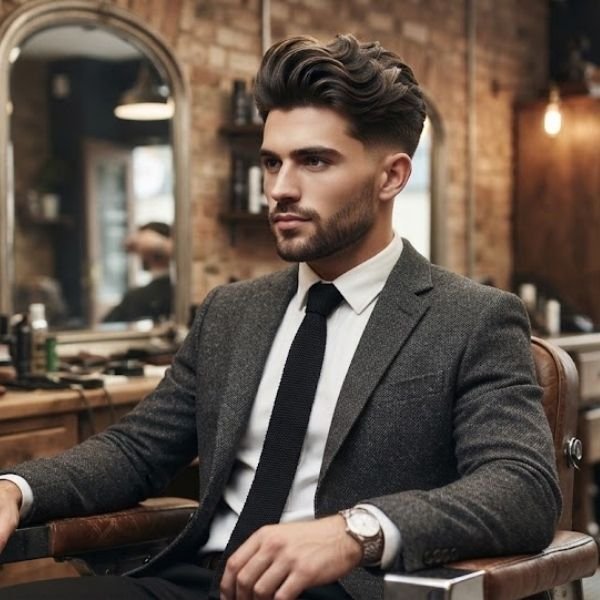
Natural waves add effortless movement to a quiff, reducing the need for heavy styling products. The hair is brushed up and back while damp, then left to dry naturally or with a diffuser to preserve the wave pattern. This variation looks best on medium length hair and gives a relaxed, beachy edge to an otherwise structured hairstyle.
Short Textured Quiff with Mid Fade
A mid fade sits between low and high, starting around the temple area, and pairs nicely with a short, textured top for a balanced, contemporary look. This style suits men who want noticeable contrast without going as bold as a high or skin fade, and it works well for both straight and slightly wavy hair textures.
Messy Quiff with Taper Fade
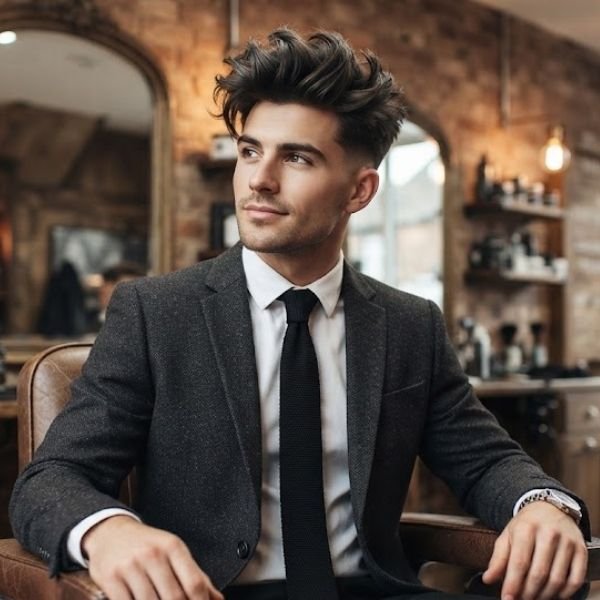
Combining a soft taper fade with a deliberately messy top gives you the best of both worlds: clean sides with relaxed, textured volume up top. Finger styling with a matte wax creates the disheveled finish, while the taper keeps the overall look grounded and barbershop neat.
Long Quiff
For men who want maximum drama, the long quiff keeps the top anywhere from five to seven inches, offering serious height and sweep. It requires more upkeep, including regular trims and stronger hold products, but it makes a striking style statement. Thick, straight hair holds this shape most reliably.
Thick Quiff Fade
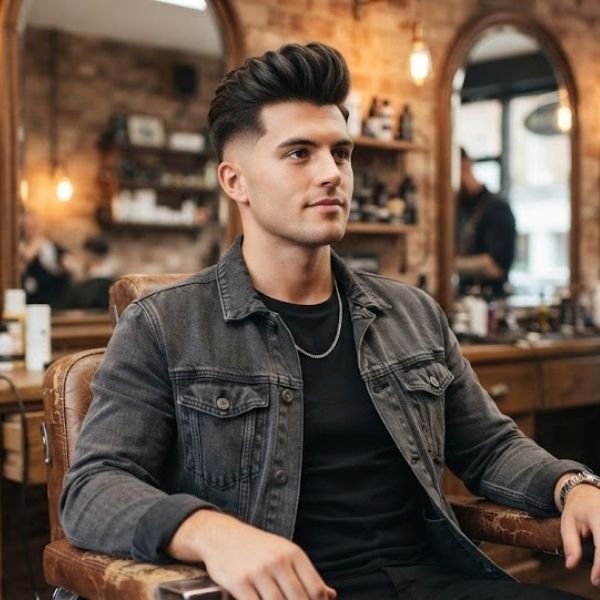
Thick hair naturally lends itself to the quiff because it holds volume without much product. Paired with a fade on the sides, a thick quiff fade creates strong contrast and a fuller, denser look on top. A lightweight pomade or cream is usually enough since thick strands already provide the lift.
Full Textured Quiff with Low Skin Fade
This variation is all about maximizing volume. The top is cut with heavy texture and layering to create a fuller silhouette, while a low skin fade keeps the sides razor clean. It’s a striking combination for special occasions or anyone who wants their haircut to make a statement.
Tousled Short Quiff with Low Fade
A shorter take on the tousled quiff, this style keeps the top around two to three inches with a soft, textured finish and a subtle low fade on the sides. It’s easy to maintain, quick to style each morning, and works well for men transitioning from a buzz cut into something with more shape.
Messy Wavy Quiff with Low Taper
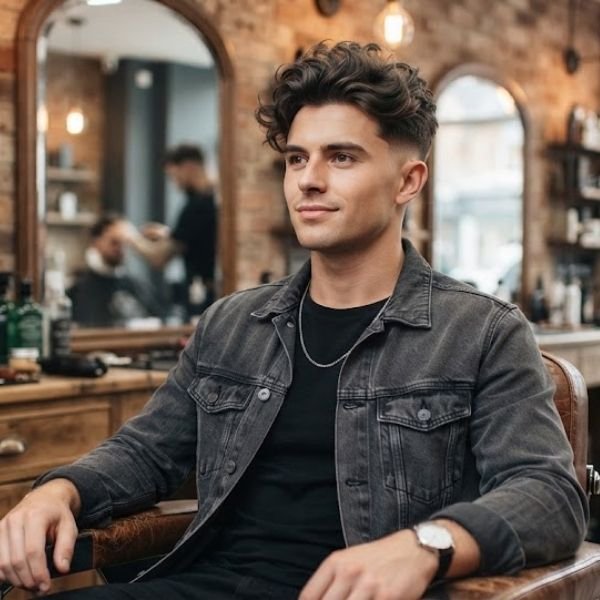
Combining natural waves with a messy styling technique and a low taper fade gives this look a relaxed, coastal feel while still keeping definite structure. Apply a sea salt or texture spray to damp hair, scrunch upward, and let it air dry for the most natural result.
Natural Quiff with High Fade
This version skips heavy styling in favor of working with the hair’s natural fall and movement, paired with a bold high fade for contrast. It suits men who don’t want to spend much time styling but still want a sharp, high contrast finish on the sides.
Undercut Quiff
The undercut quiff features a hard disconnection between the long top and the very short or shaved sides, rather than a gradual fade. This creates maximum contrast and works especially well with thick hair, giving the top section a dramatic, almost floating appearance above the sides.
Youthful Short Quiff with Drop Fade and Beard
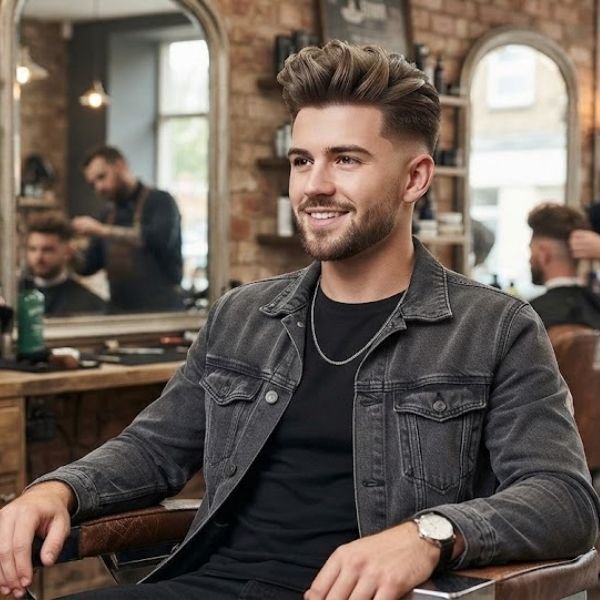
A drop fade curves downward behind the ear rather than staying level, adding a modern twist to the usual side profile. Paired with a short quiff on top and a well maintained beard, this combination reads as fresh, youthful, and current without trying too hard.
Textured Quiff with Sharp Fade
For men who want crisp, precise lines, this style combines a heavily textured top with a sharp, defined fade edge on the sides. The contrast between the rough texture up top and the clean fade line below creates a striking visual balance that photographs particularly well.
Edgy Blonde Quiff
Lightening the top section to blonde while keeping the sides your natural color, or fully bleaching the whole style, adds instant edge to a quiff. This works best with textured or messy styling, since the color change already draws attention without needing extra volume.
Long Quiff Fade
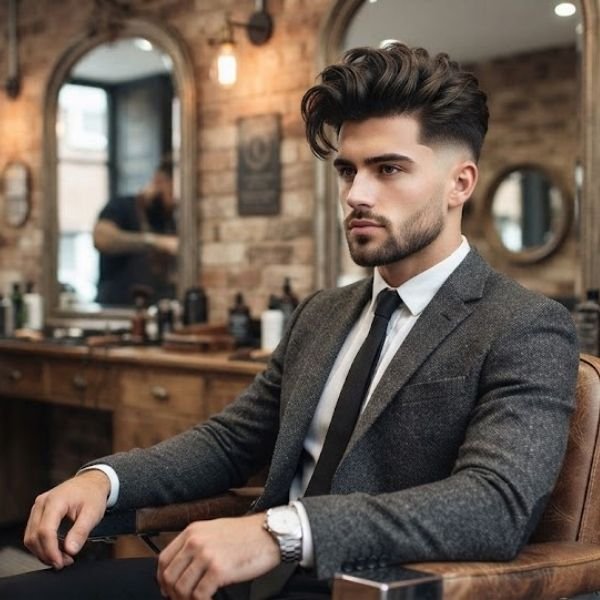
This pairs longer top length, generally four inches or more, with a fade on the sides for maximum contrast between length and closeness. It demands more styling time and stronger hold products but delivers one of the boldest versions of the quiff silhouette available.
Straight Smooth Quiff with Mid Skin Fade
For men with naturally straight hair, this variation embraces a sleek, smooth finish rather than texture, brushed cleanly upward and back. A mid skin fade on the sides adds contrast while keeping the overall look polished and refined, ideal for formal settings.
Curly Quiff
Curly hair adds natural volume and texture to a quiff without much effort. The curls are encouraged upward and back using a curl defining cream, letting the natural pattern do most of the styling work. This version tends to hold its shape longer than straight hair variations since curls resist falling flat.
Pompadour Quiff
Blending the two most iconic swept back styles, the pompadour quiff takes the extra height and precision of a pompadour and softens it with the more relaxed, natural texture of a quiff. The result sits between the two, offering serious volume without the fully slicked, formal finish of a true pompadour.
Textured Fringe Quiff
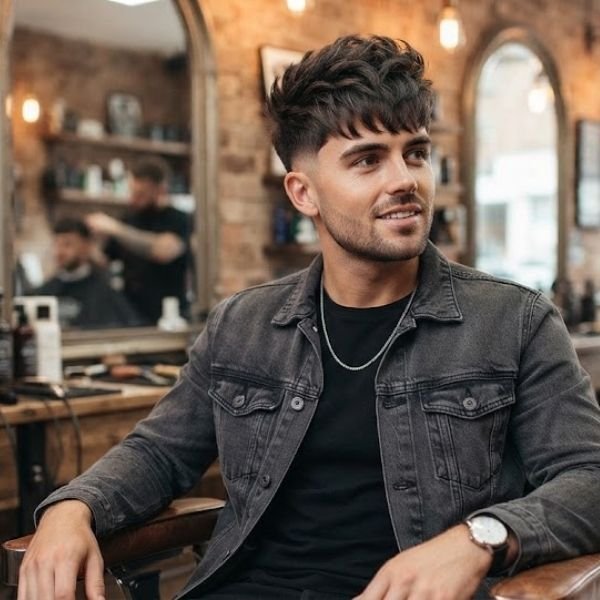
This style keeps a longer fringe at the front, styled upward and slightly forward rather than fully back, combined with texture throughout the top. It offers a softer, more youthful silhouette than a traditional quiff while still keeping the signature height.
Disconnected Quiff
A disconnected quiff creates a deliberate, visible break between the length on top and the shorter sides, often using clippers rather than scissors for a sharp line. This bold approach suits men who want their haircut to look intentional and architectural rather than blended.
What Is A Quiff Haircut?
A quiff haircut is a men’s hairstyle defined by longer hair on top, styled upward and swept backward, contrasted with shorter hair on the sides and back. The name traces back to the 1700s, when a similar towering style was worn by women and named after the Marquise de Pompadour, though the modern version we recognize today took shape in the 1950s.
Elvis Presley, James Dean, and Marlon Brando helped turn the quiff into a symbol of youthful rebellion during that decade, and it became closely tied to the British Teddy Boy movement. The style borrows a little from the pompadour, a little from the flat top, and even a touch from the mohawk, blending them into something more wearable for everyday life.
A few common questions come up when people compare the quiff to similar cuts:
- Quiff vs pompadour: A pompadour is taller, more slicked, and more formal, with volume built specifically for height and drama. A quiff is more relaxed, lower maintenance, and can be worn with natural texture rather than a heavy comb finish.
- Quiff vs fringe: A fringe simply refers to hair that falls forward over the forehead. A quiff takes that front section and lifts it upward and back instead, creating height rather than a forward sweep.
- Quiff vs undercut: An undercut describes the shaved or very short sides, which can be paired with a quiff on top but doesn’t describe the top styling itself.
The quiff works across nearly every hair type, including straight, wavy, curly, and coily hair, and it adapts to short, medium, and long lengths on top. That flexibility is a big part of why it has survived decades of changing trends without ever really going out of style.
Final Thought
The quiff hairstyle earns its staying power because it bends to whatever look you’re going for. Clean and structured for the office, messy and textured for the weekend, faded and sharp for a night out. All 28 variations above share the same foundation, longer hair on top styled upward and back, but the details you choose, the fade, the texture, the length, the beard pairing, are what make the style your own.
Bring a photo or two to your next barber appointment, mention your hair type and the amount of daily styling you’re realistically willing to do, and let your barber guide you toward the version that suits your face shape best.
FAQs About Quiff Hairstyle Men
What do I tell my barber for a quiff?
Ask for short to medium length on the sides with three to five inches left on top, then specify whether you want a fade, taper, or disconnected finish based on the look you’re after.
What is the difference between fringe and quiff?
A fringe falls forward over the forehead, while a quiff takes that same front section and styles it upward and backward for height instead.
What face shape is a quiff for?
Quiffs generally flatter oval, square, and heart shaped faces best, since the added height elongates the face and balances wider jawlines or cheeks.
Is quiff attractive?
Yes, the quiff is widely considered attractive because the added height and structure draw attention to the face while still looking effortless and masculine.
What is a modern quiff haircut?
A modern quiff pairs a sharp fade or taper on the sides with a textured, sculpted top, giving the classic silhouette a cleaner, more contemporary finish.
George is a passionate hair expert with 4 years of experience in hairstyling, grooming, and hair care. He shares practical tips, trends, and professional advice to help readers.