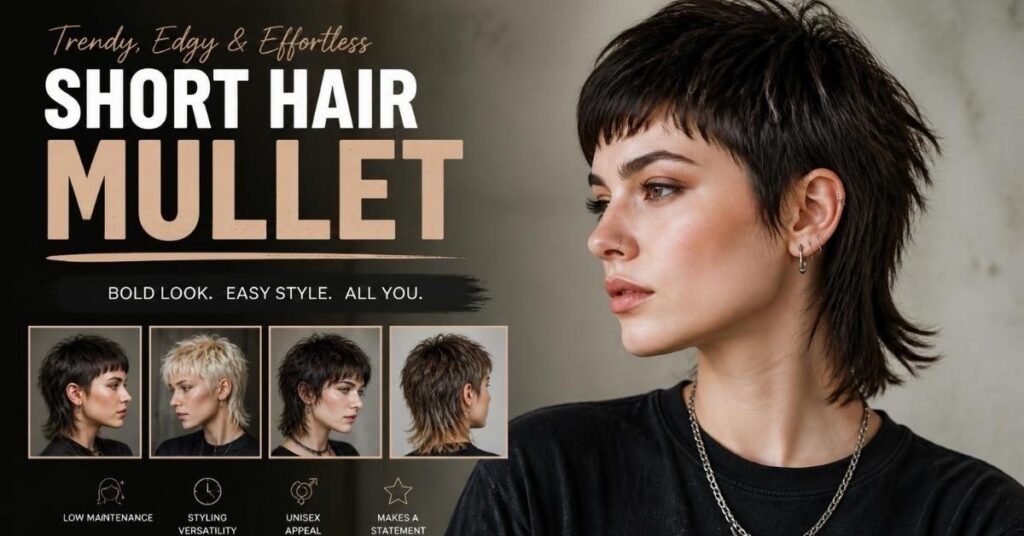
The short mullet has moved far past its retro roots. What used to be a bold, all-or-nothing statement is now one of the most requested haircuts at barbershops and salons, largely because it works. Short mullets keep the sides and top manageable while still giving the back enough length to feel intentional, edgy, and current.
This guide breaks down 10 short hair mullet variations trending in 2026, how to style each one, which fade pairs best with a short mullet, and how to keep the whole look low maintenance without losing its shape. Whether you have curly hair, straight hair, or you’re simply tired of your old crop, there’s a version here that fits your face shape, hair density, and daily routine.
Table of Contents
Short Modern Mullet
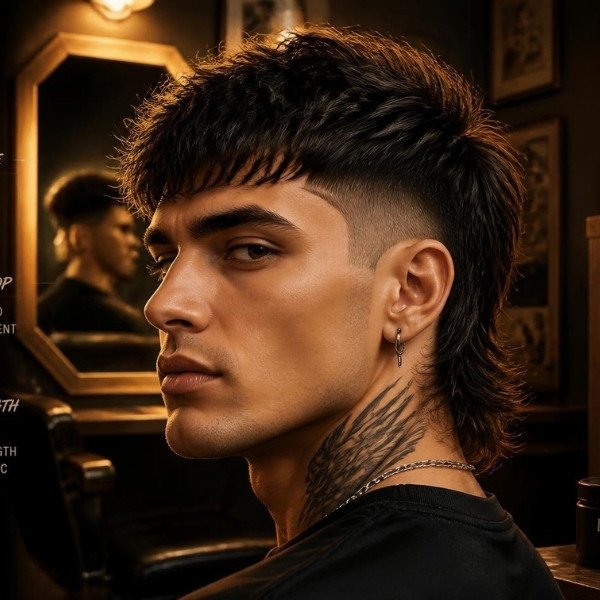
The short modern mullet is the baseline everyone else builds from. It keeps the top textured, the sides tight, and the back short enough that it reads as a haircut, not a costume.
This version suits almost every face shape because the proportions stay balanced. It’s also the easiest style to bring into an office or a formal setting, since the length difference between the front and back is subtle rather than dramatic.
Who it suits: Oval, square, and round face shapes.
Best for: First-timers who want the mullet silhouette without a dramatic commitment.
Short Burst Fade Mullet
A burst fade curves around the ear instead of running in a straight line, which creates a rounded, exploding effect at the temple. Paired with a short mullet, it adds sharp contrast without touching the length at the back.
This variation photographs well because the fade lines stay visible even as hair grows, and it pairs naturally with textured or wavy tops. The trade-off is upkeep. Burst lines soften quickly, so this style needs more frequent barber visits than a basic taper.
Maintenance: Touch-ups every 2 to 3 weeks to keep the burst line crisp.
Styling tip: Apply a light pomade to the back and let the fade do the visual work up front.
Short Taper Mullet
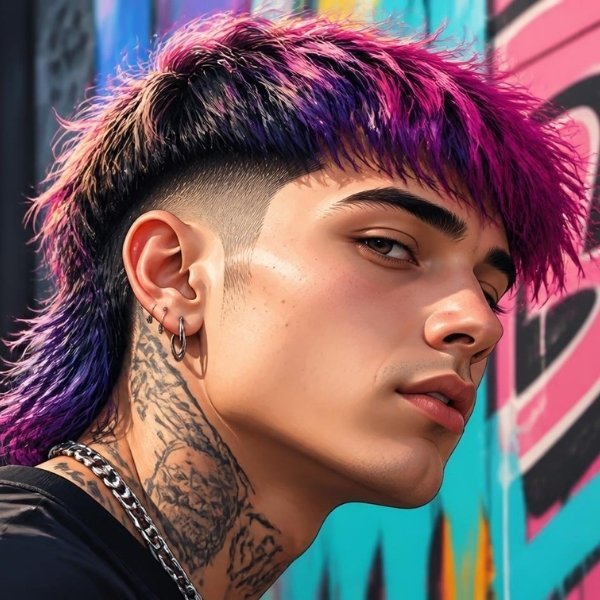
The taper mullet is the most versatile fade option on this list. Instead of a hard line, the hair gradually shortens from the crown down to the neckline, which makes the cut grow out gracefully and look intentional at every stage.
Because there’s no sharp contrast, the taper mullet suits thicker hair particularly well, since it removes bulk without creating an obvious shelf. It’s also the safest choice for workplaces that expect a polished, understated look.
Who it suits: All face shapes and most hair densities.
Maintenance: Trim every 3 to 4 weeks; grows out with minimal awkward stages.
Short Drop Fade Mullet
A drop fade dips lower behind the ear before rising again, following the natural curve of the skull rather than a straight path. On a short mullet, this creates extra roundness at the back of the head, which helps balance longer or narrower face shapes.
This style works particularly well for men and women who want their fade to feel sculpted rather than mechanical. It needs slightly more skill from the barber, so it’s worth booking with someone experienced in fade work specifically.
Styling tip: Blow-dry the back section upward and outward to add fullness where the drop curves in.
Short Curly Mullet
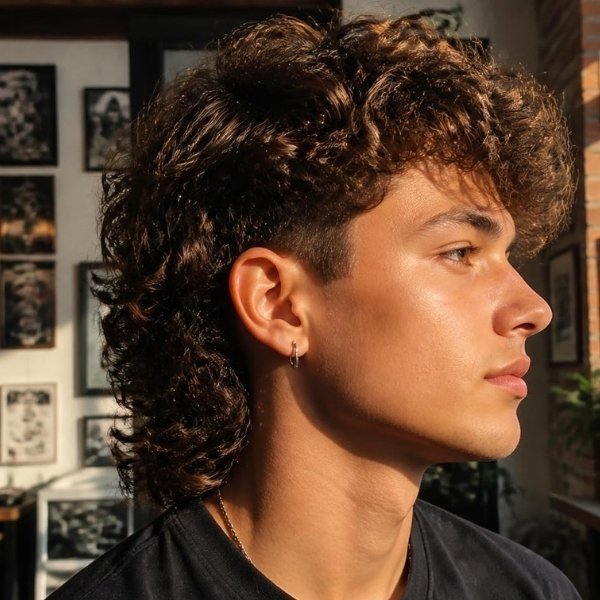
Curly hair holds the mullet shape naturally, since the texture already creates separation and movement without much styling effort. Keeping the sides short prevents the classic “mushroom” silhouette that curly hair can fall into when left too long all over.
The key with this variation is product choice. Curls need moisture and hold without weight, so cream-based products outperform anything oil-heavy or waxy, which tends to flatten curl pattern instead of defining it.
Product to use: Curl cream or a lightweight curl-defining gel.
Product to avoid: Pomade or wax, both of which flatten curls and remove volume.
Short Straight Mullet
Straight hair gives the short mullet a cleaner, more graphic outline, since there’s no natural texture to soften the line between the short top and longer back. This makes it a strong choice for anyone who prefers a structured, deliberate look over a lived-in one.
The challenge with straight hair is volume. Without texture, the crown can sit flat, so internal layering at the top is what keeps the style from looking one-dimensional.
Styling tip: Use a matte clay at the roots to lift the crown before letting the back fall naturally.
Short Wolf Mullet

The wolf mullet blends a shag haircut with mullet proportions, creating heavy layering throughout the crown and a choppier, less defined line at the back. It’s messier by design and works best on medium to thick hair that can support multiple layers without thinning out.
This version has become one of the most searched mullet styles because it looks effortless while still being clearly shaped. It suits people who want an edgier, more textured finish than a classic mullet offers.
Who it suits: Thick or medium-density hair; oval and heart face shapes.
Maintenance: Low to moderate; grown-out layers still look styled.
Short Shaggy Mullet
The shaggy mullet leans into softness. Layers are choppy but not as heavily textured as a wolf cut, and the overall shape feels relaxed rather than sculpted. It’s a strong option for fine or thin hair, since shorter layers on top create the illusion of thickness.
Because there’s no sharp fade or hard line involved, this is one of the lowest-maintenance mullets on the list. It also grows out more evenly than fade-based versions.
Maintenance: Trim every 4 to 5 weeks; forgiving of missed appointments.
Styling tip: Scrunch a texture spray through damp hair for natural, lived-in movement.
Short V-Back Mullet
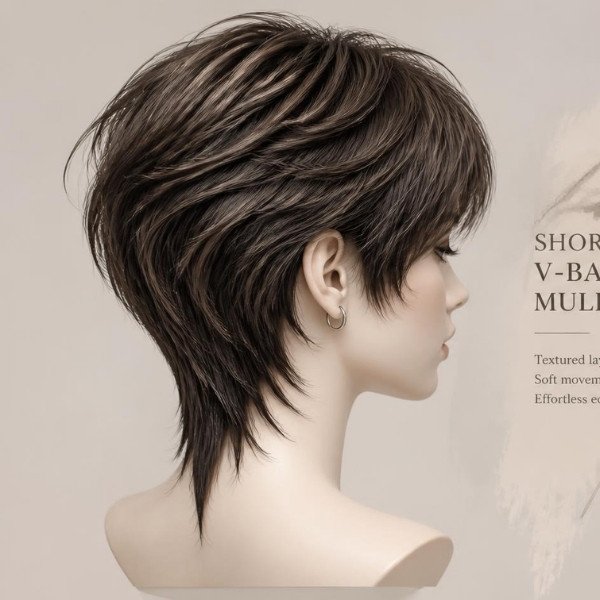
Instead of a straight or rounded line across the nape, the V-back mullet is cut into a defined point at the center of the neck. This detail gives the back a sharper, more graphic finish and works especially well when paired with a taper or low fade on the sides.
It’s a subtle but noticeable upgrade for anyone who already has a short mullet and wants to make the back section feel more deliberate without adding length.
Who it suits: Straight or slightly wavy hair, where the point stays visible.
Best for: Adding definition to an otherwise simple short mullet.
Short Fringe Mullet
The fringe mullet brings the mullet’s contrast to the front of the head instead of just the back. A blunt or choppy fringe sits across the forehead while the back keeps its usual short mullet length, creating a two-toned proportion that frames the face.
This variation works well for heart and oval face shapes, since the fringe draws attention toward the eyes and cheekbones. It does require more frequent trims at the front to keep the fringe from growing into the eyes.
Maintenance: Fringe touch-ups every 3 to 4 weeks; back can go longer between cuts.
Styling a Short Mullet
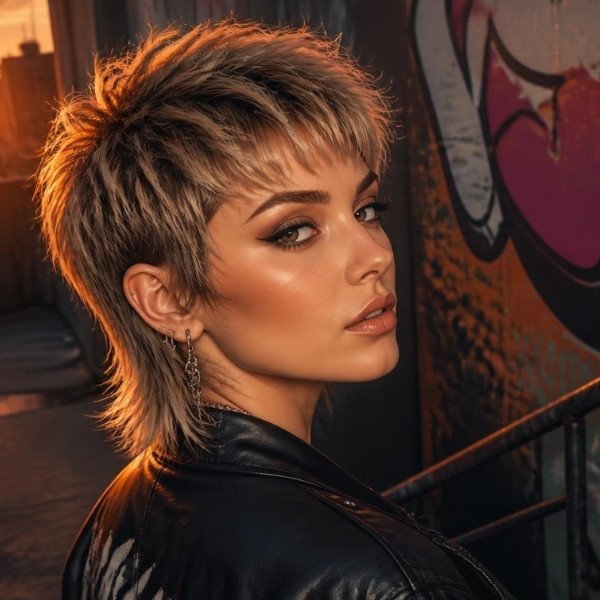
Most short mullets follow the same basic routine, regardless of texture or fade type. What changes is the product, not the process.
- Towel-dry hair until it’s damp, not soaking wet.
- Apply a lightweight cream, sea salt spray, or curl cream to the crown and back, based on your hair type.
- Use your fingers rather than a comb to build volume at the top.
- Let the back air-dry or diffuse it lightly for a natural finish.
- Finish with a small amount of oil or serum on the ends to control frizz.
Avoid heavy gels or waxes on the back section. They weigh the length down and flatten the contrast that makes a mullet look intentional in the first place. A satin pillowcase also helps, since it reduces overnight friction that causes frizz and disrupts the shape by morning.
Best Fade for Short Mullet
There isn’t one universal “best” fade, since the right choice depends on hair density, face shape, and how much upkeep you’re willing to commit to.
- Taper fade: The safest, most versatile option. Suits every face shape and grows out cleanly.
- Burst fade: Best for round or oval faces that want sharper contrast around the ear.
- Drop fade: Ideal for adding roundness at the back of the head, flattering narrower faces.
- Skin fade: The boldest option, but also the highest maintenance, needing touch-ups every 10 to 14 days.
If you’re unsure, start with a taper. It’s forgiving between appointments and works as a base you can always sharpen into a burst or drop fade later.
Mullet, Low-Maintenance, Short
Not every version of this haircut demands constant barber visits. If low maintenance is the priority, a few specific combinations work better than the rest.
- Short shaggy mullet: No hard fade line to maintain; trims every 4 to 5 weeks are enough.
- Short taper mullet: Grows out gradually with no visible growing-out stage.
- Short curly mullet: Natural texture holds shape between cuts with minimal styling.
Skip anything involving a skin fade or burst fade if your schedule doesn’t allow for visits every two to three weeks, since those lines lose their definition fast.
FAQs
Is a short mullet professional enough for work?
Yes, especially the modern, taper, or shaggy versions. Skip high-contrast fades if your workplace expects a more conservative look.
How often do I need a trim for a short mullet?
Fade-based versions need touch-ups every 2 to 3 weeks, while shaggy or taper styles can go 4 to 5 weeks between visits.
Does a short mullet work with curly hair?
Yes, curls actually hold the shape well. Use curl cream instead of pomade to keep the texture defined without flattening it.
What’s the difference between a short mullet and a regular mullet?
A short mullet keeps the back length minimal, usually just past the collar, while a regular mullet allows much longer growth at the back.
Which fade suits a short mullet best for beginners?
A taper fade. It has no hard line, grows out gracefully, and suits nearly every face shape and hair type.
Can fine or thin hair support a short mullet?
Yes, a shaggy or wolf mullet works best, since layering on top creates the illusion of extra density.
Conclusion
The short mullet earns its spot as a 2026 staple because it adapts to nearly any hair type, face shape, and lifestyle. Whether you want the boldness of a burst fade, the ease of a shaggy cut, or the natural hold of curly hair, there’s a version built for you.
Start with the style that matches how much maintenance you’re actually willing to do, not just the one that looks best in photos. A short mullet that fits your routine will always look sharper, longer, than one that fights against it.

George is a passionate hair expert with 4 years of experience in hairstyling, grooming, and hair care. He shares practical tips, trends, and professional advice to help readers.