
Wavy hair and the mullet are a natural match. Your waves add movement and volume, so the cut looks styled even when you barely tried. That is why the wavy mullet keeps showing up in barber chairs and on social feeds in 2026.
This guide covers 15 styles, who each one suits, how to style it in minutes, and exactly what to tell your barber. Whether you want a subtle office-friendly cut or a bold statement, you will find a fit here.
Table of Contents
What Is a Wavy Mullet Men
A wavy mullet is a haircut where the top and sides are shorter and the back is longer, styled to show off natural waves. It follows the classic “short in front, long in back” shape, but modern versions use soft layers and gradual blending instead of a harsh split.
Wavy hair suits this cut because waves fill out the shape and hide small imperfections. Texture does most of the styling work for you.
Key features of a wavy mullet:
- Longer length at the nape and neckline
- Layered top with a natural wave pattern
- Tapered or faded sides, depending on the version
- Optional fringe for face framing
Quick Fit Table
| Style | Best Hair Type | Best Face Shapes | Upkeep Level |
| Classic Wavy Mullet | Medium to thick waves | Oval, square | Medium |
| Wavy Hair Mullet Fade | Any wave, thick works best | Oval, round | High |
| Short Wavy Mullet | Fine to medium waves | Most shapes | Low |
| Wavy Modern Mullet | Medium waves | Oval, heart | Medium |
| Wavy Mullet Medium | Medium to thick waves | Oval, square, heart | Medium |
| Long Wavy Modern Mullet | Thick, loose waves | Oval, diamond | Medium to high |
| Burst Fade Wavy Mullet | Thick waves | Oval, square | High |
| Korean-Inspired Wavy Mullet | Fine to medium, soft waves | Oval, round | Medium |
Trim schedules run from 3 to 8 weeks depending on how sharp the fade is.
Wavy Mullet Variations
1) Classic Wavy Mullet Men

This is the original shape with a texture upgrade. The top sits short to medium, the sides are trimmed close, and the back falls past the collar.
Style it with sea salt spray and let it air dry. It works best on thick, medium waves and gives a rugged, relaxed feel.
2) Wavy Hair Mullet Fade
A fade cleans up the sides and leaves the waves as the focus. The contrast between skin-short sides and full waves on top looks sharp and current.
Ask for a low, mid, or high fade based on how bold you want it to look. A low fade is the easiest to wear to work.
3) Short Wavy Mullet Men

This is the entry-level option. The back sits just over the collar, so it reads as a mini mullet rather than a statement.
It suits guys with office dress codes or anyone testing the trend. Fine to medium waves work well here.
4) Wavy Modern Mullet
The modern mullet swaps the harsh disconnect for a smooth flow from top to back. Layers blend gradually, so there is no clear line where the length changes.
Use a light wave cream and a blow dryer with a diffuser to build soft volume.
5) Wavy Mullet Medium

Medium length is the safest sweet spot. The top is long enough to style and the back reaches the nape or slightly below.
It suits most face shapes and takes about five minutes each morning. If you are unsure, start here.
6) Long Wavy Modern Mullet
This version lets the back grow past the shoulders’ edge while keeping the top layered and lifted. It is dramatic but still wearable when the layers are cut well.
It needs thick, healthy hair to avoid a stringy finish. Deep condition weekly and trim ends often.
7) Burst Fade Wavy Mullet
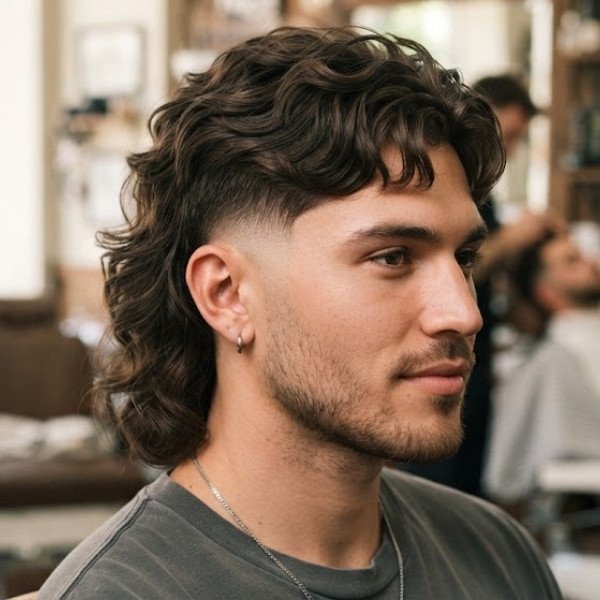
A burst fade curves around the ear and fades down toward the nape, leaving the back length untouched. The curved shape frames the mullet and adds a clean, sculpted edge.
It looks striking on thick waves but needs frequent fade touch-ups, usually every 3 to 4 weeks.
8) Korean-Inspired Wavy Mullet
This style leans soft and airy. Expect gentle waves, a wispy fringe, light layering, and a neat, slightly tapered back.
It works well on fine to medium hair and suits guys who want a polished, youthful look. A light texturizing spray gives movement without heaviness.
Seven More Twists Worth Asking About
- Wavy mullet with undercut: buzzed sides for maximum contrast
- Wavy mullet with curtain fringe: center-parted bangs that frame the face
- Wavy shag mullet: choppy, heavy layers for a rock look
- Wavy wolf cut mullet: feathered layers with volume at the crown
- Tapered wavy mullet: soft taper instead of a skin fade
- Slick-back wavy mullet: waves combed back with light clay
- Blond or highlighted wavy mullet: color adds dimension to waves
Length and Fringe
Length is where most wavy mullets go right or wrong. Waves shrink when they dry, so a cut that looks long when wet can sit two inches higher once dry. Always judge length on dry hair.
Choosing your length:
- Top: 2 to 4 inches for easy styling, longer for a shaggy look
- Back: just past the collar for subtle, past the shoulders for bold
- Sides: scissor taper for soft, fade for sharp
Fringe options:
- No fringe: clean and low-effort, but shows more forehead
- Short textured fringe: adds youth and works on most shapes
- Long curtain fringe: frames the face, best on oval and heart shapes
- Side-swept fringe: softens square or angular jawlines
If your forehead is high, a fringe will balance it. If your face is round, keep the fringe longer and side-swept to add length.
Daily Styling in Three Steps
You do not need a long routine. Wavy hair looks best when you help it instead of forcing it.
- Prep on damp hair. Towel dry gently, then apply sea salt spray or a light curl cream from roots to ends.
- Dry smart. Air dry for a natural look, or use a diffuser on low heat. Scrunch upward to boost the waves and skip brushing.
- Finish light. Rub a pea-sized amount of matte clay or paste between your palms and shape the top. Add a light hold spray only if you need it.
Pro tip: Scrunching and touching hair less while it dries reduces frizz noticeably.
Care and Upkeep
A wavy mullet is not hard to keep, but the back length needs attention. Long hair shows dryness and split ends faster.
Simple routine:
- Wash 2 to 3 times a week with a gentle shampoo
- Condition mid-length to ends every wash
- Deep condition once a week
- Use a wide-tooth comb on wet hair
- Sleep on a silk or satin pillowcase to reduce frizz
Trim schedule:
- Faded sides: every 3 to 4 weeks
- Tapered or scissor-cut sides: every 4 to 6 weeks
- Growing the back longer: trim only the top and sides, and cut split ends lightly
If you are growing into a mullet from short hair, expect around 4 to 12 months depending on your starting length. Waves take longer to look long because they spring up, so patience helps.
Barber Talk That Works
A clear request beats a photo alone. Bring a picture, then explain it in words.
Phrases to use:
- “Keep the back long and blend it into the sides.”
- “Add soft layers on top to enhance my natural wave.”
- “Low taper” or “mid fade” on the sides, whichever you prefer
- “Point cut the ends so it does not look blunt.”
- “Leave the fringe long enough to sweep.”
Questions to ask your barber:
- Will my wave pattern support this length?
- How short will it look once it dries?
- How often should I come in for touch-ups?
Avoid: vague words like “just a mullet.” Specify the length in inches and the fade height.
FAQ’s
Does a mullet work with wavy hair?
Yes, wavy hair is one of the best textures for a mullet. The natural movement adds volume and makes the style look effortless.
How often should I trim a wavy mullet?
Trim every 4 to 6 weeks, or every 3 to 4 weeks if you have a fade. This keeps the shape clean and removes split ends.
Is the wavy mullet high maintenance?
It is moderate. Styling takes about five minutes, but you need regular trims and good conditioning for the longer back.
What products work best for a wavy mullet?
Sea salt spray, a light curl cream, and a matte clay or paste work well. Use a leave-in conditioner if your ends feel dry.
Conclusion
The wavy mullet is one of the most flexible cuts you can ask for in 2026. From a short, office-safe version to a long, layered statement, there is a style for nearly every face shape and lifestyle.
Start by matching your hair thickness and wave pattern to the right variation. Then walk into the barbershop with exact terms, and keep up with trims and conditioning. Do that, and your waves will do the rest.

George is a passionate hair expert with 4 years of experience in hairstyling, grooming, and hair care. He shares practical tips, trends, and professional advice to help readers.