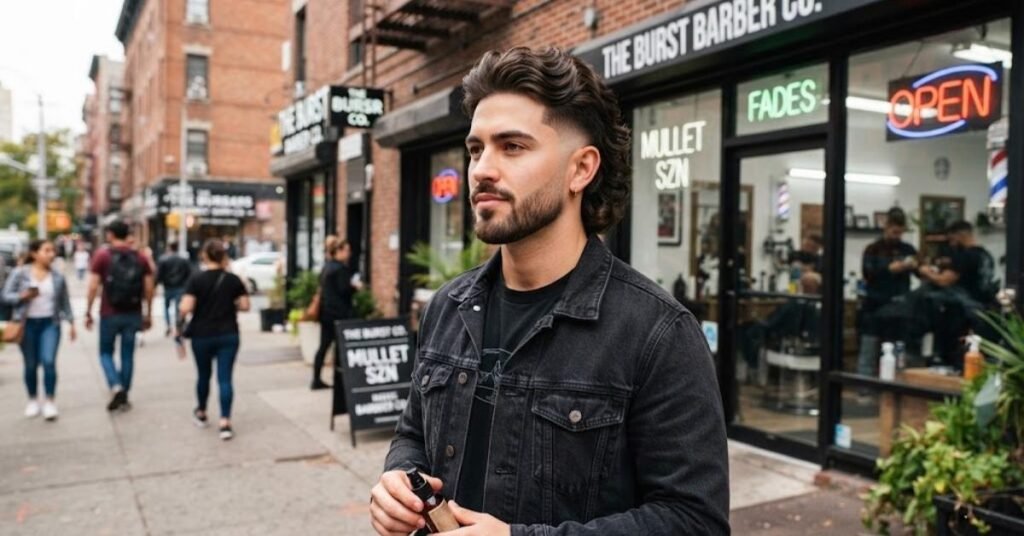
The burst fade mullet is one of the most requested men’s haircuts of 2026, and it is easy to understand why. It takes the sharp, curved blend of a burst fade and pairs it with the rebellious length of a mullet, giving you a cut that looks tailored from every angle. Instead of a straight fade line running up the side of the head, the burst fade curves around the ear like a sunburst, softening the transition between short sides and long back hair.
This guide breaks down 30 burst fade mullet variations, covers every hair type and texture, and answers the questions people usually ask their barber before booking the chair. Whether you want a low-key office-friendly version or a bold high-contrast look with a design shaved in, there is a variation here that fits your face shape, hair density, and lifestyle.
Table of Contents
Burst Fade Mullet
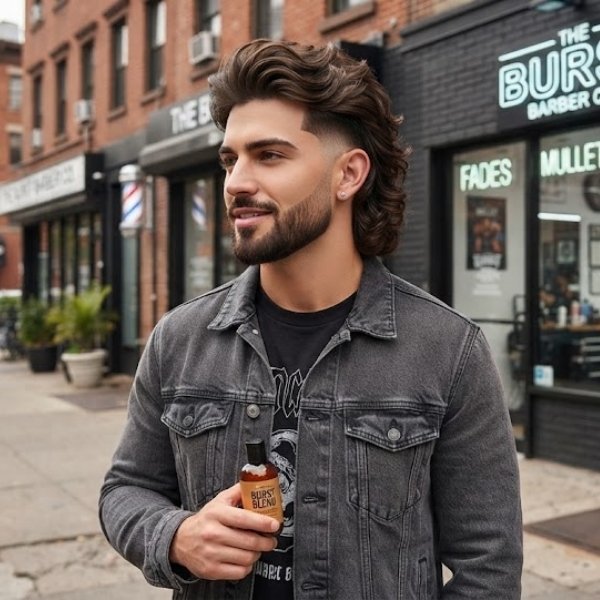
A burst fade mullet combines two distinct barbering techniques into one cohesive style. The burst fade is a rounded, arc-shaped fade that wraps around the ear instead of cutting straight up the side of the head, similar to a sunburst pattern radiating outward. The mullet element keeps length at the back and nape while the top and sides stay short, textured, or faded to the skin.
Put together, you get a haircut with real contrast. The sides look tight and clean, showing off the barber’s blending skill, while the back carries enough length to move, style, or grow out into something longer. This style works on straight, wavy, curly, and coily hair, and it can be cut low, mid, or high depending on how much contrast you want against your skin tone and hair color.
Unlike a classic 1980s mullet, the modern burst fade version reads as intentional and current rather than dated. It has become a staple on TikTok and Instagram barbering pages because the fade itself is a visible showcase of a barber’s precision.
30 Top Timeless Variation Burst Fade 2026
Barbers and stylists agree that the burst fade mullet family covers a huge range of looks, all built on the same foundation of a curved ear fade plus longer back hair. Below is a quick overview of the 30 style directions covered in this guide, so you can jump to the section that matches your hair type or vibe:
- Low burst fade mullet
- Burst fade mullet for curly hair
- Burst fade mullet for straight hair
- Modern mullet burst fade
- Long hair burst fade mullet
- Taper burst fade mullet
- Burst fade mullet V cut
- Burst fade mullet for wavy hair
- High burst fade mullet
- Mid burst fade mullet
- Buzz cut burst fade mullet
- Burst fade mullet with a mixed part
- Burst fade mullet with a design
- Textured burst fade mullet
- Asian burst fade mullet
- Blond burst fade mullet
- Drop burst fade mullet
- Mohawk mullet burst fade
- Burst fade mullet with a beard
- Mexican burst fade mullet
- Burst fade mullet for fine or thin hair
- Burst fade mullet with a wolf cut twist
- Classic burst fade mullet
- Sporty burst fade mullet
- Short burst fade mullet
- Mullet with a V shaped back
- Burst fade mullet with fringe
- Textured burst fade mullet finish
- Burst fade mullet French crop
- Custom combinations of the above, tailored to your face shape and hair density
Each variation below explains who it suits best, what to say to your barber, and how it typically gets styled day to day.
Low Burst Fade Mullet
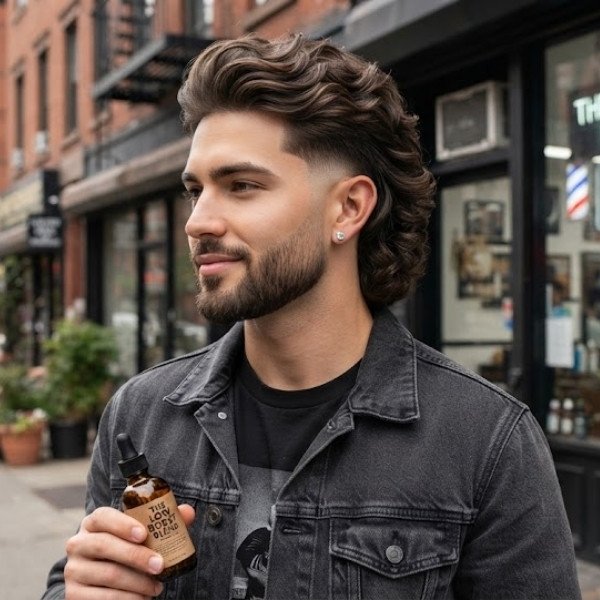
The low burst fade keeps the arc tight to the ear, starting just above the sideburn and fading out near the nape. This is the most subtle version of the cut, with less exposed skin and a smaller, softer curve than a mid or high burst. Because the fade sits so close to the hairline, it works on nearly every face shape and reads as office-friendly and low-drama.
Ask your barber for a low burst starting at the temple line and taken down to a 1 or 0.5 guard at the shortest point. It is a smart choice if you are new to fades and mullets and want a gentler introduction before committing to a bolder version.
Burst Fade Mullet Curly Hair
Curly hair and the burst fade share a natural visual language, since both are built around a curve. The arc at the ear echoes the curl pattern on top, so the two elements complement rather than compete with each other. For the best result, ask your barber to scissor-cut or shape the top so the natural curl pattern stays intact, then burst the fade tight around the ear for contrast.
Curly-haired guys should also ask whether their barber cuts hair wet or dry, since curls can shrink noticeably once dry and the finished length can look shorter than expected. A curl-defining cream or light curl gel keeps the top defined without weighing the curls down.
Burst Fade Mullet Straight Hair
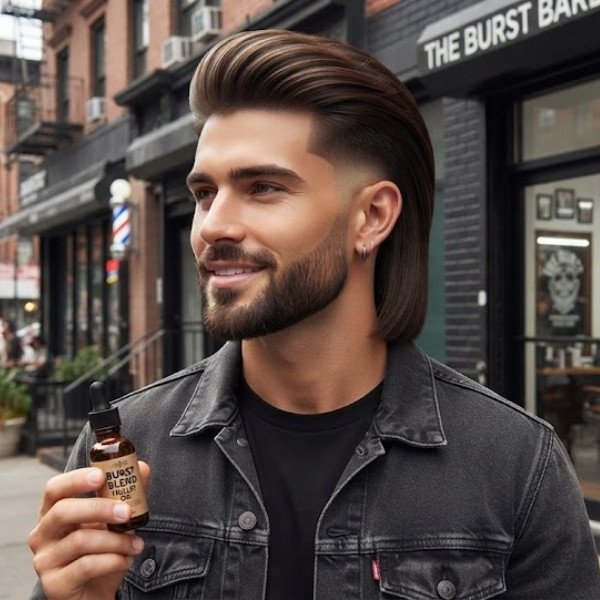
Straight hair shows off the burst fade line with maximum clarity, since there is no natural texture to soften the edges. This makes it a popular choice for guys who want a crisp, graphic look. The back tends to lie flatter and sleeker on straight hair, so many people add a slight point cut or texturizing shears to the ends to avoid a blunt, heavy look.
A light pre-styler applied before blow-drying, followed by a small amount of matte paste, keeps straight hair from looking flat while preserving the sharpness of the fade.
Modern Mullet Burst Fade
The modern mullet burst fade is the general, catch-all version most people picture when they hear “burst fade mullet.” Your barber sets the fade height based on your face shape and hair type, then layers the back so it flows rather than sitting as one blunt chunk of length. The goal is a smooth bridge between the arc and the crown, avoiding a harsh, stepped line where the fade meets the longer hair on top.
This version is genuinely customizable, which is part of why it has become one of the defining men’s hairstyles of 2026. You can dial the contrast up or down and adjust the back length to suit your comfort level.
Long Hair Burst Fade Mullet
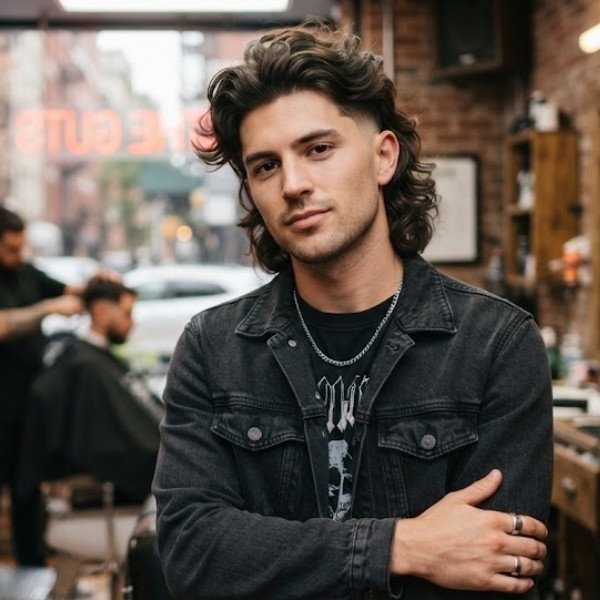
For guys who want to keep real length at the back, the long hair burst fade mullet pushes the contrast even further. The sides and top stay short and faded while the back is left to grow past the collar. This version needs more active styling, since longer hair holds more weight and can flatten without product.
A light sea salt spray adds texture and separation to the length, while the burst fade itself only needs a touch-up every two to three weeks even as the back keeps growing out for months.
Taper Burst Fade Mullet
If a full skin fade feels like too much commitment, the taper burst fade mullet is a gentler alternative. Instead of fading all the way down to the skin, the sides are tapered close but never bare, and the burst curve is softened rather than sharply defined. This keeps the classic short-sides, long-back mullet shape while offering a smoother grow-out phase and lower overall maintenance.
It is a solid pick for first-time mullet wearers, workplaces with more conservative dress codes, or anyone who prefers a subtler transition between short and long.
Burst Fade Mullet V Cut
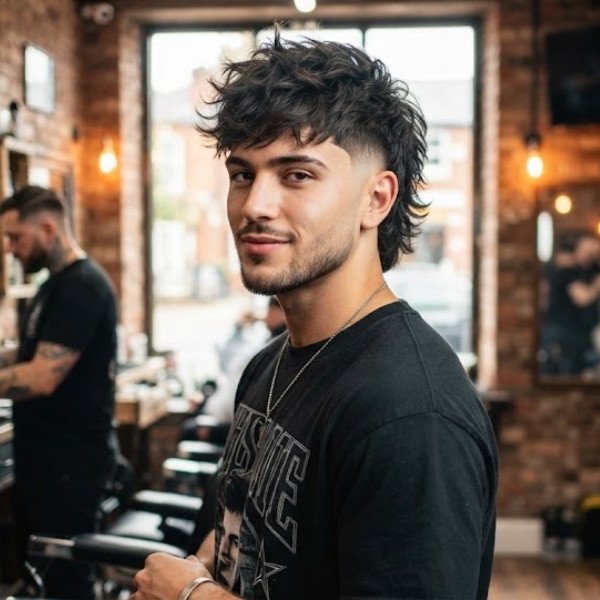
The V cut burst fade mullet adds a shallow V shape cut into the nape while the sides keep their usual burst arc. The V pulls the eye toward the length at the back and gives the silhouette a sharper, more deliberate finish than a straight-across cut. It looks best when the V is centered and kept clean with regular trims, since an uneven or overgrown V can start to look messy rather than intentional.
Ask your barber for a layered back so the hair still moves naturally around the V shape instead of sitting stiff.
Burst Fade Mullet Wavy Hair
Wavy hair sits in a sweet spot between straight and curly, and it tends to hold texture exceptionally well after a burst fade mullet. The waves at the back add natural volume and movement without much styling effort, while the fade keeps the sides clean and controlled. A light cream or wave-defining product works best here, since heavy pomades can weigh waves down and remove the texture that makes this version stand out.
Avoid brushing wavy hair out completely after styling, as this flattens the wave pattern that gives the cut its character.
High Burst Fade Mullet
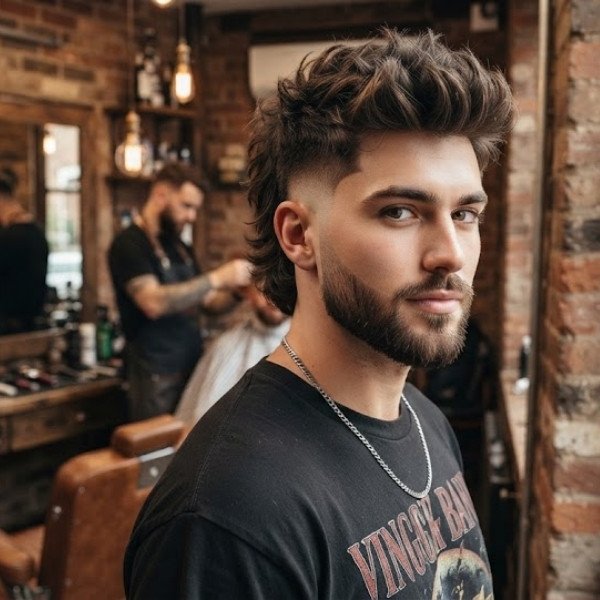
The high burst fade mullet takes the arc much further up the side of the head, creating maximum contrast between the skin-close sides and the longer top and back. This is the boldest, most statement-making version of the cut, and it suits guys with thick or dense hair who want the fade to be the focal point of the style.
Because more skin is exposed, high bursts grow out faster and typically need a touch-up every two weeks to stay sharp. It pairs especially well with mohawk-style tops, curly crowns, or heavily textured layers.
Mid Burst Fade Mullet
Sitting between the low and high versions, the mid burst fade mullet is often considered the most balanced option. It offers noticeably more contrast than a low fade without the boldness of a high burst, making it a versatile choice that suits a wide range of face shapes and lifestyles. Most barbers recommend this height for guys who want their fade to be noticeable but not the loudest thing about their haircut.
Buzz Cut Burst Fade Mullet
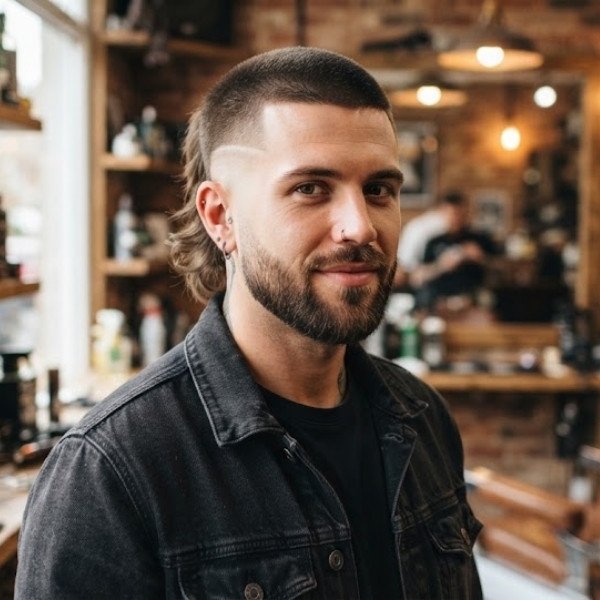
Combining a buzz cut with a burst fade mullet gives you a clean, low-maintenance option that still carries the mullet silhouette. The top is kept at the same short guard length as a standard buzz cut, but the arc at the ear adds shape and definition that a plain buzz cut lacks. Because everything on top is uniformly short, this version needs virtually no daily styling, making it a favorite for active lifestyles and hot climates.
Burst Fade Mullet Mixed part
A mixed part burst fade mullet adds a shaved or comb-created part line into the design, usually running diagonally through the top section. This creates an additional layer of visual interest beyond the fade itself and works particularly well on straight to wavy hair where the part line stays crisp between cuts. It is a good option for guys who already like a side part and want to bring that same structure into a mullet silhouette.
Burst Fade Mullet With Design.
For guys who want their haircut to make a statement, adding a shaved design into the burst fade is a popular customization. Lines, geometric shapes, or small patterns are typically cut into the fade area near the temple, using the natural curve of the burst as a canvas. Designs need touch-ups roughly every one to two weeks to stay crisp, since even a few millimeters of regrowth can blur fine linework.
Textured Burst Fade Mullet
Texture is added on top using point-cutting or texturizing shears, which removes weight and creates separation between individual pieces of hair. This gives the crown a piecey, tousled look rather than a smooth, heavy mass, and it works on nearly every hair type. A texturizing spray or clay-based product, worked through damp or dry hair with the fingers, enhances this effect for everyday styling.
Asian Burst Fade Mullet
Asian hair is often naturally thick, straight, and dense, which pairs well with a strong, clearly defined burst fade line. Many barbers recommend thinning the top slightly with texturizing shears to prevent excess bulk, especially where the longer back meets the crown. A mid or low burst is often chosen to balance the density of the hair without overwhelming the face, and a light matte clay keeps the finish natural rather than glossy.
Blond Burst Fade Mullet
Lightening the top and back to blond, whether platinum, honey, or a subtle balayage, adds another layer of contrast on top of the fade itself. This version is especially popular among guys who already color their hair, since the lighter length draws even more attention to the shape of the mullet. Keep in mind that bleached hair is more porous and prone to dryness, so a moisturizing leave-in product is worth adding to the routine.
Drop Burst Fade Mullet
A drop burst fade curves downward toward the back of the head rather than staying level, following the natural curve of the skull behind the ear. This creates a longer, more dramatic sweep than a standard burst and pairs especially well with mullets, since the drop line naturally leads the eye toward the length at the back. It is a slightly more advanced cut that benefits from an experienced barber.
Mohawk Burst Fade Mullet
Combining a mohawk with a burst fade mullet keeps a narrow strip of longer hair running from the front to the crown, faded tightly on both sides with the classic burst curve near the ears. The back is then left long in true mullet fashion. This is one of the boldest variations on this list and works best with thick or coarse hair that can hold the mohawk’s shape without heavy product.
Burst Fade Mullet With Beard
Pairing a burst fade mullet with a full or stubble beard creates a cohesive, intentional look from the sideburns down. The key detail is a smooth blend at the sideburn area, where the fade needs to connect cleanly into the beard rather than leaving a visible line. Ask your barber to fade the beard at the cheek line and keep the neckline crisp, since a sloppy blend here undercuts an otherwise sharp haircut.
Mexican Burst Fade Mullet
Often associated with thick, straight to wavy hair, this version leans into a clean, sharp burst with a fuller top that has some natural volume and movement. It frequently pairs with a mid to low fade height and can incorporate a slight quiff or forward-swept top. This style has gained major popularity through social media and barbering culture, and it photographs especially well thanks to the strong contrast between the tight sides and the fuller crown.
Burst Fade Mullet Fine or Thin Hair.
Fine or thin hair needs a slightly different approach, since too much length at the back can look stringy rather than full. Barbers typically recommend keeping the back a bit shorter than they would for thick hair and using layers to create the illusion of density. A lightweight volumizing product, such as a texture powder or mousse, adds lift at the root without weighing thin strands down.
Burst Fade Mullet with Wolf-Cut.
Blending the shaggy, heavily layered wolf cut with a burst fade mullet gives you a style with maximum movement and texture on top, tightly controlled sides, and a mullet-length back. The wolf cut’s choppy, face-framing layers soften the sharpness of the fade, resulting in a style that feels edgy but not overly severe. This combination works especially well on wavy or curly hair, where the layered texture has the most natural movement to work with.
Classic Burst Fade Mullet
The classic version sticks closely to the original formula: a clean burst fade around the ear, moderate length at the back, and minimal added texture or design work. It is timeless rather than trend-driven, making it a dependable choice if you want a version of this haircut that will still look current in a few years rather than tied to one specific styling fad.
Sporty Burst Fade Mullet
Built for an active lifestyle, the sporty burst fade mullet keeps the top short enough to need little to no product, while the fade and slight back length still give it personality. This version is popular among athletes and anyone who wants a wash-and-go routine without giving up the mullet silhouette entirely. A shorter back length, generally just past the collar, keeps things practical during workouts or humid weather.
Short Burst Fade Mullet
For a more subtle take on the trend, the short burst fade mullet keeps the back length minimal, often just an inch or two past the natural fade line, so the mullet shape is present without being dramatic. This version suits more conservative workplaces and is easier to maintain, since there is less length to style or grow out.
Mullet With V-shaped Back.
Similar to the V cut variation but treated as its own distinct style, this version focuses specifically on a precise V shape cut into the very back of the neckline, beneath the longer mullet length. It gives the bottom edge of the haircut a sharp, tailored finish and works particularly well when paired with a mid or high burst fade for maximum contrast between the sides and the pointed back edge.
Burst Fade Mullet Fringe
Adding a fringe, or bangs, to the front of a burst fade mullet softens the overall look and draws attention toward the eyes and forehead. The fringe can be worn straight across, textured and piecey, or swept slightly to one side. This version is especially popular for oval and heart-shaped faces, since a fringe can help balance a more prominent forehead.
Burst Fade Mullet Textured
This is a close cousin of the textured burst fade mullet covered earlier, but with an emphasis on heavier texturizing throughout the entire top and back, not just the crown. The result is a shaggier, more lived-in finish rather than a sleek one. A matte finishing paste, applied to damp hair and scrunched rather than combed through, brings out the most texture.
Burst Fade Mullet Mullet French Crop.
Merging the French crop, known for its short, textured fringe and tight sides, with a mullet back creates a hybrid style that keeps a structured, cropped top while still carrying extra length behind. The burst fade handles the sides as usual, while the front is kept short and textured in true French crop fashion. This combination suits guys who want the low-maintenance appeal of a crop with the personality of a mullet.
How to Tell Your Barber to Cut You the Perfect Burst Fade Mullet.
Clear communication is the single biggest factor separating a great burst fade mullet from a disappointing one. Vague requests like “give me a mullet” leave too much room for interpretation. Instead, walk in prepared with specifics.
- Bring 3 to 5 reference photos from different angles, front, side, and back
- State the guard number for the shortest point of the fade, such as 0, 0.5, 1, or 2
- Specify the fade height: low, mid, high, or drop
- Give the back length in inches, not just “long” or “short”
- Mention your preferred top texture: sleek, textured, forward, or swept back
- Ask to see the fade line in a mirror before it gets fully blended, so you can adjust the height early
- If you are growing a shorter cut into a mullet, say so upfront so the barber shapes the back to guide the growth rather than cutting it short
Ending the consultation by asking for the finish, matte or shiny, helps the barber choose the right products before you even leave the chair.
Burst Fade Mullet on Different Face Shapes
The burst fade mullet is genuinely flexible across face shapes, but small adjustments make a noticeable difference.
- Round faces: A higher fade and more height on top create vertical lines that elongate the face and slim its appearance.
- Square faces: A mid or low burst softens strong jaw angles without competing with them, while textured layers on top add balance.
- Oval faces: Considered the most versatile shape, oval faces can wear nearly any burst fade mullet variation, including bold high fades and dramatic V cuts.
- Heart-shaped faces: A fringe or forward-swept top helps balance a wider forehead against a narrower chin.
- Long or rectangular faces: A lower fade height and more width on top, rather than height, keep the face from looking stretched.
A skilled barber will factor in your face shape automatically, but naming it in the consultation helps them fine-tune the details.
New Fade Mullet Everyday Easy Styling Routine.
A burst fade mullet does not need to be complicated to maintain day to day. A simple, repeatable routine keeps it looking sharp between barber visits.
- Wash with a lightweight shampoo two to three times a week, since over-washing can dry out the scalp and hair
- Towel-dry until damp, not soaking wet
- Apply a small amount of your chosen product, working it through the top and back first
- Blow-dry on a low or medium heat setting, directing the top in your preferred direction
- Finish with a light texturizing spray or a small amount of matte paste at the ends for separation
Guys with curly or coily hair should skip the blow-dryer and instead let hair air-dry or diffuse it on low heat to preserve the natural curl pattern.
Best Hair Products While a Clean and Sharp Burst Fade Mullet.
The right product depends heavily on hair type and the finish you are going for.
- Matte paste or clay: Ideal for textured, natural-looking finishes on straight to wavy hair
- Pomade: Better suited for a sleeker, shinier look, especially on straight hair
- Sea salt spray: Adds texture, grit, and volume, particularly useful for wavy and longer back sections
- Texture powder: A lightweight option for fine or thin hair that needs volume without weight
- Curl cream or gel: Defines curls and coils while controlling frizz without stiffness
- Light hold hairspray: Locks in styling on longer back sections that tend to fall flat during the day
A little product goes a long way with this haircut. Starting with a small amount and adding more only where needed avoids the greasy, overdone look that can undercut an otherwise sharp fade.
The Secret to Wearing Burst Fade Mullet More Long.
Keeping a burst fade mullet looking fresh over a longer period comes down to consistency rather than any single trick.
- Book your next fade touch-up before leaving the barbershop, since fades lose sharpness faster than most other haircuts
- Refresh the burst fade and outline every 2 to 3 weeks while letting the back grow more slowly, typically trimmed every 6 to 8 weeks
- Tell your barber explicitly when you are trying to grow the back out longer, so a routine “cleanup” does not remove length you have been building
- Protect longer back hair at night with a silk or satin pillowcase to reduce friction and breakage
- Deep condition once a week if you are growing hair out, since longer hair is more prone to dryness at the ends
Treating the fade and the mullet length as two separate maintenance schedules, rather than one single haircut, is the real secret behind a burst fade mullet that stays sharp for months.
Conclusion
The burst fade mullet has earned its place as one of the defining men’s haircuts of 2026 because it genuinely adapts to almost anyone. Whether your hair is straight, wavy, curly, or coily, and whether you want a subtle low fade or a bold high-contrast design, there is a version of this cut built for you. The real key to pulling it off is communication with your barber, a maintenance routine that treats the fade and the back length as two separate schedules, and a product routine matched to your hair type.
Start with a clear consultation, bring reference photos, and use the barber language covered in this guide. From there, it is mostly about staying consistent with touch-ups every few weeks and letting the back grow into the length you actually want. Done right, the burst fade mullet is one of the lowest-effort, highest-impact haircuts you can walk out of a barbershop wearing.
FAQs
What is a burst fade mullet?
A burst fade mullet is a haircut that combines a rounded, ear-hugging fade with the classic mullet feature of longer hair kept at the back.
How often should I get my burst fade mullet trimmed?
Refresh the fade every 2 to 3 weeks, while the back can typically go 6 to 8 weeks between trims depending on how much length you want.
Does a burst fade mullet work on curly hair?
Yes, curly hair pairs naturally well with the curved shape of a burst fade, and many barbers scissor-cut the top to preserve the curl pattern.
What is the difference between a burst fade and a regular fade?
A regular fade tapers in a straight line up the side of the head, while a burst fade curves around the ear in a rounded, sunburst-like shape.
How much hair do I need to start a mullet?
Most barbers recommend at least 3 to 4 inches on top and back before starting, with shorter hair needing two to three months of growth first.
Is a burst fade mullet suitable for work or school?
A low or taper burst fade mullet with a moderate back length is usually the most workplace and school-friendly option.
Can a burst fade mullet suit a round face?
Yes, a higher fade combined with more height on top creates vertical lines that visually elongate a round face.
What products work best for styling a burst fade mullet?
Matte paste or clay works well for texture, pomade for a sleeker finish, and sea salt spray for added volume on the back.
Can I get a burst fade mullet with a beard?
Yes, the fade should blend smoothly into the beard at the sideburn area for a clean, connected look.
Is the burst fade mullet a temporary trend?
While it has surged in popularity recently, the underlying combination of a fade with longer back length has remained a recurring style for decades, suggesting real staying power beyond 2026.

George is a passionate hair expert with 4 years of experience in hairstyling, grooming, and hair care. He shares practical tips, trends, and professional advice to help readers.