
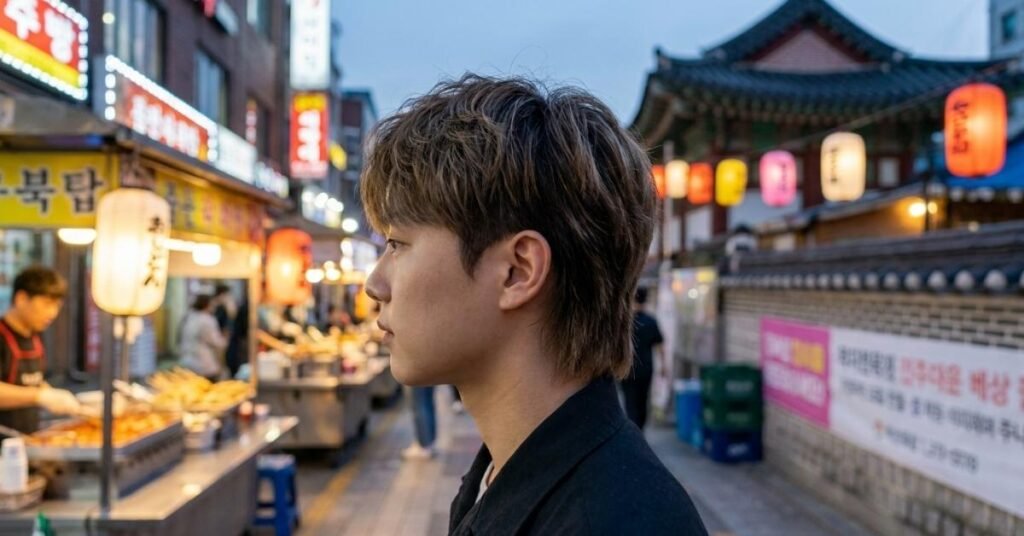
So you keep seeing that Korean mullet haircut all over your feed and you’re wondering if it’s actually worth the chop.Short answer: yes, and 2026 is the year to try it.Unlike the choppy, harsh mullets your uncle rocked in the 80s, the Korean version is softer, more layered, and honestly a lot easier to live with day to day.
It borrows its DNA from K-pop idols, Korean dramas, and Seoul street style, which is why it looks polished even when it’s technically “messy.”In this guide, you’ll find every major variation worth knowing, how to style each one, and how to actually explain what you want to your barber so you don’t leave the chair disappointed.
Table of Contents
Top Modern Korean Mullet Haircuts Timeless variation 2026
The core idea behind every Korean mullet is balance.
Short, textured hair up front and on the sides.
Longer, flowing length at the back that never feels heavy or dated.
What makes the Korean take different from a Western mullet is the focus on blending instead of contrast.
There’s no harsh line where short meets long.
Everything melts together through soft layering, light texturizing, and a lot of attention to how the hair moves rather than just how it’s cut.
That’s also why this cut works across so many hair types.
Straight, wavy, and even curly hair can all carry a version of this style, which is a big reason it has stuck around instead of fading out after one season.
Here’s a quick snapshot of the variations we’ll cover:
- Soft mullet for an effortless, low contrast look
- Layered mullet for volume and movement
- Middle part mullet for a face framing K-drama finish
- Fluffy mullet for maximum texture and lift
- Taper mullet for a cleaner, more polished edge
Korean Soft Mullet
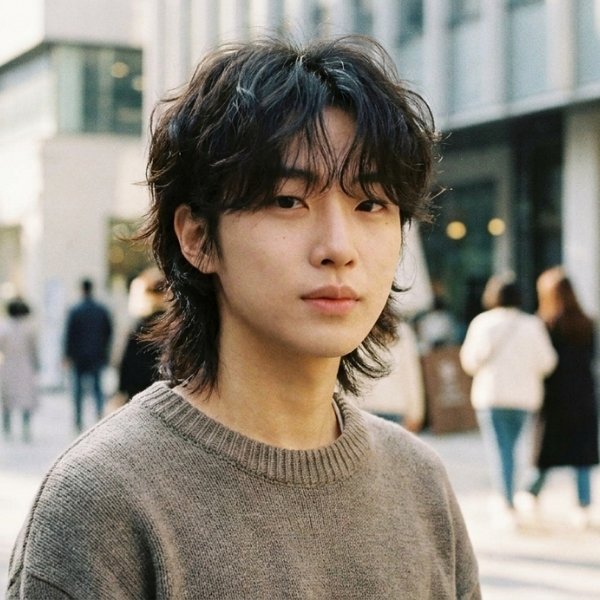
The soft mullet is the gentlest entry point into this whole trend.
Instead of a hard fade, the sides are scissor cut or given a very light taper that blends into the length at the back.
There’s nothing sharp about this cut, which is exactly the point.
It reads as natural rather than “done,” almost like your hair just grew this way on its own.
This variation suits guys who want the mullet silhouette without committing to anything bold or attention grabbing.
Styling tip:
- Rough dry with your fingers instead of a brush
- Apply a light texturizing cream through the mid lengths
- Avoid heavy pomade, since it can flatten the soft, airy finish
Korean Layered Mullet
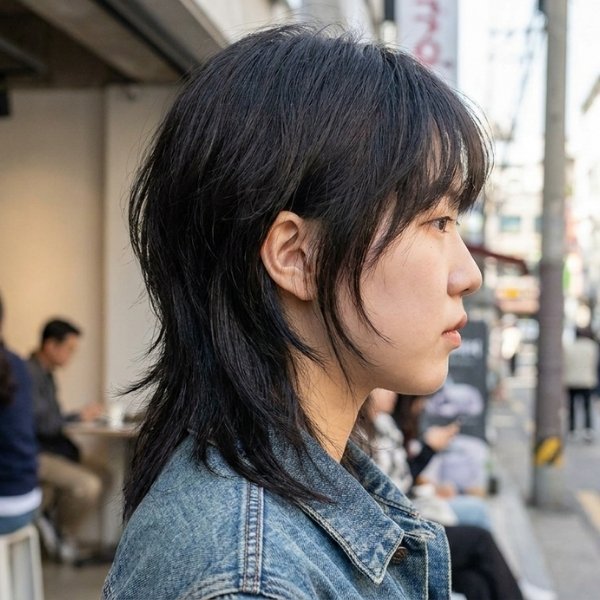
If you want more drama, the layered mullet adds internal layering throughout the crown and back.
This creates visible movement and volume rather than one flat sheet of hair.
The layers also help the hair fall naturally into place, so you spend less time fighting it every morning.
Guys with thick or slightly wavy hair get the most out of this cut, since the layers give the weight somewhere to go instead of sitting heavy.
Styling tip:
- Blow dry with a round brush, lifting at the roots for volume
- Finish with a matte texture powder at the crown
- Use your fingers, not a comb, to separate pieces once dry
Korean Middle-Part Mullet
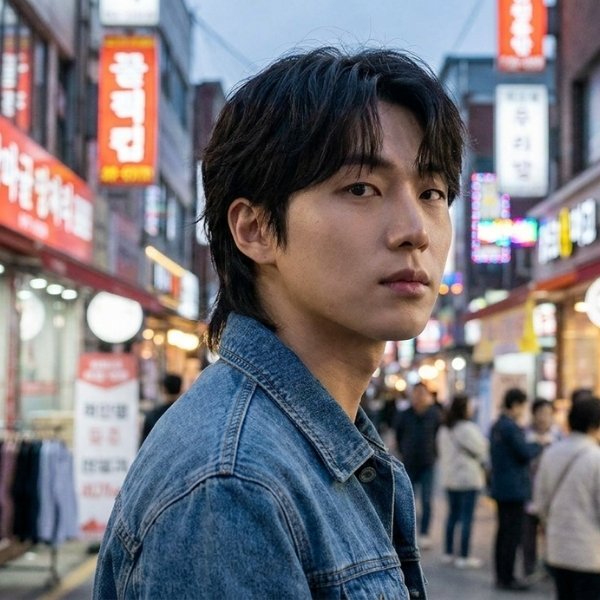
This is the one you’ve probably seen on half your favorite K-pop idols.
The middle part mullet centers the part down the middle of the head, with soft curtain style pieces framing each side of the face.
The back still tapers gradually into mullet length, so it doesn’t feel disconnected from the rest of the cut.
It’s a great option if you want a style that softens strong features, since the framing pieces draw attention toward the eyes rather than the jaw.
Styling tip:
- Blow dry each side away from the center part
- Add a light shine spray to keep strands separated
- Skip heavy gel, which can make the part look stiff instead of natural
Korean Fluffy Mullet
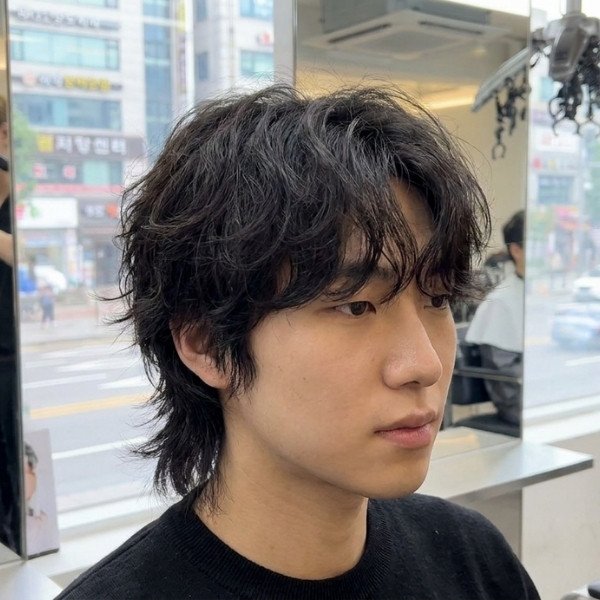
The fluffy mullet is all about volume and texture at the roots.
Think of it as the layered mullet’s bolder cousin, with even more lift through the crown and a noticeably softer, rounder overall shape.
This version tends to be the most fashion forward pick on this list, and it’s popular with younger guys who want something that photographs well and stands out.
It also happens to work great for fine hair, since the layering and lift create the appearance of thickness.
Styling tip:
- Blow dry upside down for maximum root lift
- Rough up the roots with your fingers once dry
- Finish with a matte clay for grip without weighing hair down
Korean Taper Mullet
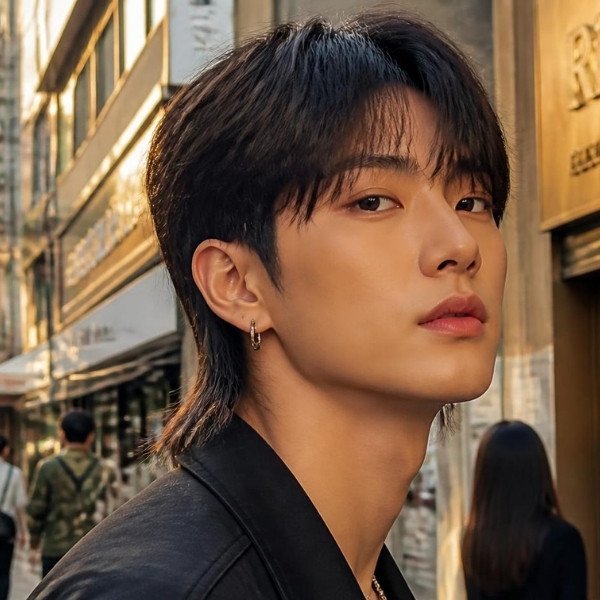
For guys who want a cleaner, sharper edge, the taper mullet pairs closely cropped sides with a longer top that flows into mullet length at the back.
It’s borrowed heavily from the popular two block haircut, which is one of the most requested styles in Korean barbershops right now.
The tapered sides give this version a more polished, put together look, making it a solid choice if you need something that still reads professional at the office.
Styling tip:
- Comb the top up and slightly back for structure
- Use a strong hold wax for all day control
- Keep the sides trimmed every two to three weeks to maintain the contrast
Best hairstyling ideas on Korean Mullets.
Getting the cut right is only half the job.
How you style it day to day decides whether it looks intentional or just unfinished.
Here are a few ideas worth keeping in your back pocket:
- Air dry first, then finish. Let your hair dry naturally for a few minutes before reaching for the dryer. It keeps the texture looking real instead of overworked.
- Layer your products. Start with a lightweight cream for control, then add a texture powder or paste on top for hold and separation.
- Use a diffuser for wavy or curly hair. It protects your natural curl pattern while still giving you shape and volume.
- Don’t overbrush. Brushing tends to flatten the layered look. Fingers give you more control and a more natural finish.
- Match your product to your goal. Shine spray for a sleeker look, matte clay or powder for something more textured and lived in.
A quick face shape reference can also save you a disappointing haircut:
| Face Shape | Recommended Variation | Styling Note |
| Round | Taper mullet | Add height at the crown to elongate the face |
| Square | Soft mullet | Soft layers help soften a strong jawline |
| Oval | Any variation | Most Korean mullet styles suit oval faces well |
| Long | Fluffy mullet | Extra width at the sides keeps proportions balanced |
Korean Mullet Guide Man of the Trend.
If you’re ready to book the appointment, walking in prepared makes a huge difference.
Barbers see a lot of vague requests, so being specific gets you closer to the exact look you have in mind.
Bring reference photos.
Since “Korean mullet” covers such a wide range of lengths and textures, a picture removes any guesswork about what you actually want.
Here’s a simple way to break down the request:
- Describe the sides. Soft taper, scissor cut, or a low fade.
- Describe the top. How much length and volume you want to keep.
- Describe the back. How long you want the nape length, since this is what defines the mullet shape.
- Mention your face shape. A good barber will adjust the proportions to flatter it.
On maintenance, plan on a trim every two to three weeks to keep the sides sharp, since they grow out and lose shape the fastest.
The length at the back can usually stretch to a monthly trim, focused mainly on removing split ends rather than cutting length.
Between visits, keep your neckline and sideburns tidy so the cut still reads as intentional rather than overgrown.
Wash your hair two to three times a week rather than daily, since natural oils actually help the layers hold their texture longer.
Conclusion
The Korean mullet haircut earns its spot as one of the standout men’s hairstyles of 2026 because it’s genuinely flexible.Whether you want something subtle like the soft mullet or something bolder like the fluffy or taper version, there’s a variation that fits your hair type, your face shape, and how much time you actually want to spend styling it.The trick is picking the right variation for you, communicating it clearly to your barber, and staying consistent with trims so the shape holds.
Get that part right, and this is a haircut that can carry you through the whole year without ever feeling boring.Got a favorite variation from this list, or already rocking your own Korean mullet?Drop a comment and let us know which style you’re trying next, and share this guide with a friend who’s on the fence about making the switch.
FAQs
What is a Korean mullet haircut?
It’s a modern take on the classic mullet that uses soft layering and blended sides instead of a harsh, choppy contrast.
Does a Korean mullet work for curly hair?
Yes, though it’s best styled with curl cream and a diffuser to keep the natural curl pattern intact while shaping the layers.
How often should I trim a Korean mullet?
Plan on trimming the sides every two to three weeks and the back about once a month to keep the shape sharp.
Is the Korean mullet high maintenance?
It’s moderate. The cut itself needs regular trims, but daily styling is quick once you learn your product routine.
Can I get a Korean mullet with thin hair?
Yes, the fluffy or layered variation adds volume and lift, which helps fine hair look fuller and more textured.
What’s the difference between a Korean mullet and a Western mullet?
The Korean version focuses on soft blending and movement, while the Western mullet usually has a sharper, more dramatic contrast between the short and long sections.

George is a passionate hair expert with 4 years of experience in hairstyling, grooming, and hair care. He shares practical tips, trends, and professional advice to help readers.