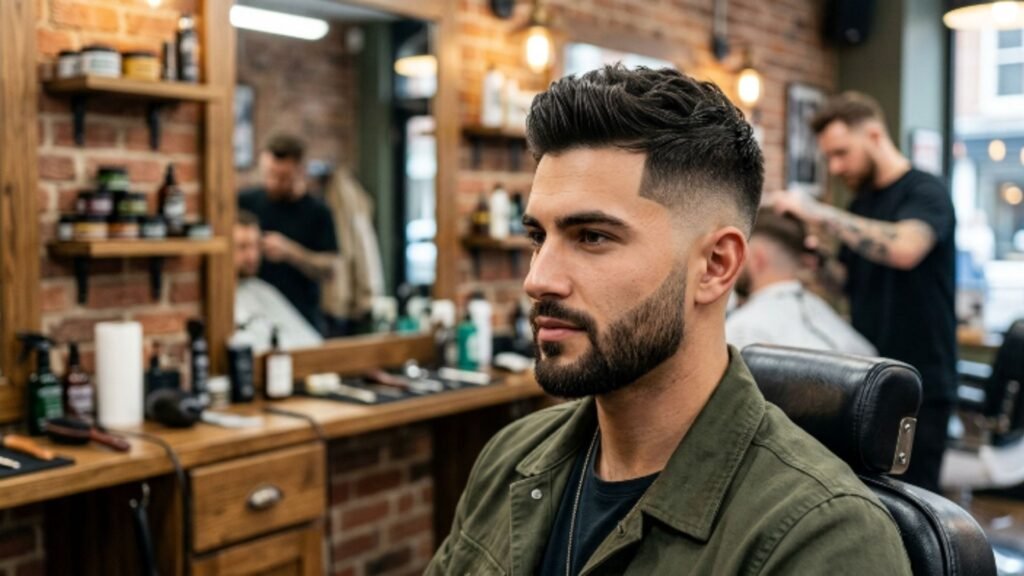
Few haircuts balance boldness and versatility the way a mid fade does. It sits comfortably between the subtle low fade and the dramatic high fade, giving men a style that reads as sharp without tipping into flashy. Whether your hair is straight, curly, thick, or fine, a barber can shape a mid fade around your texture, face shape, and daily routine.
This guide rounds up 37+ mid fade haircuts men actually ask for in the chair right now, along with the details that matter most: which face shapes and hair types each style suits, how to describe it to your barber, and what it takes to keep it looking fresh between visits. By the end, you should be able to walk into any barbershop and know exactly what to ask for.
Table of Contents
Best Mid Fade Haircut Styles to Try This Year
Every style below starts with the same foundation, a fade that begins around the temple, roughly halfway between the ears and the crown. What changes is the length, texture, and finish left on top. Here are the mid fade variations worth trying this year.
Mid Fade with Comb Over
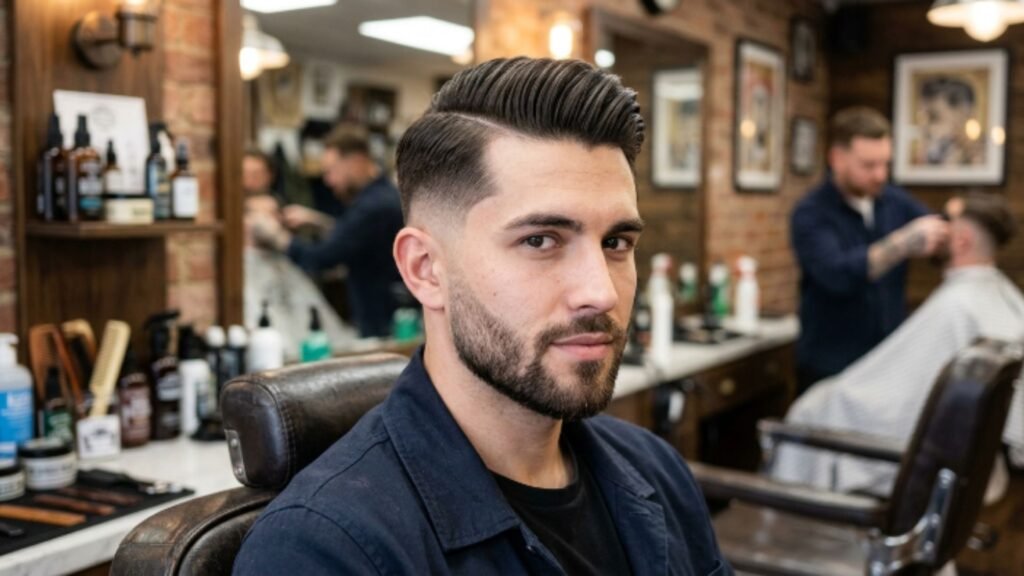
A comb over paired with a mid fade keeps the top section long enough to sweep to one side, while the sides stay tight and blended. It reads polished in an office and sharp on a night out. Straight to slightly wavy hair holds the sweep best. Ask your barber to leave 2 to 3 inches on top and blend the fade starting at the temple. A light pomade adds shine and control without weighing the hair down.
Mid Fade with Textured Crop
The textured crop keeps the top short and choppy, usually an inch or two, with the mid fade cleaning up the sides for contrast. It suits thick or coarse hair that naturally holds texture, and it works especially well on round or square faces. A matte clay or texturizing paste is enough to define the crop without slicking it flat.
Mid Fade with Quiff
Brushed up and slightly back, the quiff needs enough length on top, usually 3 to 4 inches, to create real height and movement. The mid fade underneath keeps the sides from competing with the volume up top. This combination flatters nearly every face shape and works on straight, wavy, or curly hair with the right product, a blow-dryer plus matte clay for straight hair, or curl cream for texture.
Mid Fade with Spiky Hair
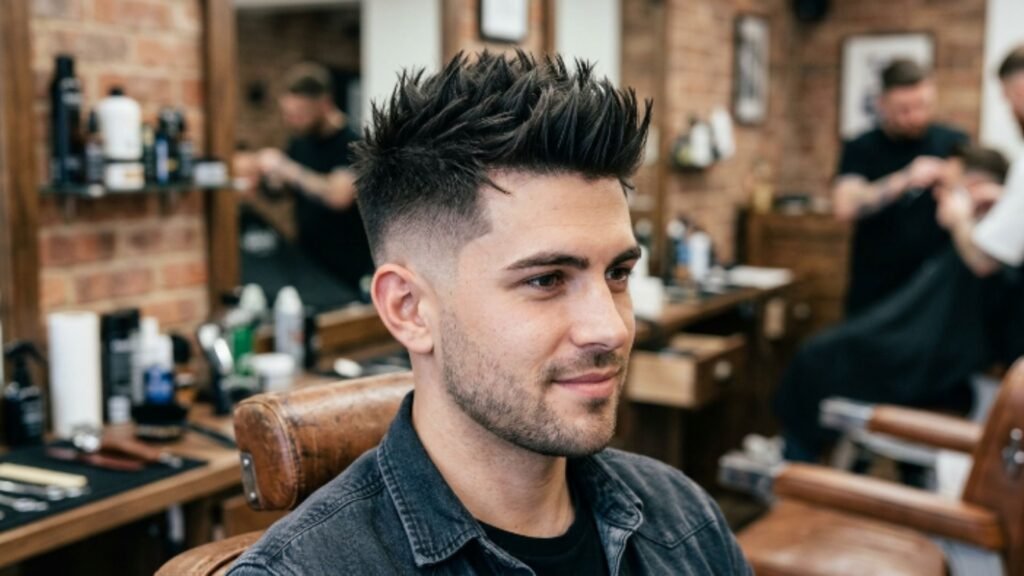
Short, choppy spikes on top with a mid fade underneath create a look that feels youthful without trying too hard. This style suits thicker hair that holds its shape once styled with a strong-hold gel or wax. It pairs well with oval and square face shapes, and it is one of the lower-maintenance spiky looks since the fade grows out gradually rather than losing its line overnight.
Mid Fade with Side Swept Fringe
A side swept fringe angles the front section across the forehead instead of straight back, softening angular features. The mid fade keeps the rest of the head clean so the fringe stands out as the focal point. It works best on straight or lightly wavy hair, and a small amount of cream keeps the sweep in place through the day.
Mid Fade with Curly Top
For men with natural curls, keeping length on top while fading the sides lets the curl pattern do the styling work for you. A mid fade gives just enough contrast to define the curls without overwhelming them. This is a favorite among men who want low daily styling time, since curl cream applied to damp hair is often all that is needed.
Mid Fade with Brushed Forward Waves
Brushed forward, this style directs the hair toward the forehead instead of back or to the side, creating a rounded, textured silhouette. It works particularly well on wavy or curly hair, where the natural pattern shows through once brushed. The mid fade underneath keeps the overall shape from looking too heavy.
Mid Drop Fade
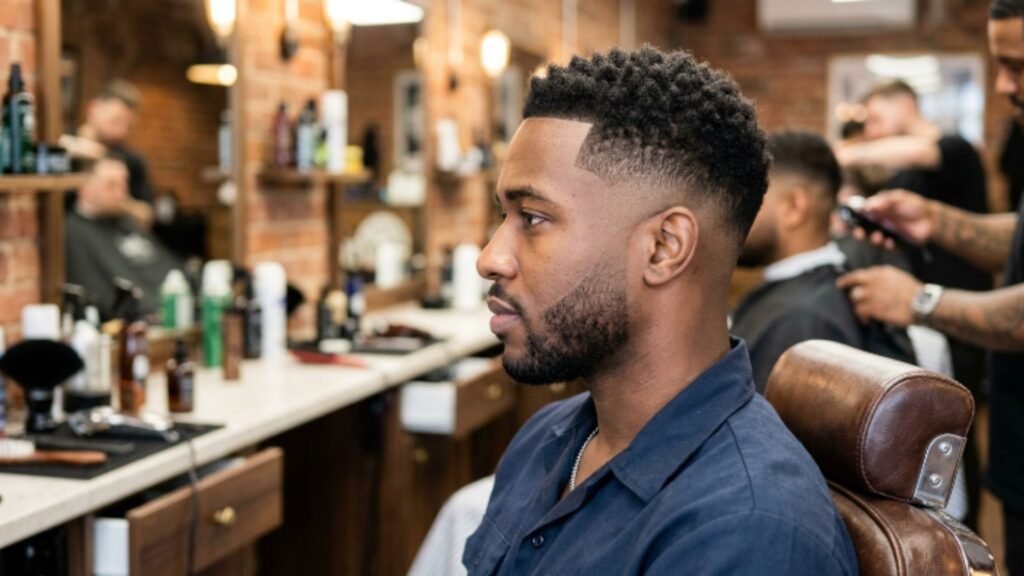
Instead of following a straight line around the head, a drop fade curves gently downward behind the ear, following the natural hairline. Combined with a mid starting point, it adds contour to the profile and suits curly or wavy hair especially well. Tell your barber to start the fade at temple height and let the line drop behind the ear rather than staying level.
Buzz Cut with Mid Fade and Beard
A short, even buzz on top paired with a mid fade and a well-groomed beard is one of the lowest-maintenance combinations on this list. It works for nearly any hair type and face shape, and it pairs naturally with a beard because the eye is drawn to the jawline rather than the top of the head. Touch-ups every 2 to 3 weeks keep both the buzz and the fade sharp.
Mid Fade with Hard Part
A hard part is a thin shaved line following your natural part, giving the haircut a crisp, intentional edge. Combined with a mid fade, it works well with a comb over, textured crop, or slick back on top. It suits straight to wavy hair and needs re-shaving every couple of weeks to stay visible.
Mid Burst Fade
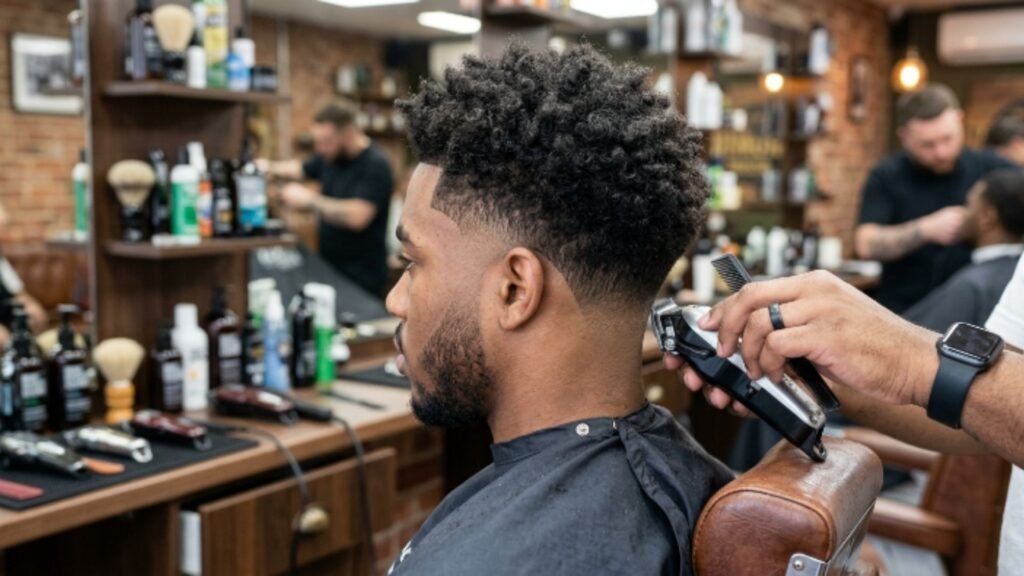
Rather than fading evenly around the entire head, a burst fade curves in a semicircle around the ear, leaving more length toward the back. Starting that arc at mid height works well with mohawks, faux hawks, and natural curly styles, since it frames the top section instead of cutting straight across it.
High Volume Brush Back with Mid Skin Fade and Beard
This is a bold, formal-leaning look where the top is brushed straight back for height and volume, the sides fade to skin at mid height, and a full beard grounds the whole style. It flatters oval and square faces and works best on thick, straight to wavy hair that can hold a brushed-back shape with a strong-hold product.
Long Curly Hair with Mid Skin Fade
Keeping significant length on top, sometimes 4 inches or more, while fading the sides all the way to skin creates strong contrast between the curl volume and the clean sides. This style makes a statement and works especially well for men who want their natural curl pattern to be the centerpiece of the haircut.
Side Part with Mid Fade
A defined side part with a mid fade underneath is one of the most timeless combinations on this list. It offers a clean, structured look with a soft division between the longer top and shorter sides, making it a safe choice for interviews, weddings, or everyday professional wear.
Mid Fade with Pompadour
The pompadour lifts the front section up and back for dramatic height, and a mid fade keeps the sides from looking bulky underneath it. This style needs enough length on top, generally 4 inches or more, and works best with thick or medium-density hair that can hold the lift with a strong pomade.
Mid Fade with Undercut
Technically an undercut uses a sharp, disconnected line rather than a gradual blend, but combining it with a mid fade softens that harsh contrast slightly while keeping the graphic, structured shape. It is popular with men who want an edgier finish without a fully shaved undercut look.
Modern Mullet with Mid Fade
The modern mullet keeps noticeable length at the back while fading the sides at mid height, updating a retro cut into something that reads current rather than nostalgic. It suits men with straight to wavy hair who want a distinctive look that still feels wearable day to day.
Short Hair with Mid Fade
For a simple, low-maintenance option, keeping the top short, around an inch, and fading the sides at mid height creates a tidy, no-fuss haircut. It suits round faces particularly well, since the tighter sides visually lengthen the face. A small amount of matte paste is enough to finish the look.
Mid Fade with Line Up
A line up adds a crisp, straight edge along the hairline and temples, sharpening the front of any mid fade style. It works on nearly any hair type and pairs especially well with short afros, curly tops, or textured crops where a defined outline makes the whole cut look more intentional.
Mid Temp Fade
Short for mid temple fade, this style focuses the fade specifically around the temples and hairline, keeping the front sharp while the back retains more length. It is common alongside textured afros and lined-up styles, and it gives a defined front profile without fully committing to a fade that wraps the entire head.
Mid Taper Fade
A mid taper fade blends more gradually than a skin fade, keeping some length on the sides rather than cutting all the way to skin. The transition starts around the temples and softens as it moves up, giving a polished, professional look that grows out more gracefully between barber visits.
Spiky Hair with Mid Taper Fade
Combining short spikes on top with a softer mid taper on the sides balances a playful top section with a more understated blend underneath. This works well for men who like the texture of spiked hair but prefer a subtler side finish than a full skin fade provides.
Mid Fade with Design
Adding a shaved design, a line, geometric shape, or pattern, into the fade at temple height turns a standard mid fade into a personalized statement. Designs work best on shorter hair where the pattern stays visible, and they need re-shaving every 1 to 2 weeks to stay crisp.
Trendy Parted Style with Mid Fade
A modern take on the classic part, this style keeps textured length on top with a visible part line, finished with a mid fade on the sides. It suits straight to wavy hair and works for men who want something more current than a traditional side part without going as bold as a pompadour.
Long Textured Fringe with Mid Fade
Letting the fringe grow long and textured, often falling toward the eyes, while the sides fade at mid height creates a striking contrast between the soft top and the clean sides. A texturizing spray on damp hair, air-dried or diffused, brings out natural movement in the fringe.
Short Slick Back with Mid Fade and Beard
A short slick back keeps the top close to the head and combed backward, paired with a mid fade and a groomed beard for a compact, tidy silhouette. It is a strong choice for men who want a low-maintenance style that still looks deliberate and sharp.
Mid Skin Fade
A mid skin fade takes the sides all the way to bare skin starting at mid height, creating the sharpest contrast of any style on this list. It suits straight hair particularly well, since flat hair meets the skin line with more precision, and it needs a refresh every 2 to 3 weeks to stay defined.
Mid Fade with Waves
For men with wave patterns, a mid fade highlights the waves by removing bulk from the sides while leaving the top long enough to brush and set. A durag or wave cap at night, along with regular brushing, helps maintain the pattern between cuts.
Mid Fade with Beard Blend
Rather than treating the hair and beard as separate sections, a beard blend fades the sideburns directly into the beard for a seamless transition. Combined with a mid fade on the sides, this creates one continuous, well-groomed shape from the top of the head to the jawline.
Mohawk with Burst Mid Fade
A strip of longer hair runs down the center while both sides burst fade around the ears at mid height. This creates a more prominent central section than a low fade mohawk would, and it suits oval and square face shapes best. Thick hair holds the strip’s shape more easily when styled upward.
Mid Fade with Messy Texture
Tousled, undone, and deliberately imperfect, this style pairs a mid fade with a top that is scrunched or finger-styled rather than combed into place. A matte paste worked through damp hair, then air-dried or roughly blow-dried, gives the texture its casual, lived-in look.
Mid Fade with Short Fringe
Keeping the fringe short and simply cut, rather than long and swept, gives this style a clean, understated finish. The mid fade underneath does most of the visual work, making it a strong option for men who want minimal daily styling.
Mid Fade with Tapered Back
Here the emphasis sits at the nape, where the hair tapers down naturally at the back while the sides carry the mid fade. It creates a rounded, softer finish at the neckline compared to a hard fade line, and it tends to grow out more gracefully.
Mid Fade with Natural Volume
Rather than pressing the top down with product, this style leaves the hair to sit with its natural lift and body, while the mid fade keeps the sides controlled. It works especially well for men with thick or coarse hair who want fullness without added height from styling.
Mid Fade with Clean Crop Top
A clean crop keeps the top short, straight across, and evenly cut, with no fringe sweep or texture play. Paired with a mid fade, it is one of the most polished, low-maintenance combinations on this list, well suited to professional settings and straight to wavy hair.
What is a Mid Fade?
A mid fade is a haircut where the hair on the sides and back gradually shortens starting around the midpoint of the head, roughly level with the temples. It sits between a low fade, which starts near the ears, and a high fade, which starts a few inches above them. That middle starting point is what makes the mid fade one of the most balanced and widely flattering fade heights available.
The top section can be styled in almost any way, short and textured, long and swept, curly, or slicked back, which is why mid fades pair so easily with the wide range of styles listed above. Barbers often describe it as the fade that works for the most people, since it offers noticeable contrast without the boldness of a high fade or the subtlety of a low one.
Types of Mid Fade Haircuts
Once a barber knows the starting height, the next question is how short the fade goes and how the blend is finished. The main variations include:
- Mid taper fade. A softer, more gradual blend that keeps some length on the sides rather than cutting to skin. Grows out more slowly and suits professional settings.
- Mid skin fade. The sides fade all the way to bare skin at mid height, creating the sharpest contrast and needing the most frequent touch-ups.
- Mid drop fade. The fade line curves downward behind the ear instead of staying level, adding contour to the back of the head.
- Mid burst fade. The fade arcs in a semicircle around the ear rather than wrapping the whole head, often paired with mohawks or longer back sections.
- Mid temple fade. Concentrated around the temples and hairline, keeping the front sharp while the back retains more length.
Each type can be combined with any of the top styles above, so a mid taper fade with a quiff looks quite different from a mid skin fade with the same quiff on top.
Mid Taper vs. Mid Skin Fade
These two get confused often because both start at the same height, but they finish very differently.
A mid taper fade blends gradually and keeps visible hair length on the sides, even at its shortest point. The transition is soft, there is no hard line where skin becomes visible, and it tends to look intentional even a few weeks after a cut. It suits fine or thinning hair well, since it avoids exposing scalp, and it holds up better for men who cannot get to the barber every two weeks.
A mid skin fade takes the sides down to bare skin, creating a sharp, high-contrast line against the longer hair on top. It reads bolder and more fashion-forward, and it tends to suit straight or coarse hair best, since flat hair meets the skin line with more precision than looser curl patterns do. The trade-off is maintenance, a mid skin fade typically needs a refresh every 2 to 3 weeks to keep its edge, while a mid taper can often stretch to 3 to 5 weeks.
Neither option is objectively better. The right choice depends on hair type, how often you can get to the barbershop, and whether you want a softer, classic look or a sharper, more contemporary one.
Our Thoughts about Mid Fade Haircuts
After looking at dozens of variations, the mid fade earns its popularity honestly. It is forgiving across hair types, from straight to tightly coiled, and it adapts to nearly any top style without looking out of place. It also sits in a sweet spot for maintenance, sharp enough to look deliberate, but not so extreme that a missed barber appointment ruins the shape.
If you are unsure where to start, a mid taper fade with a textured crop or a side part is one of the safest, most versatile combinations to try first. From there, it is easy to experiment with drop fades, burst fades, or bolder top styles like a pompadour or long curly top once you know how the mid height suits your face.
FAQ’s: What Makes Mid Fade Haircuts So Popular
What’s better, mid-fade or taper?
Neither is universally better. A mid fade gives sharper contrast and a bolder look, while a mid taper offers a softer transition that grows out more gracefully between cuts.
What is a mid taper fade?
A mid taper fade is a gradual blend that starts around the temples and keeps visible hair length on the sides instead of fading all the way to skin.
Do mid fades look good?
Yes, mid fades suit most face shapes and hair types because the fade height sits between subtle and bold, making it one of the most widely flattering options.
Is a mid fade good for straight hair?
Yes, straight hair works especially well with a mid fade, since it lies flat against the skin line and creates a crisp, clean contrast.
What haircut suits straight hair with a mid fade?
A side part, textured crop, or comb over all pair naturally with straight hair and a mid fade, since straight strands hold these shapes without extra product.

George is a passionate hair expert with 4 years of experience in hairstyling, grooming, and hair care. He shares practical tips, trends, and professional advice to help readers.