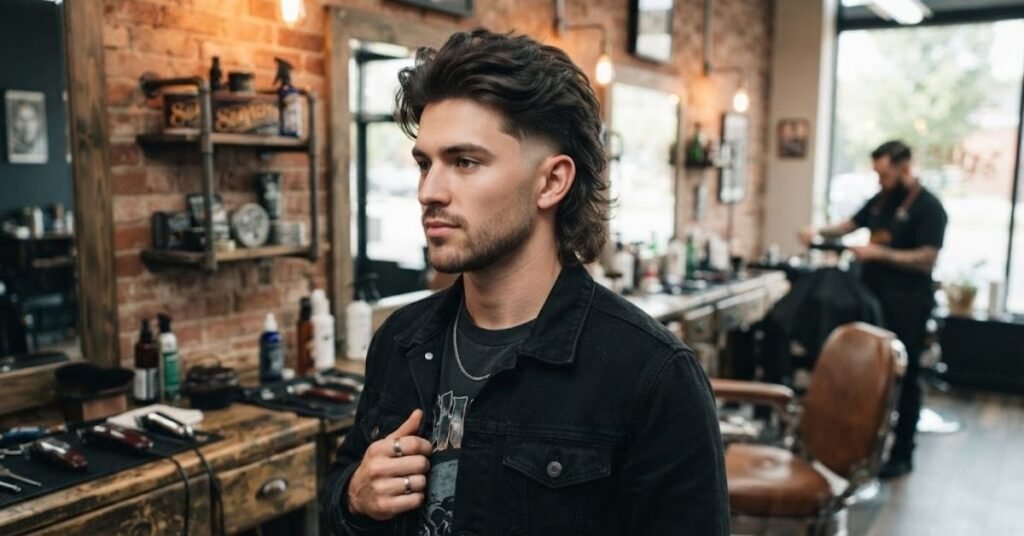
The mullet has spent the last few years shaking off its old reputation, and the mid fade mullet is the version leading that comeback in 2026. It sits in that sweet spot between the low taper mullet’s subtle blend and the high fade mullet’s sharp contrast, which is exactly why barbers report it as one of the most requested combinations this year.
A mid taper mullet works by fading the sides starting around the mid ear area, then blending upward into a fuller, textured top before flowing into the classic long mullet back. It reads as sharp enough for the office yet relaxed enough for the weekend, which is the balance most guys are actually asking for when they sit in the chair.
This guide breaks down the mid taper mullet from every angle: the timeless variations worth trying in 2026, hair type specific versions for curly, straight, wavy, and textured hair, how it pairs with wolf cut and shag layering, and a full styling routine so the cut looks intentional instead of grown out. Whether this is your first mullet or your fifth, you will leave with a clear picture of what to ask your barber for and how to maintain it at home.
Table of Contents
Top Mid Taper Mullet Timeless Variation 2026
Before choosing a specific version, it helps to understand why the mid fade has stayed relevant while more extreme fade heights come and go. A mid fade sits roughly between the top of the ear and the temple, which means it grows out more gracefully than a skin fade and requires fewer touch ups than a high fade. That single detail is what makes it the timeless choice for 2026.
Here are the core mid taper mullet variations barbers are seeing the most this year:
- Classic mid taper mullet. Even length on top, a smooth mid fade on the sides, and a moderate back length that stays above the collar for a wearable everyday look.
- Textured mid taper mullet. The top gets point cut or razor textured for movement, then styled with a matte paste for separation and a slightly undone finish.
- Mid taper mullet with fringe. A soft fringe or curtain front adds a face framing element while the mid fade keeps the sides clean and low maintenance.
- Business mid taper mullet. A tighter, shorter back length keeps the silhouette professional while the mid fade and textured crown still give it personality.
- Long back mid taper mullet. For guys who want the dramatic mullet flow, the back is left to grow well past the collar while the mid fade keeps the sides sharp for balance.
What ties every variation together is the fade placement itself. Ask your barber for the fade to begin around mid ear height using a number two or three guard, blending upward into the longer top through scissor over comb or clipper over comb work. This keeps the transition soft rather than choppy, which is the detail that separates a professional looking mid taper mullet from a cut that looks unfinished.
Mid Taper Modern Mullet
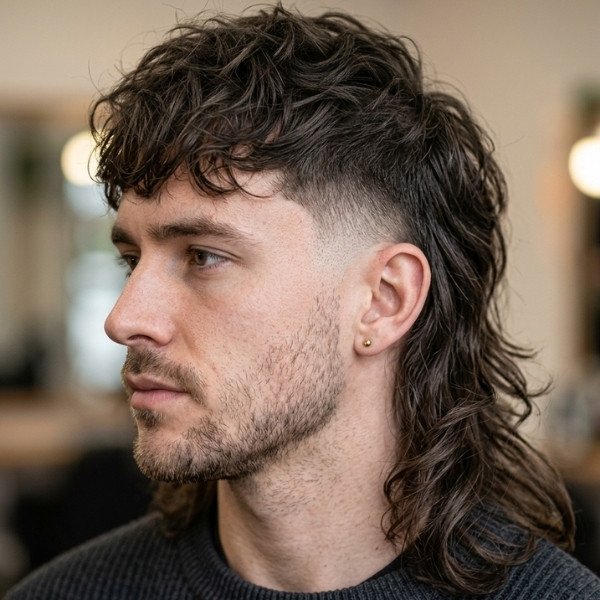
The modern mullet trades the old exaggerated party length for a more tailored silhouette, and the mid taper is arguably its best fade pairing. This version keeps the top fuller and more structured, often with a defined part or a swept back finish, while the mid fade sides add the crisp contrast that makes the whole cut look deliberate rather than dated.
To get this look, tell your barber you want:
- A mid fade starting at ear level, blended with a number two guard moving into a number four near the crown.
- A top length of two to four inches, cut with enough weight to hold shape when styled.
- A back section that tapers naturally into a moderate mullet length, avoiding the blunt cut off look of older mullet styles.
Styling this version is straightforward. Apply a matte clay or texturizing cream to towel dried hair, blow dry the roots upward for lift, then use your fingers rather than a comb to shape the top forward or back depending on your preference. Guys with fine hair should keep the back slightly shorter, since thinner strands can look sparse when left too long, while thicker hair can carry a longer, more flowing back without losing shape.
Mid Taper Curly Mullet
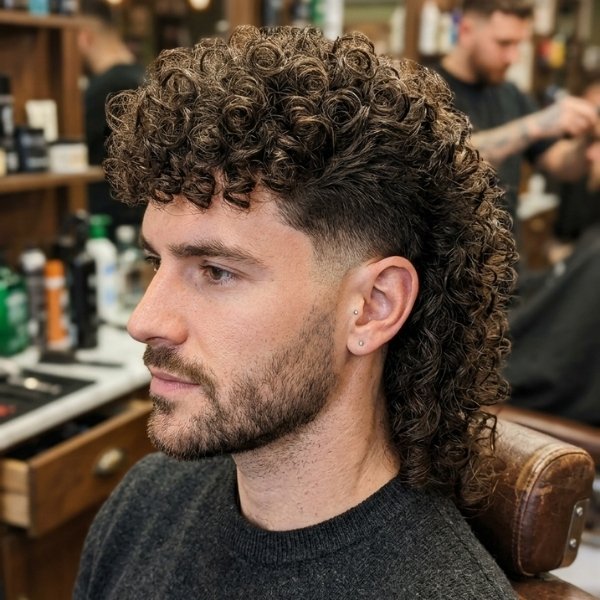
Curly hair adds natural texture that the mid taper mullet can really showcase, but it also needs a different cutting and styling approach than straight hair. Curls shrink as they dry, so barbers familiar with curly textures typically cut the style slightly longer than the final look calls for, then shape it dry once the natural curl pattern settles.
This version works especially well on hair types ranging from loose waves to tighter coils, since the mid fade removes bulk from the sides while leaving enough length on top for the curl pattern to show through. The back is usually left a bit longer than a straight hair mullet to let the curls form natural ringlets rather than a blunt shape.
For maintenance and styling:
- Detangle gently with a wide tooth comb while hair is damp, never dry, to avoid breaking the curl pattern.
- Apply a curl cream or leave in conditioner through mid lengths and ends to define curls without weighing them down.
- Air dry when possible, or use a diffuser on low heat to encourage curl clumping rather than frizz.
- Book a fade touch up every two to three weeks, since curly sides tend to look less defined as new growth appears.
Moisture is the deciding factor for how good a curly mid taper mullet looks day to day. Dry curls lose definition quickly, so a hydrating oil or cream applied on the second or third day between washes keeps the shape looking fresh rather than frizzy.
Mid Taper Straight Mullet
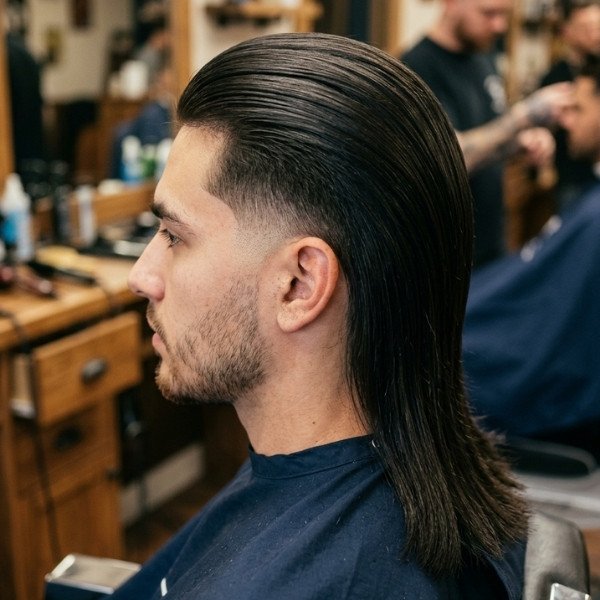
Straight hair holds the mid fade’s clean line better than any other texture, which is why this pairing is one of the most requested combinations for men wanting a sharp, low effort mullet. The contrast between the crisp fade and the smooth, flat lying top and back creates a graphic, almost geometric look that photographs well and styles quickly.
Because straight hair does not add its own texture, most barbers recommend a bit more length on top than they would for wavy or curly hair, since shorter straight hair can look flat without help. A length of three to five inches on top gives enough room to add movement with product, while the back is usually cut in a soft V shape or straight across depending on how bold you want the mullet effect to be.
Styling tips for the straight mid taper mullet:
- Use a lightweight texturizing spray on damp hair before blow drying to prevent the flat, helmet like look straight hair can fall into.
- Blow dry with a round brush, lifting at the roots, then finish with a small amount of matte paste through the ends for separation.
- Avoid heavy gels or waxes, which tend to make straight hair look greasy rather than textured.
- Touch up the fade every two to three weeks, since straight hair grows out more visibly at the hairline than other textures.
Mid Taper Wolf Mullet
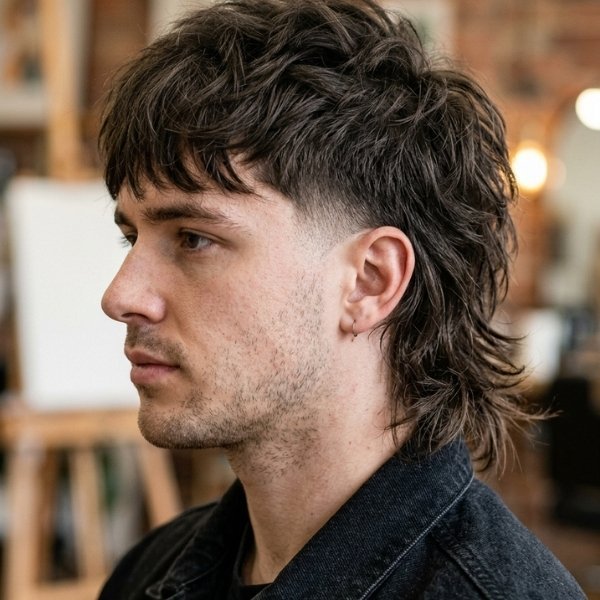
The wolf mullet hybrid combines the heavily layered, voluminous crown of a wolf cut with the mid taper’s clean side fade and the mullet’s signature back length. It is the boldest option on this list, built for guys who want maximum texture and are comfortable with a bit more daily styling effort.
What defines this cut is the deep layering through the crown and top, which creates the choppy, shaggy silhouette the wolf cut is known for, combined with a mid fade that keeps the sides from competing with all that volume up top. Without the mid fade, a wolf mullet can look overwhelming. With it, the sides stay clean while the top does all the visual work.
When requesting this style:
- Ask for heavy layering concentrated at the crown, using point cutting or slide cutting for texture rather than blunt layers.
- Specify a mid fade on the sides, blending into the layered top around ear to temple height.
- Keep the back moderately long so the mullet element still reads clearly rather than disappearing into general shagginess.
Maintenance sits in the medium to high range. Plan on a fade touch up every three to four weeks, with the top and back trimmed every six to eight weeks to keep the layers from collapsing into a shapeless mass. A volumizing mousse applied at the roots followed by a diffuser dry gives this cut its signature lift, and a texturizing spray on the ends throughout the day helps maintain separation as the style settles.
Mid Taper Shag Mullet
The shag mullet leans into softness rather than sharp contrast, pairing feathered, heavily layered hair with a structured mid fade for balance. Where the wolf mullet goes bold, the shag mullet goes relaxed, producing a laid back, effortless look that still reads as intentional thanks to the clean fade underneath.
This version suits straight and wavy hair particularly well, though it can be adapted for looser curl patterns with the right shaping. The feathered layers add softness and movement around the face, while the mid fade keeps the overall silhouette from looking overgrown.
Key features of the mid taper shag mullet:
- Soft, feathered layers throughout the top and crown, cut with a razor or thinning shears for broken, natural looking ends.
- A mid fade on the sides that tapers cleanly into the layered top, usually starting just above the ear.
- A moderate back length that flows into the shag layering rather than standing apart as a distinct section.
To style it, work a light hold texturizing cream through damp hair, then blow dry with your fingers to encourage natural movement rather than a set shape. This cut is genuinely low effort once cut correctly, since the layers are designed to fall into place with minimal intervention, making it a strong pick for guys who want mullet energy without a lengthy morning routine.
Best Styling Guide to Mid Taper Mullet
No matter which variation you choose, the mid taper mullet responds best to a consistent, simple styling routine. Overcomplicating it with too much product or the wrong tools is the most common reason this cut starts looking messy instead of intentional.
Follow these steps for a clean, all day finish:
- Start with damp, not wet, hair. Towel dry until hair is just damp before applying any product, since soaking wet hair dilutes product and makes it harder to control.
- Choose product based on your hair type. Use a texturizing spray for straight hair, a curl cream for curly hair, and a matte clay or paste for added hold and separation on any texture.
- Blow dry with intention. Lift the roots at the crown for volume, and direct the top forward, back, or to the side depending on the specific variation you are wearing.
- Shape with your hands. Fingers create a more natural, undone finish than a comb, which tends to flatten texture and create visible part lines.
- Add a finishing touch. A small amount of shine serum or a light hairspray locks the style in place without weighing the hair down or making it look stiff.
For upkeep, plan on a fade refresh every two to three weeks to keep the mid taper crisp, since this is the section that grows out fastest and most visibly. The top and back typically only need trimming every six to eight weeks, giving the mullet length time to develop while the sides stay maintained. Between appointments, a dry shampoo at the roots keeps the crown looking fresh, and a hydrating conditioner applied only to the mid lengths and ends prevents the longer back section from drying out or splitting.
Frequently Asked Questions
What face shapes suit a mid taper mullet best?
Oval, square, and round face shapes tend to suit the mid taper mullet best, since the fade adds definition along the jaw while the top height can be adjusted to balance facial proportions.
Can curly hair carry a mid taper mullet?
Yes, curly hair works very well with a mid taper mullet, since the natural volume and coil pattern add texture on top while the fade keeps the sides controlled and balanced.
How often does a mid taper mullet need touching up?
Most mid taper mullets need a fade touch up every two to three weeks, while the top and back length can typically go six to eight weeks between full trims.
Is a mid taper mullet high maintenance?
It sits in the medium maintenance range. The fade needs regular upkeep to stay sharp, but the top and back require minimal daily styling once you find the right product routine.
What is the difference between a mid taper mullet and a low taper mullet?
A mid taper starts higher on the head, around ear to temple level, creating more visible contrast, while a low taper starts closer to the neckline for a subtler, more gradual blend.
Does a mid taper mullet work for fine hair?
Yes, though it is best to keep the back section slightly shorter for fine hair, since very long, thin hair can look sparse and lose shape more easily than thicker textures.
What products work best for styling a mid taper mullet?
A matte clay or texturizing paste works well for most hair types, while curl cream suits curly textures and a lightweight mousse helps add lift for wolf or shag variations.
Conclusion
The mid fade mullet earns its place as one of 2026’s most requested cuts because it genuinely works across hair types, face shapes, and lifestyles. Whether you lean toward the clean lines of a modern mullet, the natural texture of a curly version, the bold statement of a wolf hybrid, or the relaxed movement of a shag mullet, the mid taper fade gives every variation the same sharp, balanced foundation.
The real key to pulling off this cut is communication with your barber. Be specific about the fade height, the amount of texture you want on top, and how long you want the back to grow. Pair that with a simple, consistent styling routine and a fade touch up every few weeks, and the mid taper mullet will stay looking intentional and current well beyond a single trend cycle.

George is a passionate hair expert with 4 years of experience in hairstyling, grooming, and hair care. He shares practical tips, trends, and professional advice to help readers.