
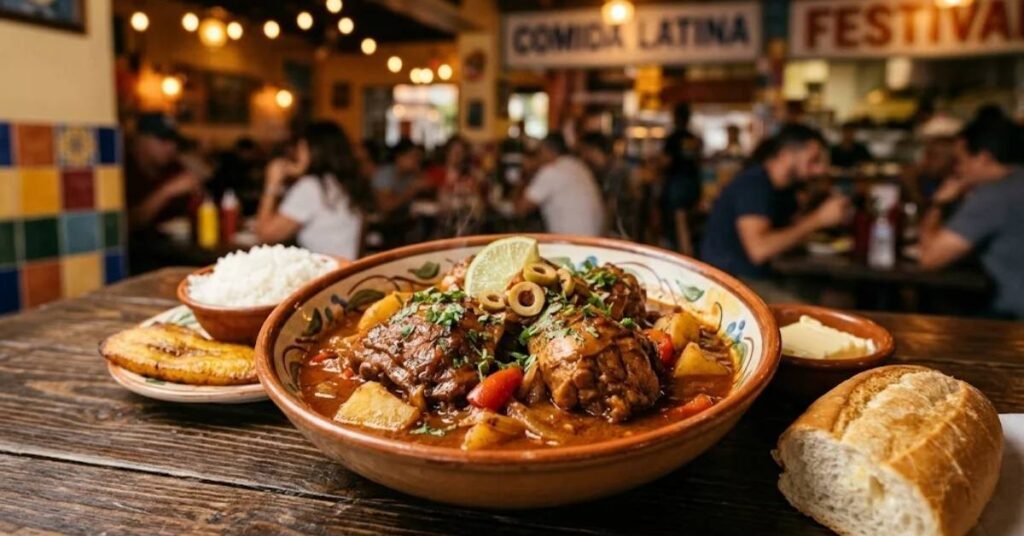
Fricasé de pollo is a Cuban chicken stew. Bone-in chicken simmers in a tomato and sofrito sauce with potatoes, green olives, and often raisins. It is the kind of dish that tastes like Sunday at a grandmother’s house.
If you are searching for fricasé de pollo near me, this guide gives you the full picture. You will learn where the dish comes from, what is in it, how to spot a good plate, and which Cuban restaurants to try. You will also get a simple recipe for your own kitchen.
Quick answer: To find the best fricasé de pollo near you, search for Cuban restaurants that serve comida criolla, then check the daily specials. Many kitchens cook it on a rotating schedule, so call ahead before you go.
Table of Contents
History of Fricásé de Pollo
From French Fricassée to Cuban Comfort Food
The name comes from the French fricassée, a classic method of cooking pieces of meat in a pale, creamy sauce. Cooks in the Caribbean borrowed the name and the idea of a slow, gentle braise. They did not keep the white sauce.
In Cuba, the dish turned red. Tomato, garlic, onion, and bell pepper replaced cream and butter, and the result became a household staple. Food historians do not agree on an exact date, so it is safest to say the dish took shape over generations of home cooking.
The Spanish Touch: Olives, Capers, and Raisins
The salty and sweet notes in Cuban fricasé de pollo have a clear Spanish accent. Green olives and capers, often sold together as alcaparrado, give the sauce its briny edge. Raisins add a soft sweetness that balances the salt.
This pairing shows up in other Cuban classics too, such as picadillo. That shared flavor map is one reason the dish feels so familiar to anyone who grew up eating Cuban food.
Nitza Villapol and the Home Kitchen
Cuban cook and author Nitza Villapol did a lot to popularize the stew. Her cookbook, Cocina al Minuto, taught generations of Cubans how to make everyday dishes. A version of her fricasé de pollo was published by Saveur in 2014.
Fricasé in the Cuban Diaspora
Cuban families carried the recipe to Miami, Tampa, New Jersey, and beyond. Today it sits on the menus of Cuban cafeterias and sit-down restaurants as a daily special. Many people also call it a comfort food for a cold day or a long week.
Nutritional Benefits of Fricásé de Pollo
Fricasé de pollo is a balanced one-pot meal. It combines protein, starch, and vegetables in a single bowl, and it is usually served with rice.
Here is one published example. A home recipe from Adriana’s Best Recipes lists the following per serving:
| Nutrient | Per serving (approx.) |
| Calories | 436 kcal |
| Protein | 29 g |
| Carbohydrates | 27 g |
| Fat | 23 g |
| Fiber | 4 g |
| Sodium | 643 mg |
| Iron | 4 mg |
| Vitamin C | 30 mg |
Your numbers will change with the cut of chicken, the amount of oil, and the portion size. Restaurant plates are often larger and served with rice and plantains, so the totals run higher.
What the main ingredients bring to the table:
- Chicken: a good source of complete protein and B vitamins.
- Tomato and bell pepper: vitamin C and plant compounds such as lycopene.
- Potatoes: potassium and energy from slow-digesting carbohydrates.
- Olive oil and olives: unsaturated fats that make the sauce rich.
Searching for the Best Fricásé de Pollo Near Me
A good plate is easy to describe and hard to fake. Use these steps to find one close to you.
- Search by cuisine, not only by dish. Try Cuban restaurant near me, comida criolla near me, or Cuban cafeteria near me. Fricasé is often a special, so it may not show up in search results by name.
- Check the menu photos and reviews. Look for mentions of the sauce, the tender chicken, and the olives. Review sites such as Yelp let you search for the dish name inside a city.
- Look for ventanitas and family spots. Small Cuban counters and home-style restaurants often cook it fresh as the plato del dia.
- Call ahead. Ask, Do you have fricasé de pollo today? It saves a trip.
- Ask how it is served. The classic plate comes with white rice, and often black beans and sweet plantains.
How to Judge Quality
- The chicken should fall off the bone with little effort.
- The sauce should coat the spoon, not pool like soup.
- You should see olives and capers, and often raisins.
- Potatoes should be soft but still hold their shape.
- The flavor should be savory first, with a small sweet note at the end.
Top Cuban Restaurants Serving Fricásé de Pollo
The list below focuses on Miami, the center of Cuban food in the United States. Menus change often, so confirm before you go. Details were checked in November 2026.
- Sergio’s: The menu lists fricase de pollo as a Chef Special of the Day, offered on Wednesdays. It is described as a savory tomato sauce with fluffy potatoes, briny olives, and tender chicken. Specials depend on availability, so ask your server.
- Havana 1957 Cuban Cuisine (Brickell): A menu listing for the 1451 S Miami Ave location shows a fricase de pollo with chicken marinated in citrus, garlic, onions, and peppers. It is served with white rice and sweet plantains. A lunch version cooked in criolla sauce with raisins and olives was also listed. Prices change, so check the current menu.
- Versailles (Calle Ocho, Little Havana): This landmark opened in 1971. A fricasé was not confirmed on the menu sources used for this guide, so ask whether it is on the daily specials.
- Other Little Havana and Miami names to call: Little Havana Restaurant, La Carreta, Islas Canarias, and Rio Cristal appear in well-known Miami Cuban guides. Fricasé availability is not confirmed here, so phone first.
Living outside Miami? The same method works in Tampa, Orlando, New Jersey, and other cities with large Cuban communities. Search for Cuban cafeterias and check their specials.
Health Benefits of Fricásé de Pollo
This dish can fit into a healthy eating pattern when you pay attention to portions and ingredients.
- Lean protein: Chicken supports muscle repair and keeps you full.
- Vegetables in the sauce: Peppers, onions, tomato, and peas add fiber and vitamins.
- Braised, not fried: Slow simmering needs less oil than frying.
- Heart-friendly fats: Olive oil is a common base for the sauce.
A few things to watch:
- Sodium: Olives, capers, and bouillon can push the salt level up. People who limit sodium should rinse capers and use low-sodium broth.
- Portion size: Restaurant plates with rice and plantains are filling. Share a plate or take half home.
- Skin and fat: Skinless chicken lowers the fat count.
This guide is general food information, not medical advice. If you manage a health condition, ask your doctor or a registered dietitian what works for you.
Tips for Cooking Fricásé de Pollo at Home
The stew is forgiving, and it tastes even better the next day.
Ingredients (serves 4 to 6)
- 3 to 4 lb bone-in chicken pieces
- Juice of 2 limes and 1 orange (or about 1/2 cup sour orange juice)
- 4 garlic cloves, smashed
- 3 tbsp olive oil
- 1 onion and 1 green bell pepper, sliced
- 1/2 cup dry white wine
- 1 can (8 oz) tomato sauce
- 1 lb potatoes, cut into 1-inch pieces
- 1/3 cup pimento-stuffed olives and 2 tbsp capers
- 1/4 cup raisins
- 1 cup peas, thawed
- Salt, pepper, and a bay leaf
Steps
- Marinate the chicken in the citrus juice, garlic, salt, and pepper for at least 1 hour. Overnight gives more flavor.
- Pat the chicken dry and brown it in hot oil in batches. Set it aside.
- Cook the onion and pepper in the same pot until soft, about 6 minutes.
- Add the wine and scrape up the browned bits. Let it reduce by half.
- Return the chicken. Add the tomato sauce, potatoes, olives, capers, raisins, bay leaf, and a splash of water.
- Cover and simmer on medium-low for 40 to 45 minutes, until the chicken and potatoes are tender.
- Stir in the peas in the last 5 minutes. Taste and adjust the salt.
Pro Tips
- Keep peeled potatoes in cold water so they do not turn brown.
- Do not crowd the pot when browning, or the chicken will steam instead of sear.
- Chicken is safe when it reaches 165°F (74°C).
- Boneless breast cooks faster, about 30 minutes, but bone-in thighs stay juicier.
- Skip the raisins if you prefer a more savory sauce.
- Serve with white rice, black beans, and sweet plantains.
- Store leftovers in the fridge for up to 3 days.
Frequently Asked Questions
What is fricasé de pollo?
It is a Cuban chicken stew made with tomato sauce, potatoes, olives, and often raisins. It is usually served with white rice.
Is Cuban fricasé the same as French fricassée?
No. The French version uses a white sauce, while the Cuban dish uses a red tomato and sofrito base.
Does fricasé de pollo have raisins?
Many versions do, for a touch of sweetness. Some cooks leave them out.
What do you serve with fricasé de pollo?
White rice is the classic side. Black beans and fried sweet plantains are common additions.
How do I find fricasé de pollo near me?
Search for Cuban restaurants or cafeterias, check their daily specials, and call ahead to confirm the dish is cooking that day.
Is fricasé de pollo healthy?
It can be a balanced meal with protein and vegetables. Watch the sodium and portion size.
Can you freeze fricasé de pollo?
Yes, for about 2 to 3 months. Potatoes may soften slightly after thawing.
Conclusion
Fricasé de pollo shows how Cuban cooking blends French technique, Spanish flavors, and island comfort. The stew is hearty, balanced, and easy to love.
To find it near you, search for Cuban restaurants, check the daily specials, and call ahead. If you cannot find a good plate, cook your own using the recipe above. Either way, pair it with white rice and enjoy it slowly.

George is a passionate hair expert with 4 years of experience in hairstyling, grooming, and hair care. He shares practical tips, trends, and professional advice to help readers.