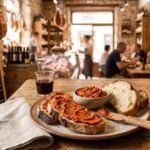
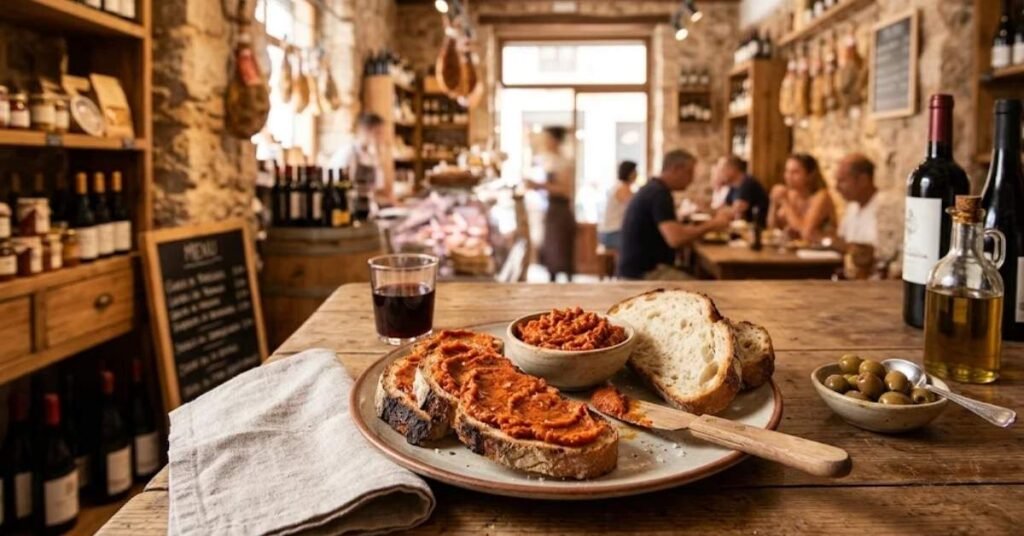
Picture a slice of crusty bread, warm from the toaster, topped with a soft, brick red spread that smells of smoke and sweet pepper. That is sobrasada with bread, one of the simplest and most loved breakfasts in the Balearic Islands.
If you searched for the best sobrasada with bread near me, you probably want two things: a clear idea of what you are about to eat, and a practical way to find a good version close to home. This guide gives you both. You will learn what sobrasada is, where it comes from, how paprika and bread shape the flavor, and how to tell a real Mallorcan product from a weak copy.
Quick answer: Sobrasada with bread is a raw cured pork sausage from Mallorca, spread on toasted rustic bread. For the best result near you, look for Spanish restaurants, tapas bars and specialty delis, and choose a sobrasada with the Sobrasada de Mallorca IGP label and a country style loaf.
Table of Contents
What is Sobrasada?
Sobrasada is a soft, raw cured pork sausage from the Balearic Islands, mostly Mallorca. It is made from minced pork, pork fat, salt, pepper and a generous amount of paprika. Unlike chorizo or salchichón, you do not slice it. You spread it, much like a pâté.
The texture is the key. The fat keeps the meat soft, so the sausage stays creamy even after weeks of curing. The Spanish gastronomist Néstor Luján famously called it the best pâté in the world.
Sweet and Hot Sobrasada
Most producers make two main styles:
- Dulce (sweet): Made with sweet paprika. Mild, rounded and easy for beginners.
- Picante (hot): Made with hot paprika. Warmer on the finish, with a gentle kick.
Common Shapes and Casings
Sobrasada is often named by the casing it is stuffed into. You may see thin, long links or thick, round pieces. Larger pieces cure for longer, and curing can last from about one month to eight months depending on size. A longer cure usually means a deeper, more savory taste.
Where Does Sobrasada Come From?
Sobrasada belongs to Mallorca, and its story is tied to the island’s farm calendar.
The Matança Tradition
For centuries, rural families held a winter pig slaughter called the matança. With no fridge or freezer, every part of the pig had to be preserved. Sobrasada was one of the smartest answers. Salt, spice and slow curing turned fresh meat into food that lasted for months.
Early History
The earliest written mention usually cited is a 1403 letter from King Martin I of Aragon, which refers to a sausage called sobrasada. The recipe likely grew out of wider Mediterranean sausage traditions, and many food historians link the name to the Italian soppressata, although the two products are not the same.
Why Mallorca Suits It
The island air is humid and salty. That climate is hard on dry cured hams, but it works well for a soft sausage that does not need to dry out completely. This is why sobrasada became a local specialty rather than a copy of mainland products.
Protected Status and the Black Pig
The product holds IGP status, which means Protected Geographical Indication. The regulatory council behind Sobrasada de Mallorca was created in 1993. There are two labels worth knowing:
- Sobrasada de Mallorca IGP: Made on the island under set rules. Artificial colorants are not allowed.
- Sobrasada de Mallorca de Porc Negre IGP: Made only from the native Mallorcan black pig, a breed related to the Iberian pig.
The black pig version is the premium choice. It tends to taste richer and costs more, and it is the one most food lovers hunt for.
Where to Find Sobrasada with Bread Near You
The right place depends on where you live. In Mallorca, you can find it almost anywhere. Elsewhere, you may need to search a little harder.
If You Are in Mallorca or Spain
Sobrasada with bread appears on breakfast menus in cafés, bakeries and traditional restaurants across Palma and the island towns. Markets such as Mercat de l’Olivar in Palma are good places to taste and buy. Old pastry cafés like Ca’n Joan de S’Aigo are known for local classics, and many family run delis sell their own sobrasada. Opening hours and menus change, so check before you go.
If You Are Outside Spain
Outside the Balearics, sobrasada with bread is a specialty item. Try these routes:
- Spanish and Catalan restaurants: Ask if sobrasada is on the tapas or breakfast list. Some kitchens serve it on toast with honey or cheese.
- Upscale tapas bars and wine bars: Many add it to small plates because chefs love its flavor.
- Specialty delis and gourmet grocers: Look in the Spanish or charcuterie section.
- Online Spanish food importers: Shops such as La Tienda, Despaña and Brindisa (in the UK) have sold Mallorcan sobrasada. Check current stock and shipping rules for your country.
- Farmers markets and food halls: Some stalls bring in small batches from Spain.
Build Your Own at Home
Buying the sausage and making the toast yourself is often the easiest path. All you need is a good loaf, a knife and about five minutes.
Tips for Finding the Best Sobrasada with Bread Near You
A few habits will save you time and disappointment.
Search Smart
Use specific phrases such as “sobrasada near me,” “Mallorcan restaurant near me” and “Spanish deli near me.” Open Google Maps, read recent reviews and look at photos of the menu. Reviews that mention “Mallorcan,” “Balearic” or “porc negre” are a good sign.
Check the Label
When you buy it, look for these signs of quality:
- The IGP seal for Sobrasada de Mallorca.
- A black pig symbol for the porc negre version.
- A short ingredient list: pork, fat, paprika, salt and pepper.
- A deep rust red color, not a bright artificial orange.
- A soft, smooth and slightly glossy texture.
Ask the Right Questions
When you call a restaurant or shop, ask:
- Is the sobrasada from Mallorca?
- Is it sweet or hot?
- What bread do you serve it on?
- Do you serve it with honey, cheese or tomato?
Know the Safety Basics
Sobrasada is raw cured, not cooked. Most healthy adults eat it without trouble, but pregnant people and anyone with a weak immune system should check official guidance on raw cured meats first. Keep it cool, wrap opened pieces well and follow the storage advice on the label.
The Importance of Artisan Bread in Sobrasada with Bread
Sobrasada is rich and fatty. The bread has to carry that richness without disappearing under it. This is why artisan bread matters so much in sobrasada with bread.
Why Rustic Bread Works Best
A good loaf gives you a crisp crust, an open crumb and a slightly chewy bite. The crisp edge balances the creamy spread, and the airy middle soaks up the oil. Soft sandwich bread turns heavy and greasy. Thin crackers lack the body.
Best Breads to Try
- Pa de pagès: The round country loaf of the Balearics and Catalonia. Toasted, it is the classic base.
- Pa moreno: A darker, more rustic bread that adds a nutty note.
- Sourdough: A tangy loaf that cuts through the fat.
- Baguette or ciabatta: Easy to find and good for a quick bite.
- Coca: A flat, pizza like bread often topped with sobrasada in the islands.
How to Serve It Like a Local
- Slice the bread thickly and toast it until golden.
- Spread a generous layer of sobrasada while the bread is still warm. The heat softens it.
- Add one of the classic finishes: a drizzle of honey, a slice of Mahón or goat cheese, or a few drops of olive oil.
- Eat it right away.
The honey pairing surprises many first time tasters. Sweet against smoky and salty is a combination that works very well.
The Role of Paprika in Sobrasada
Paprika is the soul of sobrasada. It gives the sausage its deep red color, its smoky and sweet aroma and its gentle heat.
From the Americas to the Balearic Table
Peppers reached Spain after the voyages to the Americas, and ground red pepper slowly became part of Spanish charcuterie. Sources disagree on the exact century it entered sobrasada, with accounts pointing to the 17th or 18th century. What is clear is that paprika changed the sausage for good.
More Than Color
Paprika does three jobs at once:
- Flavor: It adds sweetness, warmth and a subtle smokiness.
- Color: It creates the signature rusty red tone.
- Preservation: Its natural compounds help protect the fat from going rancid, which supported long storage.
Sweet Versus Hot Paprika
Sweet paprika keeps the flavor mellow and lets the pork shine. Hot paprika adds a clear heat that works well with honey or mild cheese. If you are trying sobrasada with bread for the first time, start with the sweet version.
Frequently Asked Questions
What is sobrasada with bread?
It is a raw cured Mallorcan pork sausage spread on toasted bread, often finished with honey or cheese.
Is sobrasada eaten raw?
Yes, it is cured, not cooked, and usually eaten as it is. It can also be melted on toast or used in cooking.
What does sobrasada taste like?
It tastes smoky, savory and slightly sweet, with a soft texture like a rich pâté.
How do I find sobrasada with bread near me?
Search for Spanish restaurants, tapas bars and specialty delis, then call ahead or buy a jar online.
What bread is best for sobrasada?
Toasted country bread such as pa de pagès or sourdough works best.
Is sobrasada the same as chorizo?
No. Both use paprika, but sobrasada is soft and spreadable, while chorizo is firmer and sliced.
What is porc negre sobrasada?
It is sobrasada made from the native Mallorcan black pig, usually the premium version.
How should I store sobrasada?
Keep it cool, wrap opened pieces tightly and refrigerate after opening unless the label says otherwise.
Conclusion
Sobrasada with bread is a small dish with deep roots. It carries the memory of the Mallorcan matança, the spice of paprika from the New World and the comfort of a warm slice of country bread.
To find the best sobrasada with bread near you, start with Spanish restaurants and delis, read the label for the IGP seal, and choose real artisan bread. Try the sweet version first, add a little honey, and work your way toward the porc negre and hot styles. Once you taste it properly, you will understand why the islands guard it so proudly.
Notes before you publish
- Local places: I named only businesses that appeared in the sources. Confirm the current hours and menus of Mercat de l’Olivar, Ca’n Joan de S’Aigo and the importers. Add your own local picks if you have them, because “near me” content ranks better with them.
- Conflicting sources: The sources disagree on a few points, so I wrote them cautiously. These are the century paprika entered the recipe, IGP versus PDO wording, and the curing time.

George is a passionate hair expert with 4 years of experience in hairstyling, grooming, and hair care. He shares practical tips, trends, and professional advice to help readers.