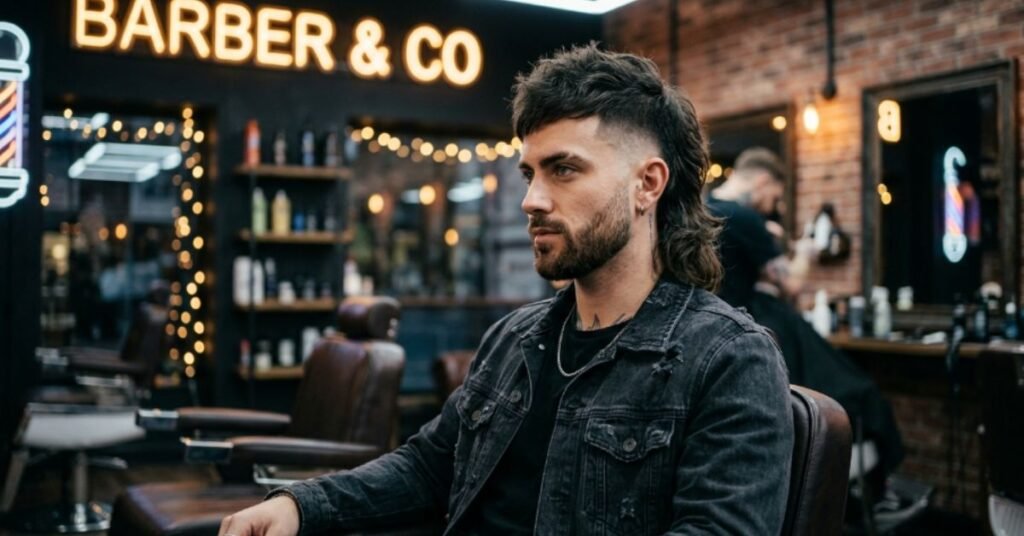
The Mohawk mullet is one of the boldest hairstyles taking over barbershops in 2026. It blends the raised center strip of a classic Mohawk with the extended back length of a mullet, giving you a cut that is part punk rebellion and part modern craftsmanship. This hybrid style works on straight, wavy, and curly hair, and it can be dialed up for a dramatic statement or toned down for a wearable everyday look.
If you have been scrolling through barber reels wondering how to ask for this cut, you are in the right place. This guide breaks down the top 10 Mohawk mullet variations trending this year, explains which fade suits each version, and shares practical styling and care advice so your cut stays sharp between visits.
Table of Contents
Top 10 Modern Mohawk Mullet 2026
Fashion in 2026 is leaning heavily into individuality, and barbers are reporting a steady rise in requests for statement cuts instead of safe, predictable trims. The Mohawk mullet sits right at the center of that shift because it lets you keep short, manageable sides while still having room to experiment with height, texture, and length in the back.
Here is a quick look at the ten variations we will cover in detail below:
- Mohawk Burst Fade Mullet
- Mohawk Taper Mullet
- Mohawk V-Back Mullet
- Mohawk Curly Mullet
- Mohawk Straight Mullet
- Mohawk Wolf Mullet
- Mohawk Drop Fade Mullet
- Mohawk Shag Mullet
- Mohawk Textured Mullet
- Mohawk Fringe Mullet
Each style shares the same foundation, a shaved or faded side with a raised strip on top that flows into a longer mullet tail, but the finish, texture, and fade technique change the entire personality of the cut.
Mohawk Burst Fade Mullet
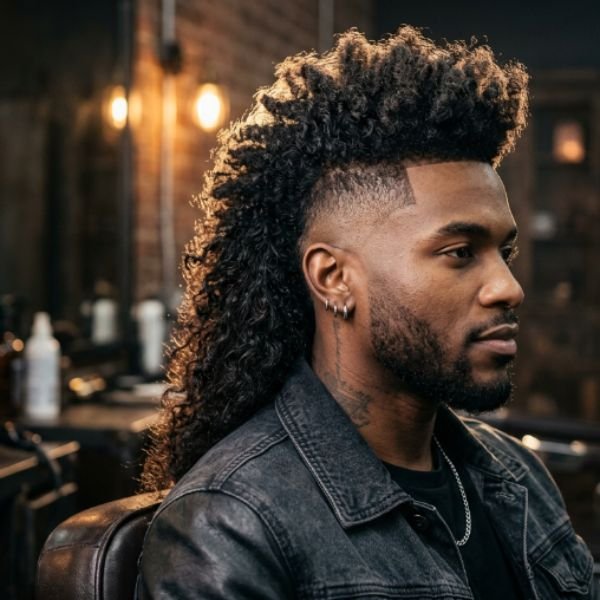
The Mohawk burst fade mullet uses a fade that curves around the ear in a circular motion instead of running in a straight line down the neck. This burst pattern keeps the strip on top looking sharp while the back is left long enough to flow into mullet territory.
Best for: People who want a fade that looks intentional and detailed rather than a plain buzzed side.
Styling tip: Blow-dry the top strip upward while it is slightly damp, then lock the shape in place with a strong-hold matte clay or gel.
Mohawk Taper Mullet
The Mohawk taper mullet swaps a harsh, skin-level fade for a soft taper on the sides. Instead of exposed skin, you get a gradual blend from short to slightly longer hair, which grows out more evenly and looks polished in almost any setting.
Best for: First-timers or anyone who needs a version that reads professional in an office but still has personality after hours.
Styling tip: Apply a light amount of pomade or cream through the back and a matte clay on top to build height without a greasy finish.
Mohawk V-Back Mullet
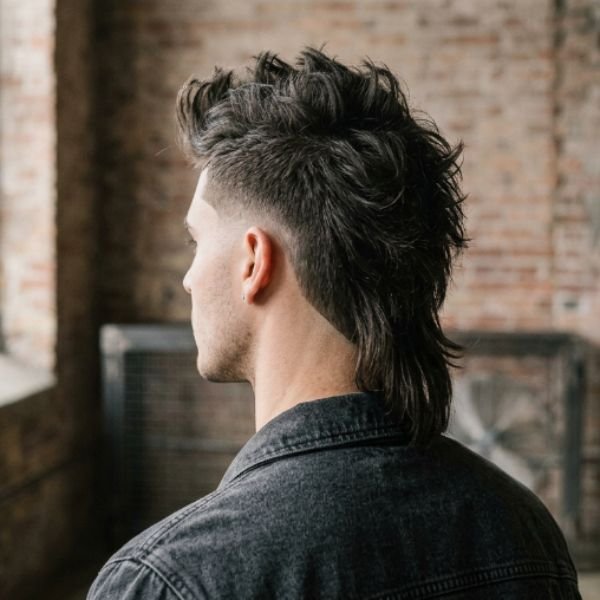
The Mohawk V-back mullet is defined by a sharp, pointed V shape cut into the nape of the neck. That single detail creates a dramatic silhouette that pairs perfectly with the height of the Mohawk strip on top, giving the whole cut a more structured, deliberate finish.
Best for: Clients who already have a fade or taper and want one extra detail that instantly elevates the back of the haircut.
Styling tip: Ask your barber to keep the V-line crisp with a razor for the cleanest possible edge, and plan touch-ups every two to three weeks to preserve it.
Mohawk Curly Mullet
Curls add volume, texture, and personality that a straight Mohawk mullet simply cannot replicate. The sides are usually kept short with a fade or undercut to control bulk, while the strip on top and the mullet tail are left longer so the natural curl pattern can shine.
Best for: Naturally curly or wavy hair types looking for a softer, more bohemian take on the classic Mohawk mullet.
Styling tip: Use a curl cream or mousse on damp hair and let it air dry or diffuse on low heat to define curls without frizz.
Mohawk Straight Mullet
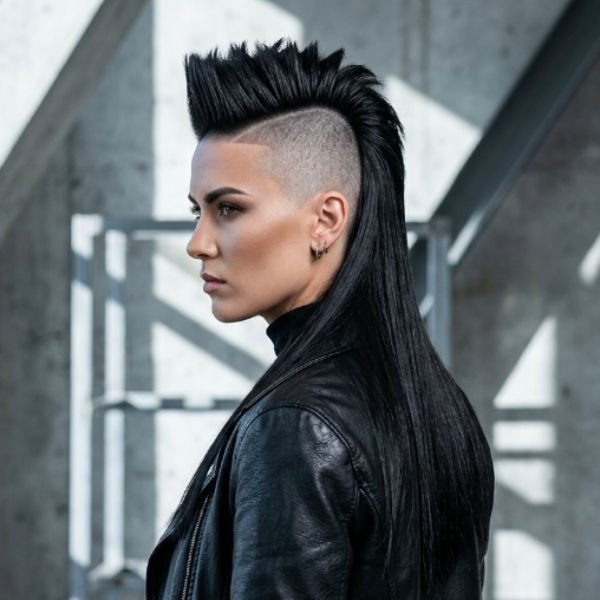
This is the classic, high-contrast version most people picture when they hear “Mohawk mullet.” The sides are buzzed close, the strip on top is styled upward and sharp, and the back tail stays straight with a slightly shaggy finish. It carries strong 1980s punk energy while still feeling current.
Best for: Straight to wavy hair and anyone who wants maximum contrast between the shaved sides and the length on top.
Styling tip: A strong-hold gel or pomade keeps the strip standing tall through a full day, even in humidity.
Mohawk Wolf Mullet
The Mohawk wolf mullet borrows heavily textured, shaggy layers from the wolf cut trend and merges them with the raised Mohawk strip. The result is a rugged, lived-in style with plenty of movement instead of sharp, defined lines.
Best for: Thick or medium-density hair that can hold heavy layering without looking thin.
Styling tip: Use a texturizing spray or sea salt spray and scrunch the back sections to enhance natural movement and shape.
Mohawk Drop Fade Mullet
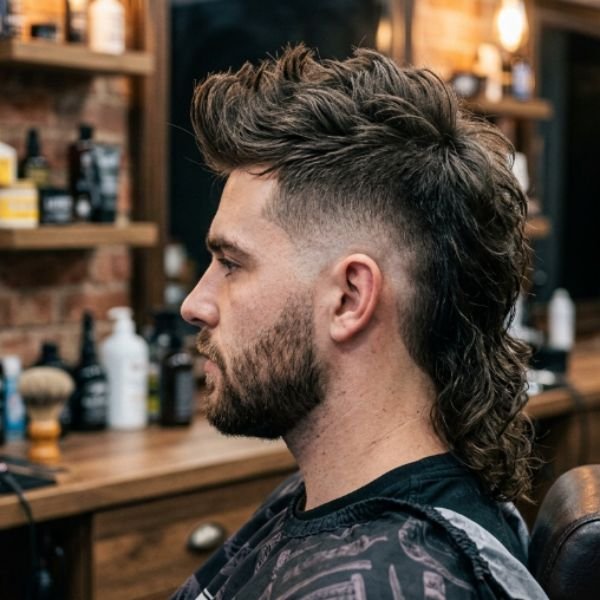
Instead of running in a straight horizontal line, the drop fade curves downward behind the ear before leveling out at the back of the head. That subtle drop softens the transition between the shaved sides and the mullet tail, creating a smoother, more blended finish than a standard fade.
Best for: Anyone who wants the sharpness of a fade without a harsh, choppy transition into the longer back section.
Styling tip: Keep the top slightly rougher and more textured to contrast the smooth precision of the drop fade underneath.
Mohawk Shag Mullet
The Mohawk shag mullet leans into heavy layering throughout the top and back, giving the whole cut a relaxed, effortless feel. Rather than one solid strip, the top is broken up into feathered layers that flow directly into a shaggy mullet tail.
Best for: People who want the Mohawk mullet silhouette without committing to sharp lines or daily heavy styling.
Styling tip: Rough-dry with a diffuser and finish with a light matte paste to keep the layers separated rather than clumped together.
Mohawk Textured Mullet
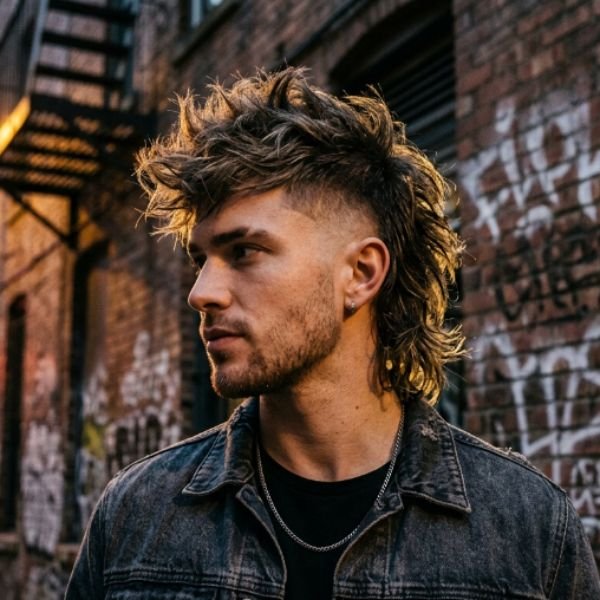
Texture is the star of this variation. Point-cut or razor-textured ends throughout the top and back remove bulk and add a choppy, piecey finish that photographs well and looks intentional even on a low-effort day.
Best for: Fine to medium hair that needs extra texture to avoid looking flat.
Styling tip: Work a small amount of clay between your palms and press it into the ends rather than the roots to keep pieces separated without weighing hair down.
Mohawk Fringe Mullet
The Mohawk fringe mullet adds a face-framing fringe at the front while keeping the raised strip and longer back intact. It softens the overall look and gives you a style detail up front that balances the boldness happening at the back of the head.
Best for: Rounder or longer face shapes that benefit from a fringe softening the forehead area.
Styling tip: Blow-dry the fringe forward and slightly to one side, then set with a light-hold cream so it moves naturally instead of sitting stiff.
Mohawk Mullet Styling
Getting the cut right at the barbershop is only half the equation. Daily styling is what keeps a Mohawk mullet looking sharp instead of shapeless. A simple, repeatable routine works better than a long, complicated one.
- Start with clean, slightly damp hair for the best control and product absorption.
- Blow-dry the crown first using a round brush, lifting at the roots to build height in the Mohawk strip.
- Let each section cool before releasing it. This locks the shape in place and adds shine.
- Brush or comb the back tail downward for a smooth, natural flow instead of pulling it upward.
- Finish with a lightweight product such as matte clay, sea salt spray, or a light-hold cream depending on your hair type and the finish you want.
- Avoid overloading the top with product. A small amount worked evenly through the hair looks far more natural than a heavy application.
Most barbers agree that the crown area shapes the entire look, so spend the majority of your styling time there before moving on to the sides and back.
Best Fade for Mohawk Mullet
Not every fade works the same way with a Mohawk mullet, since the goal is to complement the height on top rather than compete with it.
- Burst fade: Ideal if you want a detailed, curved fade around the ear that still feels bold and eye-catching.
- Taper fade: The safest and most versatile choice, especially for first-timers or workplaces with a conservative dress code.
- Drop fade: A great middle ground that softens the transition between the shaved sides and the longer mullet tail.
- Skin fade: Delivers the sharpest possible contrast against the Mohawk strip, best suited to straight or wavy hair that holds a clean line.
Your barber can also recommend a fade based on your hair density and how fast your hair grows, since finer or faster-growing hair may need more frequent touch-ups to keep sharper fades looking crisp.
Care Tips for Mohawk Mullet
A Mohawk mullet rewards consistency far more than effort. A short daily routine paired with the right maintenance schedule keeps the cut looking deliberate instead of overgrown.
- Trim on schedule. Clip the sides and Mohawk strip every 4 to 6 weeks to maintain contrast, and trim the back tail every 8 to 10 weeks to prevent split ends without sacrificing length.
- Wash smart, not often. Washing too frequently strips the natural oils that help the strip hold its shape. Two to three washes per week with a sulfate-free shampoo is usually enough.
- Condition the back regularly. The mullet tail is older hair and needs more moisture than the shorter, newer growth on top. A weekly deep-conditioning treatment keeps it from looking dry or brittle.
- Protect against heat. Apply a heat protectant before blow-drying, and avoid excessive daily heat styling to keep hair strength intact over the months it takes to grow out the back.
- Switch to a silk or satin pillowcase. This small change reduces friction overnight, cutting down on frizz and helping the shape last longer between styling sessions.
- Book regular barber check-ins. Even between full trims, a quick line-up or fade refresh every two to three weeks keeps the cut looking sharp rather than growing out unevenly.
FAQS
What exactly is a Mohawk mullet?
It is a hybrid haircut that combines a raised center strip like a Mohawk with the extended back length of a mullet, creating a bold, edgy silhouette.
How long does it take to grow a Mohawk mullet?
Hair grows roughly half an inch per month, so most people need 6 to 12 months to reach a full mullet length in the back while keeping the sides trimmed short.
Does a Mohawk mullet work with curly hair?
Yes, curly and wavy hair actually adds extra volume and texture, making styles like the Mohawk curly mullet look fuller and more dynamic.
How often should I get it trimmed?
Trim the sides and top every 4 to 6 weeks and the back tail every 8 to 10 weeks to keep the shape sharp while still growing out length.
Is the Mohawk mullet only for men?
No, this style works on any gender. Barbers are seeing rising demand from women who want the same bold silhouette with softer, layered styling.
What is the easiest Mohawk mullet variation to maintain?
The Mohawk taper mullet is the lowest-maintenance option since it grows out evenly and needs only light daily styling to look polished.
Can I style a Mohawk mullet without heat tools?
Yes, a sea salt spray or texturizing paste applied to damp hair and air-dried can create a relaxed, textured finish without any heat damage.
Is a Mohawk mullet appropriate for a professional workplace?
Softer versions like the Mohawk taper or drop fade mullet tend to read as polished and workplace-friendly compared to a high-contrast skin fade.
Conclusion
The Mohawk mullet earns its spot as one of 2026’s standout hairstyles because it refuses to sit still. From the sharp precision of a burst fade to the relaxed texture of a wolf cut, there is a variation here for every hair type, face shape, and lifestyle. Pick the version that matches how bold you want to look, stay consistent with trims and daily styling, and this cut will reward you with a look that feels both retro and completely current.

George is a passionate hair expert with 4 years of experience in hairstyling, grooming, and hair care. He shares practical tips, trends, and professional advice to help readers.