

Thinking about getting a mullet but worried it’ll look messy or dated? Or maybe you’re scared your barber won’t get it right. That’s a fair worry, and this guide fixes it.The Mexican mullet is a modern haircut with short, faded sides, a textured top with a blunt fringe, and a longer, flowing back.
In 2026, the best versions are the burst fade, taper, shaggy, V-back and short mullet.Keep reading for barber scripts, styling tips and mistakes to skip. Drop a comment with your favorite style at the end.
Table of Contents
How To Make Mexican Mullet Styles in a Full Guide.
This look grew out of Takuache culture and got a global push from Latin music stars like Peso Pluma. It works because the sides stay clean while the back keeps its length.
You need three things: faded sides, a textured top and a thick, shaped back. Without that balance, it just looks like grown-out hair.
Step by Step: How the Cut Comes Together
- Start with hair that’s at least 4 inches on top and 5 inches at the back.
- Ask for a fade or taper on the sides.
- Have the barber cut a blunt fringe or point-cut the top for texture.
- Ask for a scissor blend where the fade meets the length.
- Add layers in the back so it moves instead of hanging flat.
What To Tell Your Barber
Show a photo first, then use words. Give lengths in inches, not clipper guards, because guards differ between machines.
Try this: “Burst fade on the sides, top at 3 inches with a straight fringe, back at 5 to 6 inches with layers.” Clear, simple and hard to misread.
Best Mexican Mullet hairstyle 2026
The best style depends on your face shape, hair type and how much time you’ll spend on it. Here’s a quick match-up.
| Style | Best For | Maintenance |
| Burst fade mullet | Round or square faces | Medium |
| Taper mullet | Any face, first-timers | Low |
| Shaggy mullet | Wavy or curly hair | Low |
| V-back mullet | Straight, thick hair | Medium |
| Short mullet | Beginners, work settings | Low |
If you’re unsure, the taper is the safest pick. It’s forgiving, easy to grow out and fits most hair textures.
Got thick, wavy hair and a bit of confidence? Go shaggy. Want something sharp with more contrast? Go burst fade.
Mexican Burst Fade Mullet
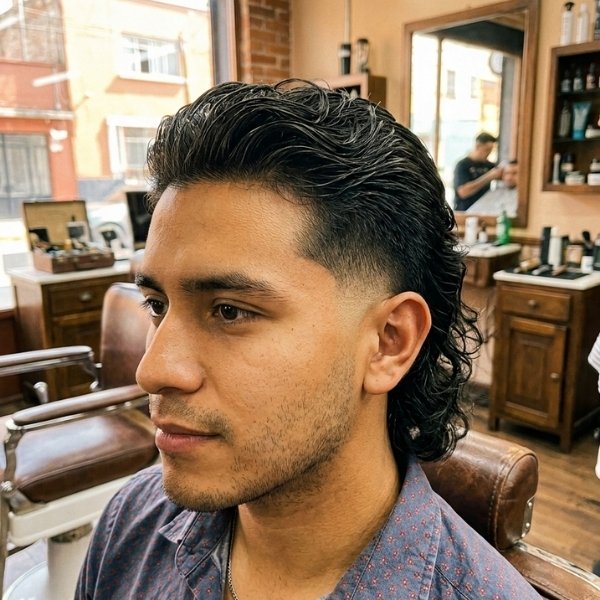
The burst fade curves around the ear instead of running straight up the side. That rounded shape makes the longer back stand out even more.
It suits guys who like a fresh, sharp look and don’t mind regular visits. Because the fade grows out faster, plan a trim every 3 to 4 weeks.
Ask for a scissor blend at the top of the fade so there’s no hard line. Style the top with matte paste for texture.
Mexican Taper Mullet
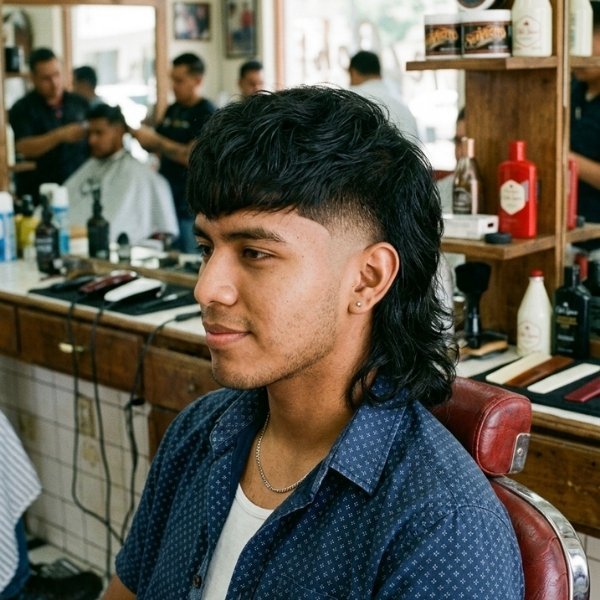
A low taper shortens the hair gently around the ears and neckline while the back keeps its length. It’s clean without being loud.
This is the easiest version for school, work or family events. It also lets the textured top do the talking.
Want a bit more edge? Move to a mid taper. Your barber can adjust it in seconds.
Mexican Shaggy Mullet

The shaggy version is loose, layered and full of movement. It looks best on wavy hair or curly hair, though straight hair can work with the right cut.
Barbers usually use point cutting or razor work to create the messy, lived-in feel. It looks effortless, but the cut is very intentional.
Use sea salt spray on damp hair, scrunch, then air dry. Skip heavy gels because they flatten the shape.
Mexican V‑Back Mullet

The V-back shapes the ends of the back section into a soft point. That shape adds structure and makes the whole cut look finished.
It’s a great fit for thick, straight hair that tends to fall in a blunt line. The point draws the eye down and adds a bit of edge.
Keep the V neat with a trim every 6 to 8 weeks. Otherwise the shape blurs as it grows.
Mexican Short Mullet

Not ready for a long tail? The short version keeps the back around 2 to 3 inches. It’s the best starter cut for a first-time mullet.
It’s also easier to hide at work or school, and it grows into a longer style later. Think of it as a trial run with less commitment.
Pair it with a mid taper and a textured fringe. Simple, sharp and low effort.
Mexican Mullet Easiest Styling.
Good news: most of the work happens at the barbershop. At home, you just need a few basics.
- Hair cream on damp hair for soft hold
- Matte paste or texture powder for the top
- Sea salt spray for waves
- Curl cream for curly hair
- A wide-tooth comb for the back only
For a quick routine, apply cream to damp hair, part it down the middle if you like, and air dry. Add a pea-sized amount of paste to the top for definition.
Take care of the back length too. A few drops of argan oil on the last 2 to 3 inches keeps the ends from looking dry.
Mexican Mullet Ideas trending.
Trending versions this year mix classic shapes with small twists. Here are the ones barbers keep hearing about:
- Curly mullet with a tight taper and natural curl in the back
- Skin fade mullet for maximum contrast
- Bleached or blonde front with darker faded sides
- Colored tips on the last 2 inches of the back
- Middle part mullet with a soft, natural top
- Edgar-style mullet with a straight, blunt fringe
Pick one twist, not five. A single bold detail looks intentional, while too many looks messy.
Which Mexican Mullet Suits Your Face Shape and Hair Type?
Match the cut to your features and you’ll get better results with less styling. Here’s a simple guide.
- Round face: burst fade with more height on top
- Square face: taper with a softer, textured fringe
- Oval face: almost anything works
- Curly hair: longer top so curls can form
- Straight, thick hair: V-back or layered cut
Fine hair? Keep the back a bit shorter so it doesn’t look thin. Your barber can point-cut the ends for a fuller look.
Common Mexican Mullet Mistakes To Avoid
Most bad mullets come from a few easy errors. Skip these and you’ll look sharper.
- Using heavy gel or shiny pomade, which kills the texture
- Letting the back grow with no layers or shape
- Asking for a cut in “guards” instead of inches
- Skipping trims on the fade, so it grows out messy
A quick fix is booking a trim schedule. Fade every 3 to 4 weeks, back shape every 8 to 12 weeks.
Conclusion
The Mexican mullet is bold, flexible and easy to wear once you pick the right version. Start with a taper or short mullet if you’re nervous, and go for a burst fade or shaggy cut when you’re ready.
Bring a photo, give your lengths in inches, and keep your products light. That’s really the whole secret.Which style are you trying first? Leave a comment below, and share this guide with a friend who’s been thinking about the cut.
FAQs
What is a Mexican mullet?
It’s a mullet with faded sides, a textured top with a fringe, and a longer back, popularized through Takuache culture and Latin music.
Which fade is best for a Mexican mullet?
The burst fade and low taper are the most popular, with a mid taper as a strong middle option.
How long should my hair be before getting one?
Aim for about 4 inches on top and 5 inches at the back for a full version.
Can I get a Mexican mullet with curly hair?
Yes. Curly and wavy hair suit it well, especially with a longer top and a tapered side.
How often should I trim it?
Refresh the fade every 3 to 4 weeks and shape the back every 8 to 12 weeks.
What products work best?
Use light products like hair cream, matte paste, sea salt spray or curl cream, and avoid heavy gels.
Is the Mexican mullet good for work or school?
Yes, especially the taper and short versions, which look clean and neat.
How do I ask my barber for it?
Bring a photo and give lengths in inches, plus your fade type and fringe style.

George is a passionate hair expert with 4 years of experience in hairstyling, grooming, and hair care. He shares practical tips, trends, and professional advice to help readers.