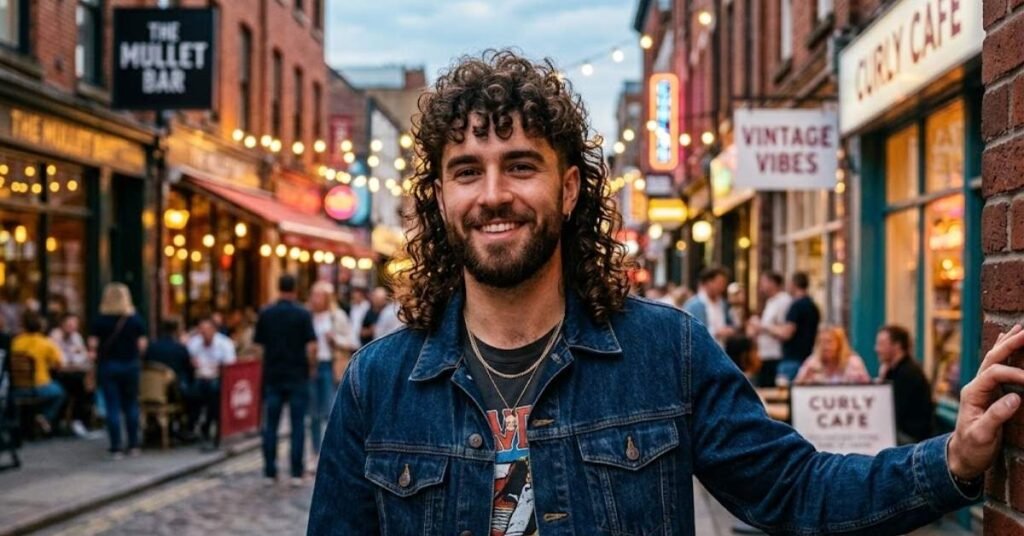
The curly mullet has moved far past its retro roots. In 2026, it sits at the center of modern barbering, mixing natural texture with sharp, tailored shapes. If you have curly, coily, or wavy hair and want a cut that feels current rather than costume-like, the curly mullet gives you volume up top, definition through the sides, and movement at the back without sacrificing structure.
This guide breaks down the ten most requested curly mullet variations of the year, plus everything you need to know about styling, maintenance, and product choices to keep your curls looking intentional between barbershop visits.
Table of Contents
Curly Mullet Hair: Hairdressing, Hair Fashions and Hair Care
A curly mullet is not a single haircut. It is a framework that a stylist adapts around your curl pattern, face shape, and hair density. That is why two people with a “curly mullet” can look completely different from each other. One might have a tight, faded silhouette with 3B coils; another might wear loose 2C waves with a soft, shaggy back.
Understanding the hairdressing side (how the cut is built), the fashion side (how it is worn and styled), and the care side (how it is maintained) is what separates a curly mullet that looks deliberate from one that just looks grown out.
Top 10 best Hair styles
Here is a quick-reference list of the most popular curly mullet styles trending this year, before we break each one down in detail.
- Curly Modern Mullet Fade
- Curly Burst Fade Mullet
- Curly Taper Mullet
- Curly Wolf Mullet
- Curly Shag Mullet
- Curly V-Back Mullet
- Curly Layered Mullet
- Curly Fringe Mullet
- Curly Drop Fade Mullet
- Natural Curl Mullet Style
Each of these works with different curl types, from loose waves to tight coils, so the right pick depends on your natural texture, hair density, and how much daily styling time you’re willing to put in.
Curly Modern Mullet Fade
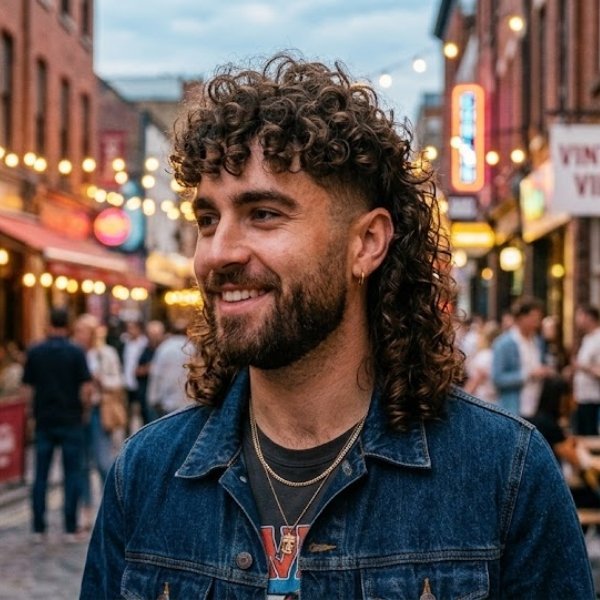
The Curly Modern Mullet Fade pairs a sharp mid or high fade on the sides with full, bouncy curls left long on top and at the crown. The contrast between the closely clipped sides and the untouched curl volume is what makes this cut feel modern instead of dated.
It works best on medium to thick curl density (type 2C to 3B) and suits round, oval, and square face shapes because the fade slims the sides while the curls add height. Ask your barber for a skin fade or a mid fade depending on how bold you want the contrast to look.
Curly Burst Fade Mullet
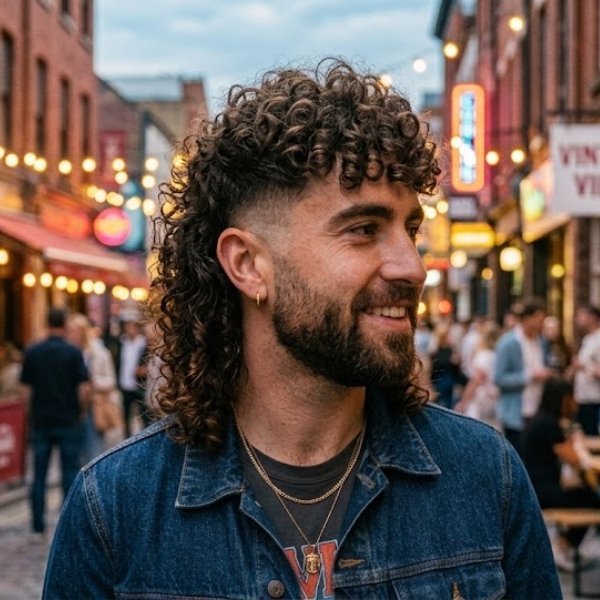
The Curly Burst Fade Mullet rounds the fade around the ear instead of cutting it in a straight line, which softens the transition between the short sides and the longer curls on top. This rounded burst pattern also blends naturally into a longer curly tail at the nape.
This style suits people who want a fade without harsh, geometric lines. It flatters oval and heart-shaped faces particularly well, and it pairs nicely with a trimmed beard for a polished, finished look.
Curly Taper Mullet
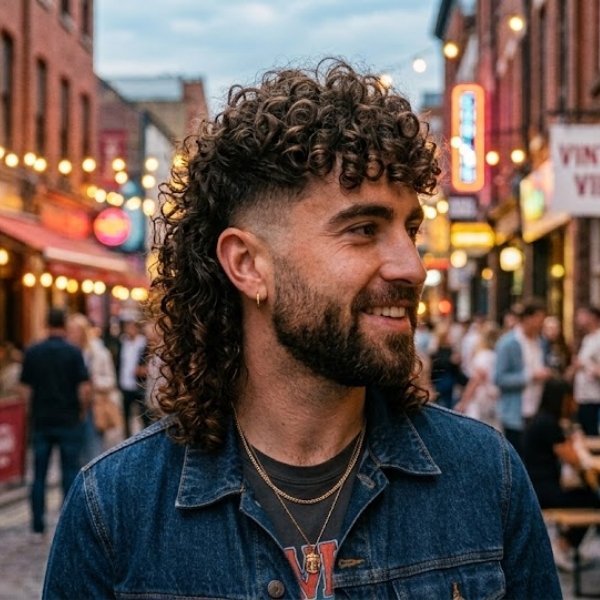
The Curly Taper Mullet is the lower-maintenance cousin of the fade mullet. Instead of a sharp buzzed line, the sides gradually shorten toward the neck and ears, leaving a bit more length throughout.
This makes it a great entry point if you are trying a mullet for the first time or if your curls are on the finer side and you don’t want too much scalp exposure. The taper grows out more evenly than a fade, so you can stretch time between trims to five or six weeks.
Curly Wolf Mullet
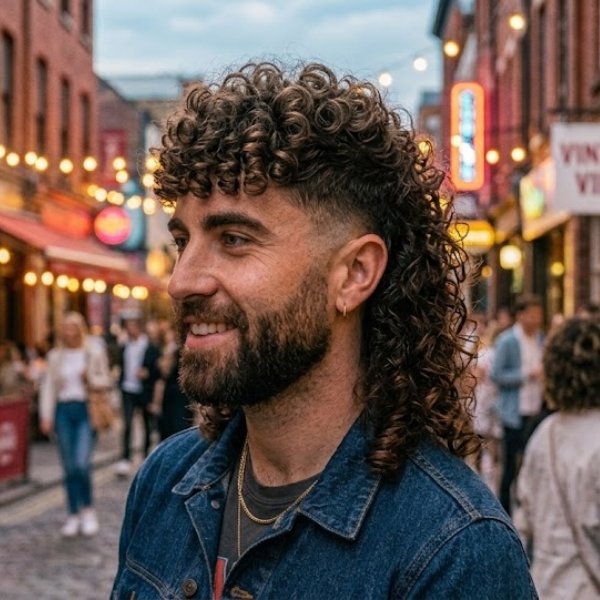
The Curly Wolf Mullet blends a shag haircut with mullet proportions, creating heavy layering throughout the crown and a textured, choppy back. It is one of the most requested curly styles because it naturally hides frizz inside the layers instead of fighting it.
Curl types from loose waves to tight coils can wear a wolf mullet, since the layered cut works with whatever natural shape your hair already has. This is a favorite among people who want volume without daily heat styling.
Curly Shag Mullet
The Curly Shag Mullet leans into heavy, feathered layers from the crown all the way to the ends, with face-framing pieces around the front. Unlike the wolf mullet, which is choppier and more textured, the shag mullet keeps a softer, rounder silhouette.
This cut is especially flattering on square and diamond face shapes because the layers soften angular features. It also works well on curl types 2B through 3A, where the layers help the curls clump and define naturally.
Curly V-Back Mullet
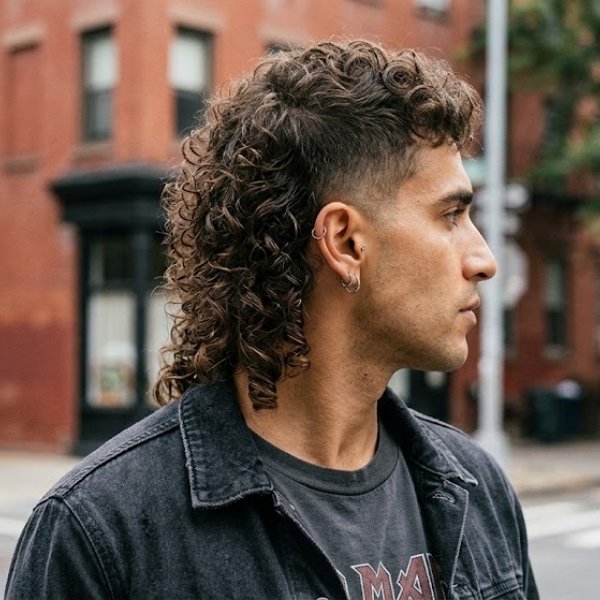
The Curly V-Back Mullet cuts the back section into a distinct V shape rather than a blunt or rounded line. This creates a clean focal point at the nape and gives the back of the haircut a more sculpted, deliberate finish.
It pairs well with curls that hold their shape, since the V line needs to stay visible for the effect to read clearly. This variation is popular for people who want their mullet to look precise from every angle, not just from the front.
Curly Layered Mullet
The Curly Layered Mullet uses multiple layers cut at different lengths throughout the head, which reduces bulk and lets each individual curl move independently instead of clumping into one heavy mass. This is one of the best options for thick, dense curls that tend to feel weighed down in a single-length cut.
Layering also helps the mullet shape read clearly even as your hair grows out, which means fewer emergency trims between barbershop visits.
Curly Fringe Mullet
The Curly Fringe Mullet adds curled bangs or a face-framing fringe to the classic mullet silhouette. The fringe can be worn loose and full for a soft look, or trimmed shorter for a more structured, edgy finish.
This version works particularly well for people with round or oval faces who want to add visual interest to the forehead area. It also gives you flexibility, since the fringe can be pushed back, side-swept, or worn forward depending on the day.
Curly Drop Fade Mullet
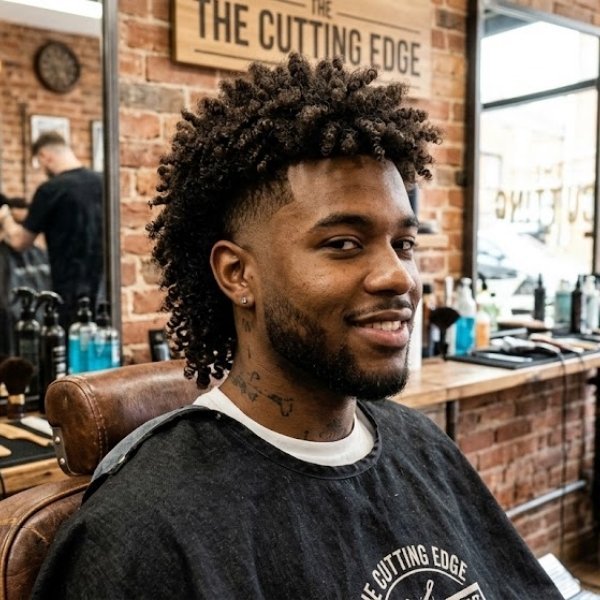
The Curly Drop Fade Mullet curves the fade line downward behind the ear instead of keeping it straight across, which follows the natural curve of the head and creates a rounder, more organic transition into the longer curls.
This is one of the most requested modern variations because it looks sharp without appearing overly harsh, making it a strong option for both casual and professional settings.
Natural Curl Mullet Style
The Natural Curl Mullet Style skips heavy fades or tapers altogether and instead focuses purely on letting your curl pattern dictate the shape. The sides are trimmed just enough to keep things tidy, while the top and back are shaped to enhance your natural spiral or coil pattern.
This approach requires the least maintenance in terms of cutting frequency, but it depends heavily on a strong curly hair care routine, since there is no fade to distract from frizz or dryness. It is a popular choice for people transitioning away from chemical straightening or heat styling.
Best Curly Mullet Styling
Getting a great cut is only half the job. Styling is what makes a curly mullet look finished instead of unkempt. Here is a simple, repeatable routine that works across most curl types:
- Start on damp, not soaking, hair. Excess water dilutes product and weakens curl hold.
- Apply a leave-in conditioner first. This adds slip, makes detangling easier, and gives styling products something to grip.
- Layer a curl cream, then a light mousse. Cream shapes and moisturizes, mousse adds hold without stiffness.
- Scrunch, don’t rub. Cup sections of hair in your palm and squeeze upward to encourage clumping and curl definition.
- Diffuse on low heat, or air dry. Tilt your head and lift at the roots for volume while the diffuser does the work.
- Avoid brushing dry curls. Use your fingers or a wide-tooth comb only while conditioner is still in the hair.
Following this order matters more than which specific products you use, since applying styling products to dehydrated hair rarely gives you the definition you’re after.
Easy Care for Curly Mullet
The longer back section of a mullet tangles more easily than a uniform curly cut, so your care routine needs to account for that. A few habits make the biggest difference:
- Wash 2 to 3 times a week with a sulfate-free, curl-specific shampoo to avoid stripping natural oils.
- Co-wash between shampoo days using conditioner only, which cleanses gently while adding moisture.
- Deep condition weekly, focusing on the longer back section, which tends to dry out faster than the shorter sides.
- Rinse with cool water to help seal the hair cuticle and boost natural shine.
- Sleep on a silk or satin pillowcase to reduce friction and overnight frizz.
- Book a trim every 4 to 6 weeks to keep the fade or taper sharp and prevent split ends from creeping into the longer sections.
Consistency matters more than product cost here. A simple routine followed regularly will outperform an expensive product used inconsistently.
Curly Mullet Trending Looks
For 2026, the strongest trends are leaning toward softer transitions and lower daily maintenance rather than extreme contrast. A few looks defining the year:
- Drop fade and burst fade combinations that curve naturally around the ear instead of cutting straight lines.
- Wolf and shag hybrids that use heavy layering to manage frizz while keeping volume.
- Curtain fringe pairings that soften the front of the mullet with a middle-part, wavy fringe.
- Color-enhanced curls, particularly deep brown, golden, or subtle highlight placements that make curl movement more visible.
- Undercut curly mullets for people who want the lowest possible side maintenance alongside dramatic top volume.
These trends signal a broader shift: people want a mullet that looks styled on day one and day five, not just fresh out of the barber’s chair.
Products for Curly Mullet
The right products depend on your curl pattern, but most curly mullets benefit from a version of the following:
- Leave-in conditioner: the foundation step for detangling and hydration.
- Curl-defining cream: shapes clumps and reduces frizz without heavy buildup.
- Lightweight mousse: adds hold and volume, especially useful for looser waves.
- Sea salt spray or texture powder: revives second and third-day curls without a full restyle.
- Anti-frizz serum or hair oil: used sparingly as a finishing step, never as a base product.
- Clay or pomade: helpful for controlling volume around the faded sides without adding shine.
- Deep conditioning mask: used weekly to maintain moisture in thicker or drier curl types.
A good rule of thumb is to keep your daily routine to one or two products maximum. Stacking too many styling products on top of each other is one of the most common reasons curly mullets end up looking heavy or greasy instead of defined.
FAQs
What are the best description products of the curly mullet hair?
The most effective products are a leave-in conditioner, a curl-defining cream, and a lightweight mousse, applied in that order on damp hair for the best definition and hold.
What shall I do with a curly mullet of frizzes?
Apply a leave-in conditioner and curl cream while hair is still damp, scrunch instead of rubbing, and diffuse on low heat. A satin pillowcase and weekly deep conditioning also cut down frizz between washes.
How often should I trim a curly mullet?
Most curly mullets need a trim every 4 to 6 weeks to keep the fade or taper sharp and prevent the longer sections from looking shapeless.
Can fine or thin curly hair pull off a mullet?
Yes, fine curls can wear a mullet if the cut is layered to add the appearance of volume and paired with volumizing mousse rather than heavy creams that weigh curls down.
Does a curly mullet suit every face shape?
Most face shapes can wear some version of a curly mullet, but the specific style matters. Fades and tapers suit round and square faces, while shags and fringe versions flatter oval and heart-shaped faces.
Conclusion
The curly mullet earns its place in 2026 not because it is trendy, but because it genuinely works with a wide range of curl types, densities, and face shapes when it is cut and cared for correctly. Whether you go bold with a burst fade, low-maintenance with a natural curl style, or textured with a wolf or shag hybrid, the real key to pulling it off comes down to two things: getting a cut that respects your curl pattern, and following a simple, consistent styling and care routine.
Talk to a stylist who has specific experience cutting curly hair, be clear about how much daily styling time you’re realistically willing to spend, and build your product routine around hydration first, definition second. Get those fundamentals right, and any of the ten styles above can look sharp well past the first week.
George is a passionate hair expert with 4 years of experience in hairstyling, grooming, and hair care. He shares practical tips, trends, and professional advice to help readers.