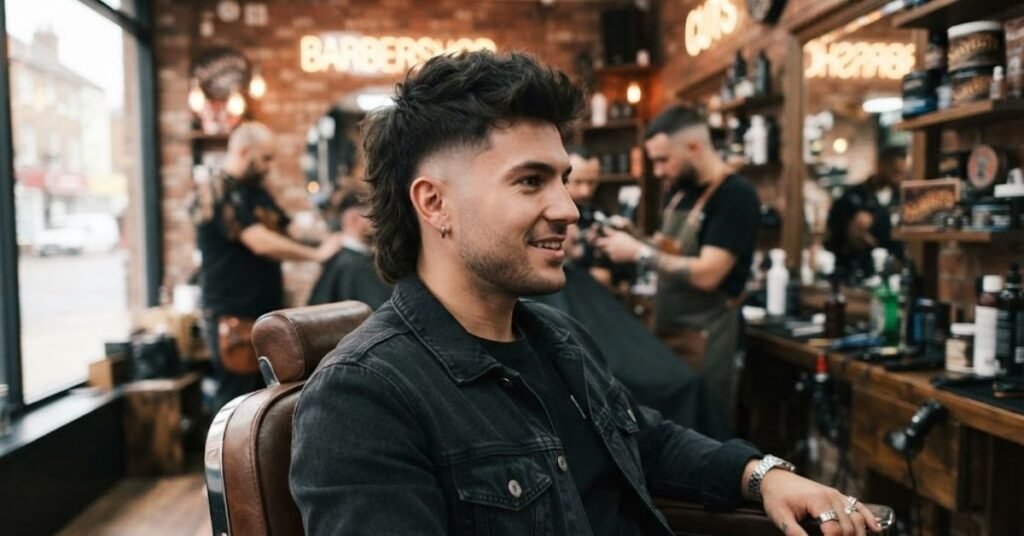
The modern mullet has moved far past its retro roots. What used to be a punchline in the 1980s is now one of the most requested cuts in barbershops heading into 2026. Today’s version trades the bulky, uneven silhouette of the classic mullet for clean fades, deliberate texture, and shape that actually flatters different face types and hair textures.
This guide breaks down nearly 40 modern mullet variations, from burst fade and wolf cut styles to curly, Korean, and punk-inspired takes, so you can find the version that fits your lifestyle. We also cover daily maintenance, washing routines, product picks, and barber-approved trimming tips to help your mullet hold its shape between appointments.
Table of Contents
Modern Mullet
The modern mullet keeps the core idea of the original cut, short on top and sides, longer at the back, but rebuilds it with intentional blending and texture. Instead of one abrupt length change, barbers now use fades, tapers, and layering to create a smoother transition from front to back. The result reads as polished and current rather than dated, which is why it works in casual settings and more formal ones alike.
96 Modern Mullet Hairstyles Timeless Variation 2026
Below are the most popular modern mullet styles trending in 2026, organized by fade type, length, texture, and cultural influence. Each variation suits a different hair type, face shape, and maintenance level, so use this list to compare options before your next barber visit.
Burst Fade Mullet
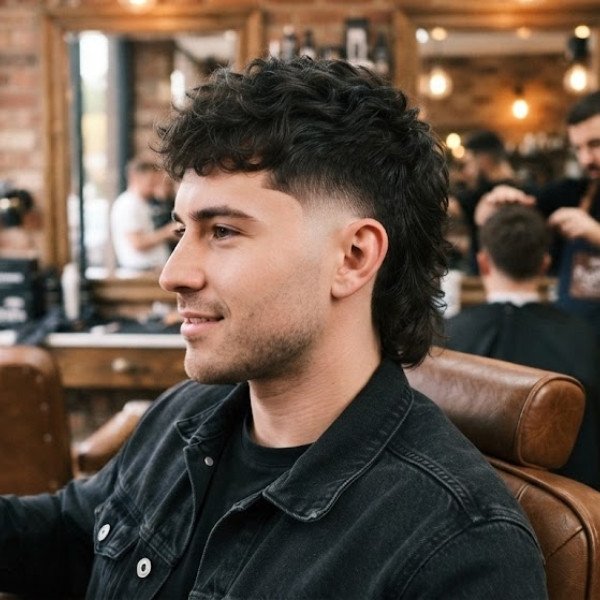
The burst fade mullet curves the fade around the ear instead of cutting a straight line down the back of the head. This creates a rounded, burst-like pattern that blends into the longer nape hair without a harsh edge. It works best on thick or medium density hair and pairs well with curly or wavy textures on top.
Mullet Fade
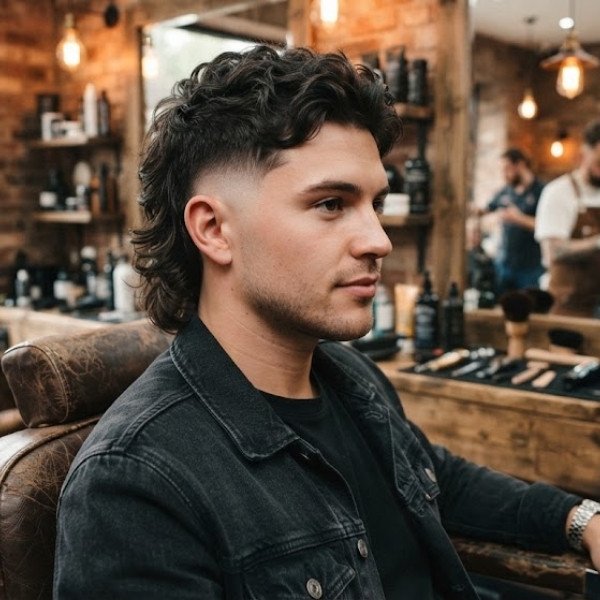
A mullet fade is the broad category covering any mullet with faded sides, whether low, mid, or high. It replaces the shaggy, undefined sides of a classic mullet with crisp, gradual blending. This version suits men who want a sharp, groomed look up front while still keeping length and movement at the back.
Short Mullet
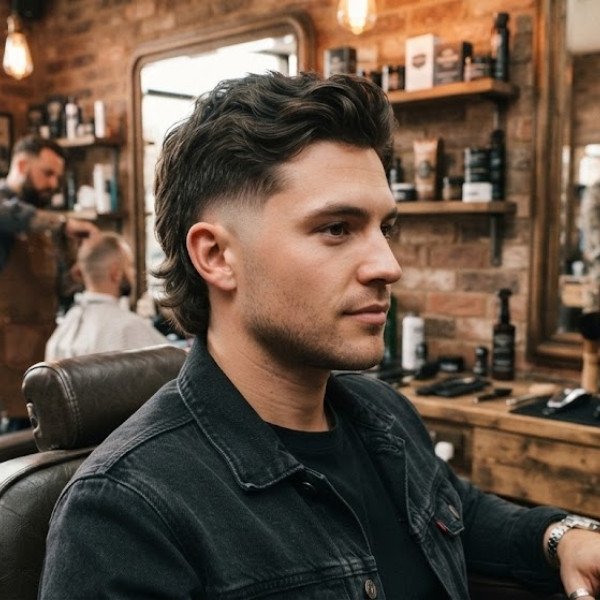
The short mullet trims back the length at the nape to just an inch or two, making it far more office friendly than longer versions. It keeps the spirit of the cut without the daily styling commitment. This is a strong pick for first timers who want to test the mullet trend with minimal upkeep.
Curly Mullet
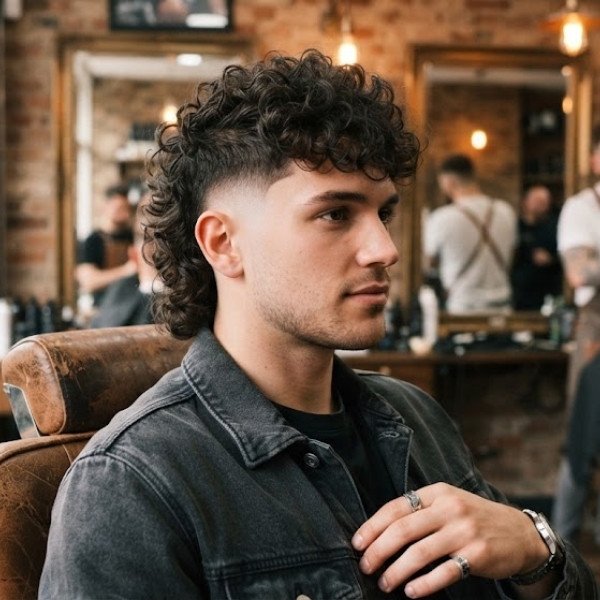
Curly hair adds natural volume and bounce to the back section of a mullet, giving it a lived-in, effortless look. Barbers typically use a lower taper instead of a skin fade here, since curls need extra room to fall naturally without looking boxy. A light curl cream helps define ringlets without weighing them down.
Middle Part Mullet
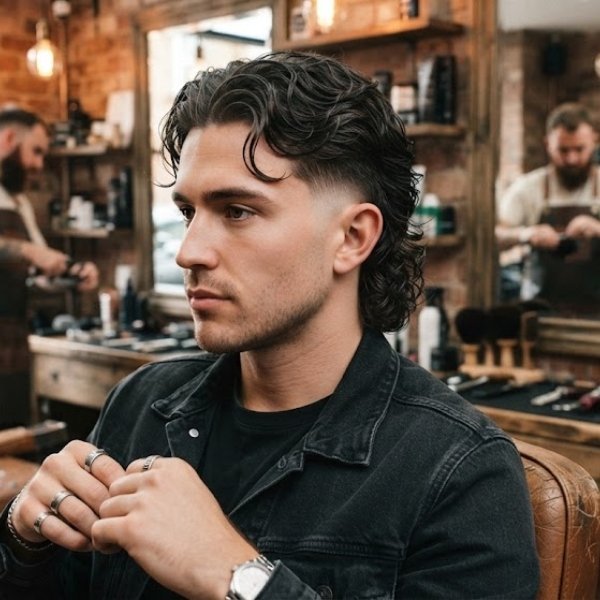
This variation combines a center part on top with the classic long-back silhouette, giving off a vintage, 70s-inspired vibe. It works especially well on straight or slightly wavy hair that falls naturally to either side. A flat iron or light blow dry helps keep the part crisp throughout the day.
Asian Mullet
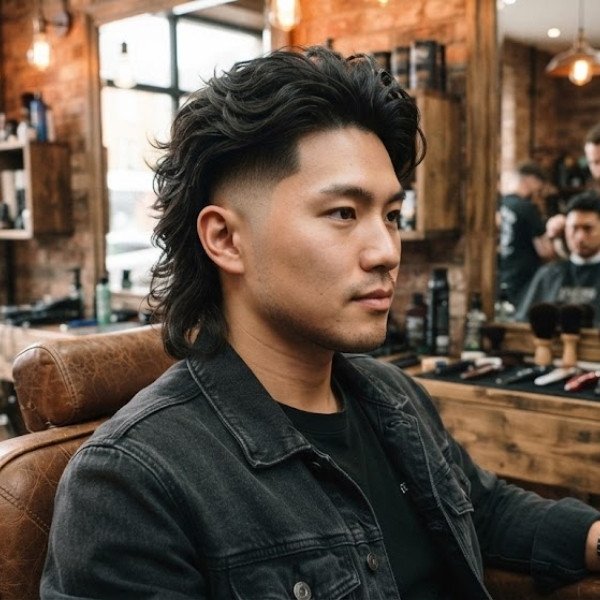
Popularized by Korean and Japanese street style, the Asian mullet keeps the top soft and face-framing while letting the back flow with minimal fading. Internal layering is often added to control naturally straight, downward-growing hair, giving it movement instead of a flat, helmet-like finish.
Mohawk Mullet
The mohawk mullet raises a strip of hair down the center of the head while keeping the back long, blending two bold statement cuts into one. It requires more daily styling with strong-hold product but delivers a striking, edgy look that stands out in a crowd.
Wavy Mullet
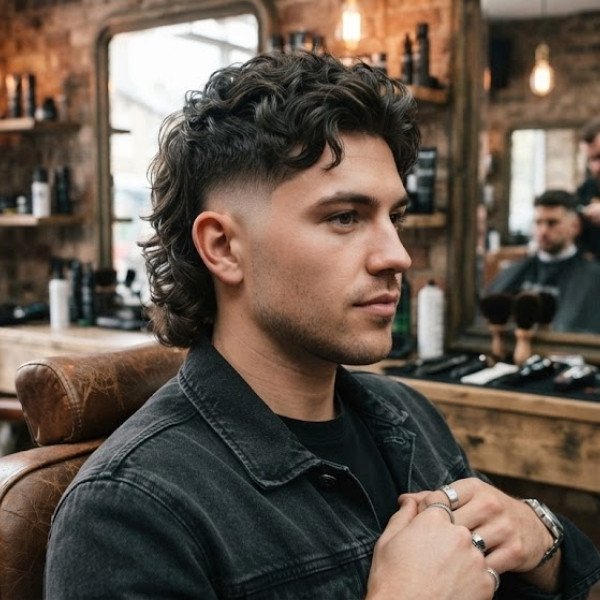
Natural or styled waves give this mullet a relaxed, beachy texture that looks effortless rather than overly structured. It pairs well with a mid taper on the sides and a light sea salt spray to enhance natural wave pattern without heavy product buildup.
Shaggy Mullet
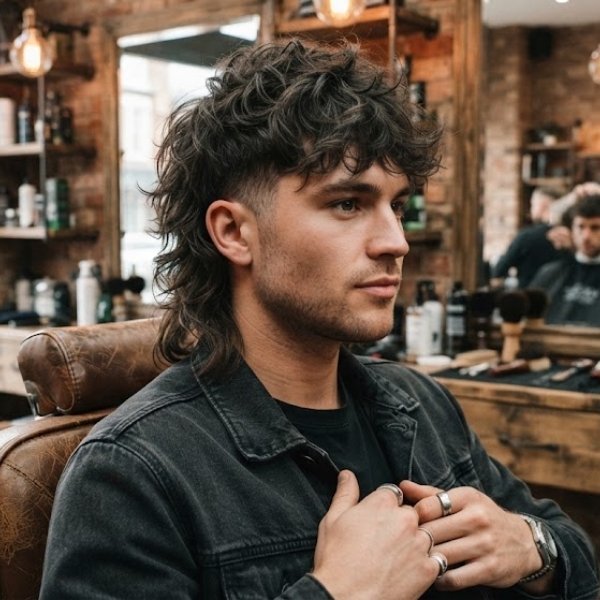
The shaggy mullet leans fully into texture, with choppy, uneven layers throughout the top and back. It intentionally avoids clean lines, giving a rock-inspired, low-effort appearance that actually takes some skill to cut correctly. Great for thick or medium hair that holds texture well.
Long Mullet
For those who want maximum drama, the long mullet lets the back grow well past the collar while keeping the top and sides shorter for contrast. It demands more frequent conditioning to prevent split ends and works best paired with a taper rather than a full skin fade for balance.
Wolf Cut Mullet
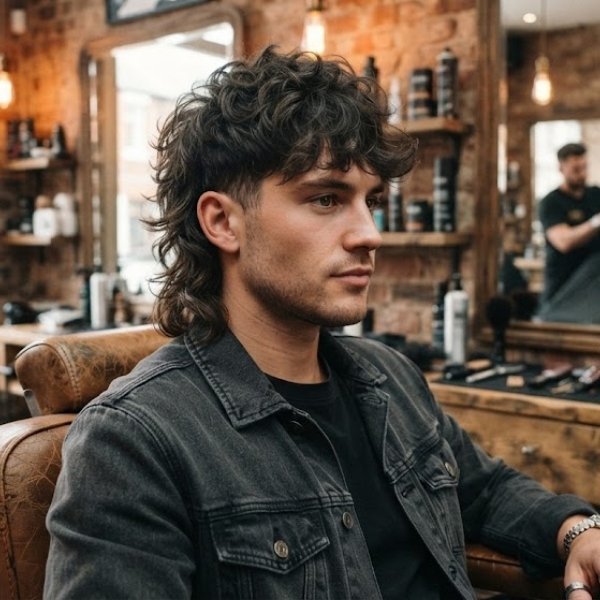
A hybrid of the shag and the mullet, the wolf cut mullet uses heavy layering and a rounded, voluminous top with a choppy, textured back. It has become one of the most searched hairstyles of the past two years thanks to its social media popularity and works on both straight and curly hair.
Permed Mullet
Adding a perm to a mullet introduces long-lasting curl or wave pattern to naturally straight hair, giving the back section extra body and texture. This variation reduces daily styling time since the curl pattern holds on its own, though it does require sulfate-free products to protect the perm.
Modernized Mullet
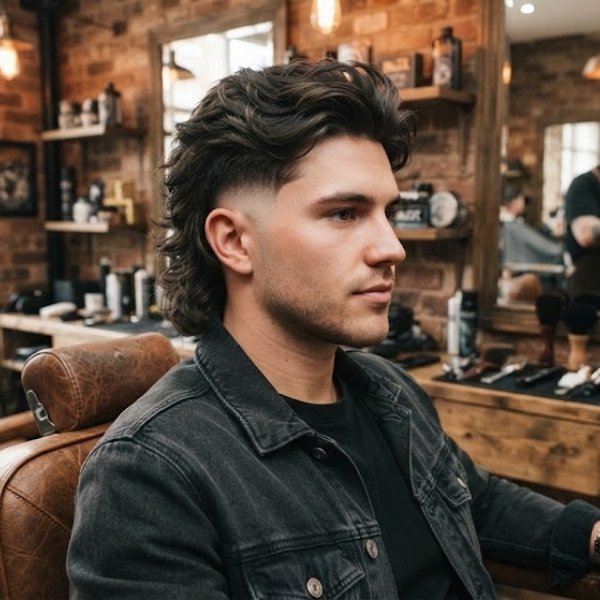
This is the umbrella term for any classic mullet updated with contemporary barbering techniques, meaning cleaner fades, better blending, and intentional texture rather than an accidental grow-out. It’s the version most barbers mean when a client simply asks for a modern mullet.
Low Taper Fade Mullet
The low taper fade mullet keeps the fade close to the hairline, leaving more length around the ears compared to a high or mid fade. It offers a subtle, professional-friendly contrast between the sides and the longer back, making it one of the more versatile choices on this list.
Shag Mullet
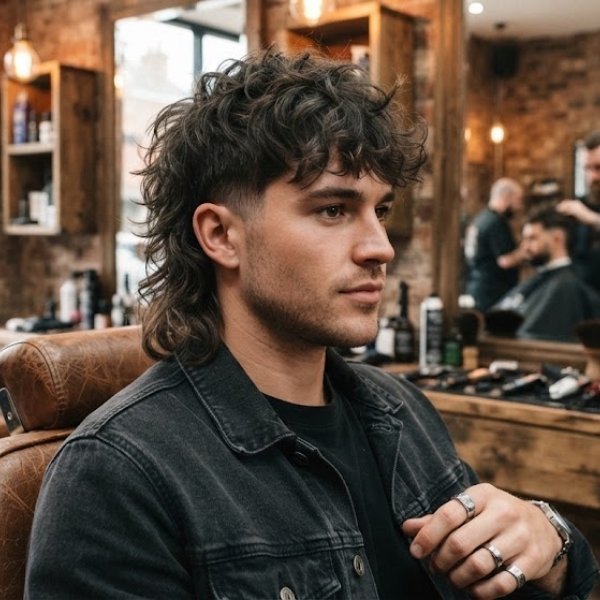
Similar to the shaggy mullet but with more emphasis on face-framing layers at the front, the shag mullet blends retro shag haircut elements with mullet length in back. It suits medium to thick hair and looks best with minimal heat styling to preserve its natural texture.
Medium Mullet
Sitting between the short and long variations, the medium mullet offers noticeable length at the back without the full commitment of a dramatic grow-out. It’s a balanced option for people who want the mullet silhouette while still keeping some versatility for styling.
Straight Hair Mullet
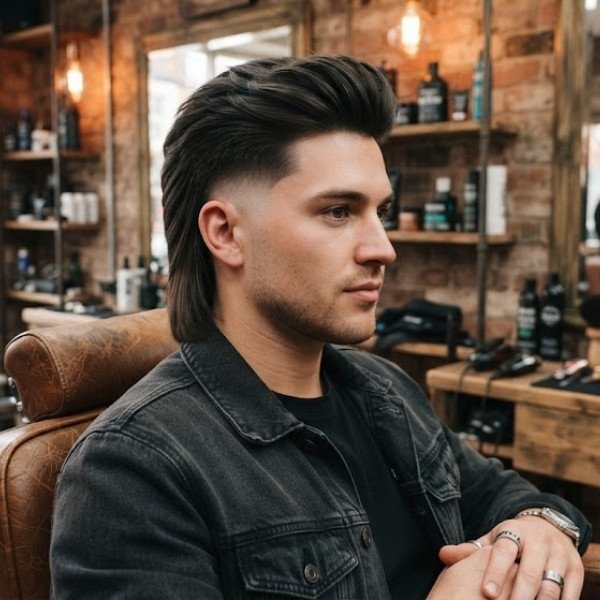
Straight hair mullets rely heavily on texturizing scissors and point cutting to avoid a flat, heavy look at the back. A light taper on the sides paired with a matte clay on top helps create dimension that straight hair doesn’t naturally provide on its own.
Soft Mullet
The soft mullet uses gentle blending and rounded layers instead of sharp fades or hard lines, creating a more subtle, wearable version of the cut. It’s a good entry point for anyone nervous about committing to a bolder mullet style.
Dreadlock Mullet
This variation applies mullet proportions to locs, keeping the sides shorter or faded while letting dreadlocks grow longer at the back and crown. It requires specialized maintenance from a loctician alongside regular barber visits to keep the fade sharp.
Textured Fringe Mullet
A textured fringe mullet brings a choppy, piece-y fringe to the front while keeping the classic long back. The fringe softens the forehead and works particularly well for square or rectangular face shapes that benefit from added visual movement up front.
Mexican Mullet
Also called the “mullet mexicano,” this style favors a fuller, less faded silhouette with natural volume throughout, often paired with a mustache or light beard. It has surged in popularity through social media and skews toward a bolder, less blended look than typical Western modern mullets.
Modern Mullet Taper
This version relies entirely on tapering rather than a hard fade, gradually shortening the sides without a sharp line. It’s a low-contrast, easy-to-maintain option that grows out more gracefully between barber visits than a skin fade would.
French Crop Mullet
Combining the short, blunt fringe of a French crop with mullet length in the back, this style keeps the top neat and forward-swept while contrasting sharply with the longer nape hair. It suits thick, straight hair that holds a blunt fringe shape well.
Two Block Mullet
Borrowed from Korean hairstyling, the two block mullet features a distinctly shorter under-layer beneath a longer top layer, creating a two-tiered effect. Combined with mullet length at the back, it gives a structured yet youthful appearance.
Mid Taper Mullet
The mid taper mullet fades starting around the temple, offering a middle ground between the subtlety of a low taper and the contrast of a high taper. It’s one of the most requested combinations for men wanting balance without extremes.
Textured Mullet
This general category covers any mullet cut with texturizing shears to remove bulk and add movement throughout. It works across nearly all hair types and is often the finishing technique applied to other mullet variations on this list.
Classic Mullet
The classic mullet stays closest to the original 80s silhouette but is cut with modern precision, avoiding the choppy, unintentional look of the original era. It keeps short sides, a fuller top, and a clearly defined longer back section.
Undercut Mullet
An undercut mullet uses a disconnected, closely shaved section beneath longer hair on top and back, creating dramatic contrast. It’s a bolder statement piece that works well for those who already have an undercut and want to add mullet length behind it.
Fluffy Mullet
The fluffy mullet emphasizes volume and softness on top through blow-drying techniques and lightweight mousse, creating a rounded, voluminous silhouette. It’s particularly flattering on round faces since the added height elongates the overall face shape.
Korean Mullet
Korean mullets favor soft, face-framing layers on top with minimal fading and a naturally flowing back section. The style prioritizes movement over sharp contrast, often finished with a light wave perm for extra texture.
Faux Hawk Mullet
This variation combines the raised, textured center strip of a faux hawk with mullet length in back, without the fully shaved sides a true mohawk requires. It offers a bold look with slightly more flexibility for growing it out later.
High Taper Mullet
The high taper mullet starts fading near the crown, creating the sharpest contrast between the sides and the top and back sections. It’s a striking, high-maintenance option that needs trims every two to three weeks to stay crisp.
Fringe Mullet
A fringe mullet brings a swept or blunt fringe to the front of the cut, drawing attention to the eyes while the back maintains classic mullet length. It’s especially popular for softening angular jawlines.
Modern Mullet Low Fade
This pairing keeps the fade subtle and close to the hairline while emphasizing longer, wavy or textured layers on top and back. It’s one of the more office-appropriate mullet combinations available.
Layered Mullet
The layered mullet uses multiple length levels throughout the top and back to build movement and reduce bulk, especially useful for thick or coarse hair that can otherwise look heavy in a traditional mullet cut.
Punk Mullet
The punk mullet embraces spiked or choppy texture on top, sometimes with bold color, alongside a longer, less groomed back section. It leans into the rebellious roots of the mullet with an intentionally rougher finish.
Modern Mullet with Beard
Pairing a modern mullet with a well-groomed beard balances the longer back with structure at the jawline. Barbers often recommend fading the beard at the cheeks to avoid a harsh line that clashes with the softer mullet silhouette.
Spiky Mullet
The spiky mullet uses a strong-hold gel or wax to push the top section upward into defined spikes, contrasting with the relaxed length at the back. It requires daily restyling but delivers a high-impact look.
Euro Mullet
The Euro mullet, also called the Euro fade mullet, favors a soft, swept fringe with a low or mid fade and slightly longer back layers. It draws influence from European football and street style trends and works well on straight to wavy hair.
Essential Daily Care Tips for a Fresh Modern Mullet
A modern mullet only looks sharp if it’s maintained properly between barber visits. Because the cut mixes short faded sides with longer, textured back sections, it needs a slightly different care routine than a standard short haircut. The next sections cover exactly how to wash, style, and trim your mullet at home to protect its shape.
Understanding the Modern Mullet Style
Before diving into maintenance, it helps to understand what actually makes a modern mullet different from the classic version, and why that difference affects how you should care for it.
Key Features of a Modern Mullet
- Faded or tapered sides that require regular touch-ups to stay sharp
- A longer back section that needs conditioning to avoid dryness and split ends
- Textured or layered top hair that relies on the right products to hold shape
- A deliberate contrast between short and long sections, which grows out unevenly if ignored
Why the Modern Mullet Needs Daily Maintenance
The two contrasting lengths in a mullet grow at different visible rates. Faded sides show regrowth within a week or two, while the longer back can look fine for over a month. Skipping daily care, even something as simple as brushing or applying a light product, lets the sides look overgrown while the back becomes unmanageable and dry.
How to Wash and Condition a Modern Mullet Properly
Washing a mullet the same way you’d wash a basic short haircut often leads to dry ends at the back and product buildup on top. A slightly adjusted routine keeps both sections healthy.
Gentle Conditioning Techniques for Shape Protection
Focus conditioner on the mid-lengths and ends of the back section, since that’s the part most prone to dryness. Avoid applying heavy conditioner near the roots or faded sides, as this can weigh down the top and cause the fade to look flat instead of sharp. A leave-in conditioner once or twice a week helps the longer back stay soft without affecting the shorter sections.
Common Washing Mistakes to Avoid
- Using hot water, which strips natural oils and dries out the back section faster
- Scrubbing the faded sides too aggressively, which can irritate freshly cut skin
- Skipping conditioner entirely because the top hair is short
- Rubbing hair dry with a towel instead of gently squeezing out excess water
Best Hair Products for Modern Mullet Maintenance
Because a mullet combines multiple textures and lengths in one haircut, most people need more than one product in their routine.
Lightweight Styling Creams
A lightweight cream works well on the top and fringe sections, adding definition and light hold without stiffness. It’s ideal for daily use since it won’t build up as quickly as heavier pomades or gels.
Sea Salt Spray for Texture & Volume
Sea salt spray enhances natural texture in wavy or curly mullets and adds volume to fine or straight hair. Spray it on damp hair before air drying or diffusing for the most noticeable texture, then scrunch gently with your hands.
Pomades, Gels, and Clays — When to Use Each
- Pomade: best for slicked or defined looks, especially on straighter, shorter top sections
- Gel: ideal for spiky or faux hawk mullet variations that need strong, long-lasting hold
- Clay: suited to textured, matte finishes on medium to thick hair without shine
Weekly Shape-Up Routine for a Clean Modern Mullet
Between full barber visits, a simple at-home weekly routine helps the cut stay presentable and prevents the sides from overtaking the overall shape.
How to Maintain Crisp Sides at Home
If you’re comfortable with clippers, a quick touch-up along the neckline and around the ears every one to two weeks keeps faded or tapered sides from looking grown out. Use a guard one size larger than your barber used to avoid over-cutting, and always work slowly in good lighting.
Back Length Check & Light Dusting Technique
Check the back length weekly by pulling small sections between two fingers and comparing them to the rest of the hair. If you notice split or frayed ends, a light dusting trim, removing only a quarter inch or less, keeps the ends healthy without shortening the overall mullet length you’re growing out.
Barber-Recommended Trimming Tips to Protect Mullet Shape
Most barbers recommend booking a shape-up every two to four weeks depending on how fast your hair grows and how sharp you want the fade to stay. Bringing a reference photo to each appointment helps maintain consistency in the fade height and back length over time.
Identifying Overgrowth and Shape Loss
Signs it’s time for a trim include the fade line losing definition, the top hair falling over the ears, or the back section losing its distinct shape and blending too much into the sides. Catching these signs early makes each barber visit faster and less dramatic.
Heat Styling & Damage Prevention Tips for Modern Mullet
Heat tools help shape a mullet’s volume and texture, but overuse can damage the longer back section faster than shorter styles since those strands go longer between trims.
Proper Blow-Drying for Volume
Dry the top section first using a round brush and lifting at the roots for volume, then finish the back on a lower heat setting to avoid unnecessary damage. Always apply a heat protectant spray before using any hot tool.
Using Heat Tools Safely
- Keep flat irons and curling wands below 350°F for fine or color-treated hair
- Never use heat tools on soaking wet hair
- Limit heat styling to three to four times per week to prevent breakage
- Let hair air dry partially before finishing with a blow dryer to reduce direct heat exposure
FAQs for Modern Mullet Care
How often should I trim a modern mullet?
Most people need a shape-up every two to four weeks to keep the fade sharp while letting the back continue growing out.
Can I maintain a modern mullet without a barber?
Light touch-ups with clippers are possible between visits, but a professional should handle the initial cut and any major shape corrections.
Does a modern mullet work with fine hair?
Yes, layering and lightweight texturizing products can add the volume fine hair needs to carry a mullet well.
What’s the best product for a curly modern mullet?
A curl-defining cream or light gel helps control frizz while letting natural curl pattern show through in the back.
How long does it take to grow a modern mullet from a short cut?
Most people see a workable back length within three to six months, depending on hair growth rate and desired length.
Is the modern mullet suitable for professional workplaces?
Shorter or low-fade variations with subtle back length are generally more office-appropriate than longer, dramatic versions.
Conclusion
The modern mullet has earned its place as one of 2026’s most versatile hairstyles, offering dozens of variations that suit nearly every hair type, face shape, and lifestyle. Whether you prefer the sharp contrast of a burst fade mullet, the natural movement of a curly or wavy version, or the low-maintenance appeal of a short mullet, there’s a style on this list built for you. The key to keeping any modern mullet looking sharp comes down to consistent care: proper washing and conditioning, the right styling products for your texture, regular shape-up trims, and careful heat protection. With the right maintenance routine, a modern mullet stays fresh, defined, and ready to wear from the barbershop straight through to your next appointment.

George is a passionate hair expert with 4 years of experience in hairstyling, grooming, and hair care. He shares practical tips, trends, and professional advice to help readers.